

















Church leaders warn of worsening violence in Papua, urging dialogue, justice, and civilian protection as displacement and fear spread.
Newsroom (23/04/2026 Gaudium Press) Church leaders in Indonesia’s Papua have issued a stark warning over a deepening humanitarian crisis, as escalating violence continues to displace civilians, disrupt daily life, and spread fear among Indigenous communities.
“There is violence in Papua almost every day,” Reverend Benny Giay, moderator of the Papuan Council of Churches, said on April 21, describing a region caught in a worsening cycle of conflict with no clear resolution in sight.
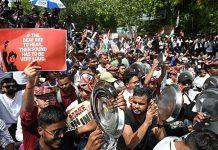
Giay said the situation has left many Papuans trapped in what he called “a dead end,” as ongoing clashes and security operations intensify across multiple regions.
Recent incidents have underscored the severity of the crisis. Church leaders, alongside members of the Council, cited shootings of civilians in Dogiyai between late March and early April, as well as further violence linked to security operations in the Sinak and Kembru districts of Puncak Regency.
According to church monitoring networks and humanitarian observers, military operations carried out between April 12 and 15 in parts of Pogoma and Kembru involved both ground and air forces. These operations reportedly resulted in civilian casualties, destruction of homes, and fresh waves of displacement.
Estimates gathered from church sources and local media indicate that between nine and 15 civilians were killed, with several others injured. However, independent verification remains difficult due to restricted access to conflict-affected areas.
Church leaders emphasized that while the Papua conflict carries political and security dimensions, the immediate reality is a humanitarian and pastoral emergency affecting families, congregations, and the fabric of everyday life.
“In many places, people can no longer farm, trade at markets, send children to school, or worship in peace,” said Reverend Dorman Wandikbo, who has remained in close contact with affected congregations.
The Church has also pointed to structural causes behind the escalating crisis. Leaders criticized the national policy of “accelerated development” in Papua, arguing that it has been implemented alongside a “security-heavy” approach that has heightened tensions rather than alleviating them.
“Development accompanied by weapons creates fear, not welfare,” said Father John Bunai, an Indigenous Catholic priest from Jayapura Diocese.
He added that many church members are now living as internally displaced persons, with limited access to basic necessities such as food, health care, and education.
Church leaders say the current crisis reflects deeper, long-standing issues that remain unresolved. These include systemic racism and marginalization, persistent failures in education and health services, economic inequality, and unresolved political questions surrounding Papua’s integration into Indonesia. They also highlighted concerns over weak accountability within security institutions.
Despite recommendations from experts for affirmative policies, peaceful dialogue, and reconciliation, leaders say meaningful dialogue has not been sustained. Instead, policy decisions since 2019—including expanded security deployments and administrative restructuring—have contributed to increased militarization.
The humanitarian consequences are becoming increasingly visible. More than 107,000 people have been internally displaced across Papua, with many forced to live for years away from their home villages.
“For the Church, these numbers are not statistics,” Giay said. “They are congregations torn apart, families scattered, and communities struggling to pray, learn, and survive.”
In response, church leaders have called for urgent action to prevent further bloodshed. They appealed for prayers for displaced communities and victims of violence, while urging government authorities and community leaders to prioritize steps toward peace.
“We remain open to dialogue,” Bunai said, stressing that any lasting solution must be grounded in justice, the protection of civilians, and genuine engagement with Indigenous Papuans.
Papua, a Christian-majority region, has experienced decades of violence since the 1960s, when Indonesia assumed control from Dutch colonial rule following a referendum widely criticized as rigged.
- Raju Hasmukh with files from UCA News
Related Images: