Cardinal Walter Kasper urges renewed theology, synodality, and humility, stressing faith’s relevance amid modern Europe’s spiritual questions.
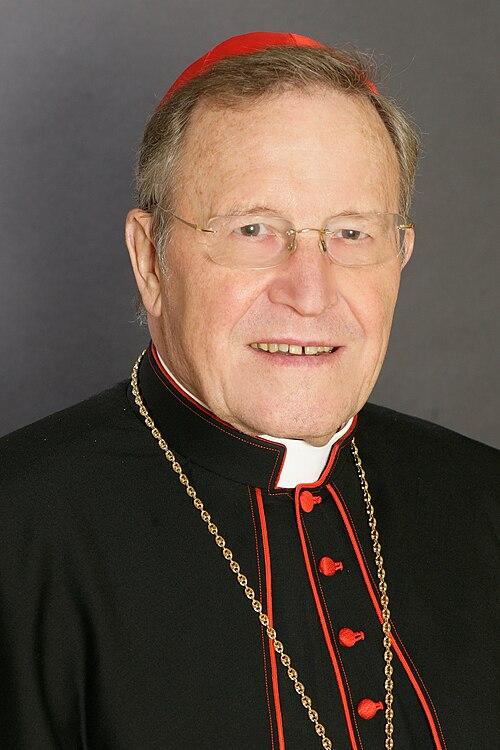
Newsroom (12/06/2026 Gaudium Press ) Emeritus Cardinal Walter Kasper has forcefully challenged the notion that modern Europe’s growing religious indifference has rendered the question of God obsolete. Speaking at the University of Vienna, the 93-year-old theologian rejected the idea that faith is fading irreversibly, insisting instead that the human longing for justice, peace, and a more humane world inevitably keeps the question of God alive.
“The Church isn’t coming to an end so quickly. Faith isn’t coming to an end,” Kasper said, drawing on his recent experiences in Rome, particularly during the Holy Year 2025. There, he observed a dynamic younger generation increasingly interested in religious questions—an observation he offered as evidence against widespread pessimism about Christianity’s future.
Kasper was in Vienna for the presentation of his new book, On the Trail of Jesus Christ, written in dialogue with theologian Jan-Heiner Tück. Their joint appearance at the University of Vienna, titled “Renewal from the Origin: Challenges of Post-Conciliar Theology,” provided a platform for wide-ranging reflections on theology after the Second Vatican Council.
Justice, Redemption, and the Necessity of God
Central to Kasper’s argument was the inseparability of justice and the idea of God. A truly universal understanding of justice, he argued, must extend beyond the living to include the dead, victims of violence, and the marginalized. Such a vision, he maintained, is inconceivable without reference to God.
Redemption, in his view, cannot be reduced to individual forgiveness of sins. Instead, it must encompass solidarity with the victims of history and a commitment to building a peaceful world. “Jesus Christ came to bring peace,” Kasper emphasized, linking Christian faith directly to social responsibility.
This perspective also informed his reflections on truth in a pluralistic world. Kasper warned against both relativism and arrogance. Truth, he argued, should neither be abandoned nor imposed. Instead, it must be “witnessed, offered, and lived”—a process rooted in humility.
Truth Without Arrogance
Kasper reaffirmed his conviction that Jesus Christ is the authoritative revelation of God, while acknowledging the limits of human understanding. “We only recognize him in fragments,” he said, echoing the Pauline notion that human knowledge remains incomplete.
This humility, he insisted, should shape Christian engagement with other religions and cultures. Drawing on the legacy of the Second Vatican Council, Kasper stressed that truth is not the exclusive possession of Christians. Other traditions, he said, hold “parts of the truth of the whole.”
Such openness, however, does not equate to relativism. For Kasper, ultimate truth remains grounded in God, even as it transcends human comprehension. Christians, therefore, must be willing to learn from others without abandoning their own convictions.
Hope Beyond Judgment
A key theme of Kasper’s address was the universal hope of salvation. He described hope as a “path into the unknown,” emphasizing that the Church must resist the temptation to pronounce definitive judgments about individuals’ ultimate fate.
While the Church has canonized many saints, it has never declared any individual definitively damned—a fact Kasper highlighted as theologically significant. Even in the case of the most serious crimes, he said, final judgment belongs to God alone.
“God has ways of reaching people that we do not know about,” Kasper remarked, linking this belief to the Church’s rejection of the death penalty. The possibility of repentance, he argued, must remain open until the very end.
Synodality: A Path of Listening, Not Politics
Kasper devoted considerable attention to synodality, a central theme of Pope Francis’ pontificate. Initially skeptical of the process, he now regards it as a promising path for the Church, emphasizing the importance of listening, dialogue, and spiritual discernment.
He praised the method of “dialogue in the Spirit” used during recent synodal assemblies as a forward-looking approach to decision-making. However, he warned against interpreting synodality in purely parliamentary terms.
“It is not simply about majorities,” he said. “The bishop must listen, but others must also listen to the bishop’s voice.” Synodality, in his view, requires mutual attentiveness and cannot be reduced to voting procedures.
Addressing the contentious Synodal Path in Germany, Kasper called for a “reasonable compromise” with Rome. He cautioned against any national Church attempting to dictate direction to the universal Church, underscoring the need for unity and balance.
The Role of Theology in Society
Kasper concluded with a strong defense of theology’s public relevance. While acknowledging the necessity of specialized academic research, he criticized overly narrow approaches that fail to engage broader audiences.
“A theology that writes only for other specialists loses its public and ecclesiastical significance,” he said. Theology, he argued, must address fundamental human questions and demonstrate the relevance of Christian faith to everyday life.
“I can’t talk about God if I don’t say what it means to me,” Kasper noted, highlighting the personal and existential dimension of theological work. For him, theology involves not only intellectual rigor but also the “heart.”
He also defended theology’s place in state universities, where it can both meet academic standards and contribute to public discourse on fundamental values. “Theology is not a pleasure in itself,” he said, “but a service to society.”
A Renewed Vision for the Church
Taken together, Kasper’s reflections present a vision of a Church that is neither in decline nor in retreat, but engaged in a process of renewal rooted in its origins. His message is one of cautious optimism: faith persists, truth remains meaningful, and theology still has a vital role to play.
At a time when many question the relevance of religion in modern Europe, Kasper’s intervention suggests that the deeper questions of human existence—justice, meaning, and hope—continue to point beyond themselves.
- Raju Hasmukh with files from KNA and https://www.herder.de/