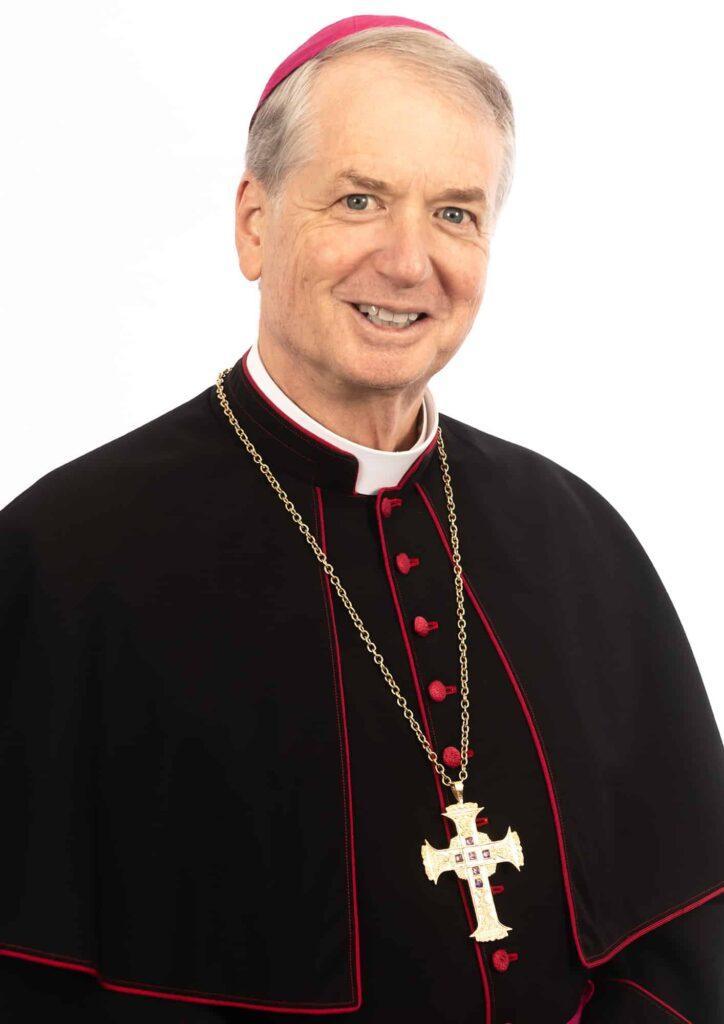
Sydney Archbishop Anthony Fisher defends Catholics’ right to protest Divine Playhouse, amid controversy over parody of sacred symbols.
Newsroom (29/07/2026 Gaudium Press ) Sydney Archbishop Anthony Fisher OP has defended the right of Catholics to publicly oppose artistic productions they believe ridicule their faith, issuing a strong statement amid continuing controversy surrounding Divine Playhouse, a temporary arts venue operating in a former Catholic church building in central Sydney.
The dispute has unfolded over several weeks and centers on Divine Playhouse, which occupies the former St John the Evangelist Church on Kent Street. The church was deconsecrated in the 1930s and, according to Church law, had been “reduced to profane use” under Canon 1222 of the Code of Canon Law. For approximately eighty years, the building housed the Genesian Theatre before being sold in 2017.
In his statement, Archbishop Fisher emphasized that freedom of expression extends beyond artistic creation and includes the right of individuals and communities to object when they believe something crosses a line.
“Freedom of expression includes not only the right to speak, act and create, but also the right, and sometimes the responsibility, to say clearly when something is inappropriate, offensive or wrong,” he wrote.
Promotional Material Sparks Backlash
The venue attracted widespread criticism from Catholics over promotional content and performances that incorporated recognizable Catholic imagery and themes. Divine Playhouse received a grant of AU$100,000 from the New South Wales government agency Create NSW, a fact that intensified objections from critics who questioned the use of public funds.
Among the events advertised were productions titled Sunday Mess and Unholy Confessions. Promotional imagery also included depictions of fast-food fries presented in a manner resembling the Eucharist, one of the most sacred elements of Catholic worship.
Archbishop Fisher drew a distinction between satire, criticism, and artistic commentary, which he acknowledged as legitimate forms of expression, and what he described as a targeted misuse of religious symbols.
He characterized the productions as involving “a deliberate appropriation, sexualization, and denigration of specific and sacred symbols and rituals of the Catholic faith,” arguing that assurances from organizers that Catholics were not being mocked lacked credibility.
The Archbishop stressed that Catholic objections stem from the sacred significance of the symbols involved rather than opposition to artistic expression itself.
“For Catholics, the Eucharist is not a cultural motif available for parody. It is the sacrament at the heart of our worship: the presence of Christ himself, real and truly given,” he stated.
He also criticized the use of religious attire as comedic or promotional material, arguing that religious habits represent lives dedicated to God and service to others rather than costumes intended for entertainment.
Petition Gains Thousands of Supporters
Opposition to the venue has extended beyond statements from Church leaders. According to The Catholic Weekly, more than 3,700 people signed a petition urging the New South Wales government to withdraw support for Divine Playhouse and issue a public apology to Christians who felt offended by the productions.
Chris Nave, who promoted the petition, argued that the controversy centers on respect for beliefs held by Christians worldwide.
“What is sacred to billions of people around the world has been turned into entertainment and commercial marketing,” he said. He further maintained that the New South Wales Government should not be associated with a venue that many Christians perceive as ridiculing their faith.
Public demonstrations have also accompanied the dispute. On July 8, approximately seventy people gathered outside the Kent Street venue in a peaceful protest, reciting the Rosary and carrying religious images and devotional items. Some participants displayed banners reading “Jesus is King.”
Religious Freedom and Artistic Freedom
A key aspect of Archbishop Fisher’s statement was his rejection of claims that Catholic opposition to Divine Playhouse amounts to hostility toward the LGBT community or an attempt to suppress artistic freedom.
“The objection is directed against the deliberate ridicule of beliefs and practices that Catholics consider sacred,” he said.
Fisher argued that a healthy democratic society should simultaneously safeguard artistic freedom, religious freedom, and the right to peaceful protest, rather than treating those principles as mutually exclusive.
The Archbishop welcomed New South Wales Premier Chris Minns’ decision to review the grant awarded to the venue. However, he expressed disappointment that some elected officials and public figures had dismissed Catholic concerns as expressions of homophobia.
He challenged critics to consider whether public reactions would be the same if sacred elements of another religious tradition were subjected to sexualized parody while receiving government funding.
Concerns About Anti-Catholic Prejudice
The controversy has also prompted broader discussion about attitudes toward religion in public life.
Archbishop Fisher argued that anti-Catholic sentiment is often treated differently from prejudice directed at other faith communities.
“For too long, anti-Catholic prejudice has been treated as a comparatively acceptable form of intolerance,” he concluded.
His remarks frame the dispute not only as a disagreement over a particular artistic venue but also as part of a larger debate about religious respect, public funding, and the boundaries between artistic expression and offense.
Venue Ordered to Vacate Premises
As the controversy continues, Divine Playhouse is facing an additional challenge unrelated to the public debate.
According to The Catholic Weekly, the venue has been ordered to leave its Kent Street location after the landlord terminated the lease. The decision reportedly cited contractual provisions relating to “offensive commercial activity.”
Organizers of Divine Playhouse have indicated that they intend to challenge the termination and pursue an appeal.
The dispute has thus evolved from a cultural controversy into a broader legal and political issue, encompassing questions of government funding, freedom of expression, religious sensitivities, and the future of the venue itself.
- Raju Hasmukh with files from INfocatholica