






Pope Leo XIV urges Spain’s bishops toward unity, renewal, and mission, highlighting communion, faith, and dialogue in a changing world.
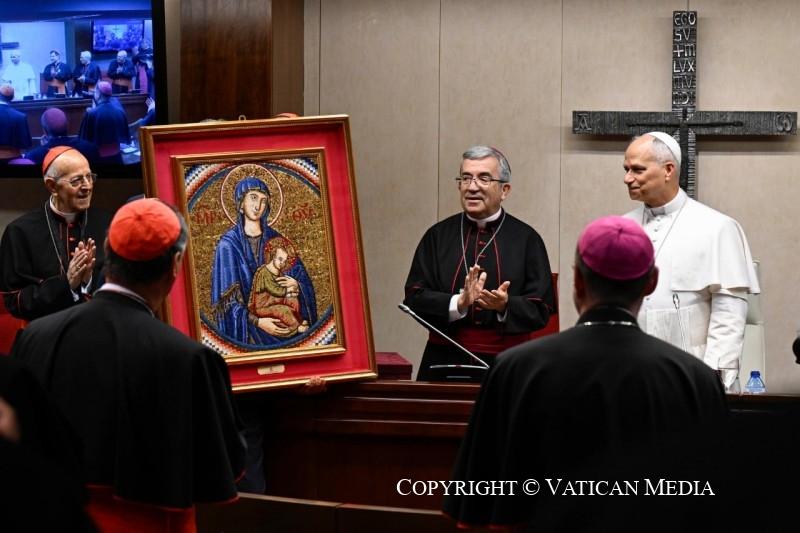
Newsroom (08/06/2026 Gaudium Press ) On the third day of his Apostolic Journey to Spain, Pope Leo XIV delivered a wide-ranging and reflective address to the country’s bishops, urging them to embrace unity, deepen communion, and respond with renewed missionary energy to contemporary challenges. Speaking at the headquarters of the Spanish Episcopal Conference in Madrid, the pontiff outlined a vision of the Church as a pilgrim community grounded in faith yet open to transformation.
Addressing the assembled prelates as “brothers in the Episcopate,” Pope Leo framed his message within the broader context of the Church’s ongoing synodal journey — a process he described as rooted in attentive listening and discernment. He emphasized that recognizing “the voice of God speaking through the ecclesial community” remains central to this path.
A Church on a Spiritual Journey
The Pope structured his address around the metaphor of a journey toward God, one that unfolds not through physical movement but through a transformation of the heart. This journey, he cautioned, requires both discernment and courage.
Among the key dangers he identified was a tendency to cling to the past — whether in the form of outdated structures, habits, or ways of thinking — at the expense of openness to new realities. Equally problematic, he noted, is the impulse to carry unnecessary “baggage,” symbolic of practices that burden rather than sustain the Church’s mission.
At the same time, he underscored the importance of maintaining roots. Drawing on the experiences of migrants, he highlighted the suffering that comes from isolation and lack of belonging. For the Church, this translates into the need to hold fast to its spiritual and cultural heritage while remaining adaptable.
Spain’s rich Christian tradition, he said, remains a powerful asset — one capable of inspiring even those outside the faith through its beauty and enduring cultural presence. The challenge lies in ensuring that this heritage continues to bear fruit in a rapidly evolving society.
Centrality of the Eucharist and Word
Pope Leo stressed that the Church’s renewal depends fundamentally on its sacramental life. Describing the Eucharist and the Word as essential “viaticum” for the journey, he called for a renewed appreciation of their transformative power.
Rather than focusing on external factors such as making liturgies more appealing, the emphasis, he said, should be on cultivating a genuine spiritual hunger for Christ. The rhythm of sacramental life, he added, sustains believers much like nourishment sustains a child or an athlete approaching the finish line.
Dialogue in a Diverse and Changing Society
Turning to the challenges of communication, the Pope acknowledged the difficulties posed by linguistic, cultural, and social barriers. These challenges, he said, are particularly relevant to evangelization and the Church’s ability to engage with contemporary society.
He called for a renewed commitment to dialogue — one grounded in humility and a willingness to “learn the language of the other.” Spain’s own history, including periods of missionary expansion and cultural exchange, was cited as a source of inspiration.
Referencing figures such as Friar Hernando de Talavera and Saint Toribio de Mogrovejo, Pope Leo highlighted the importance of adaptability and respect in spreading the Gospel. While contexts have changed, especially in the digital age and amid increased migration, the underlying spirit of openness must remain.
From Rural Isolation to Urban Fragmentation
Using imagery drawn from the Camino de Santiago, the Pope described the varied landscapes of contemporary pastoral life — from sparsely populated rural regions to densely populated yet socially fragmented urban centers.
In both contexts, he argued, the Church must adopt similar processes of engagement: listening, understanding, and fostering genuine human connection. The call is not only to proclaim the Gospel but also to build relationships that allow faith to take root.
A Call to Communion Amid Polarization
In a world marked by growing polarization, Pope Leo underscored the Church’s responsibility to serve as a sign of unity. This unity, however, is not uniformity but a “communion in diversity” that reflects the richness of different charisms and experiences.
He emphasized the particular role of bishops as visible signs of this communion. Their mission includes safeguarding unity, fostering dialogue, and healing divisions — both within the Church and in wider society.
A Church that lives in internal harmony, he noted, is better positioned to engage with other Christian communities, religions, civil authorities, and all people of goodwill.
Vocations and the Search for Meaning
Addressing the question of vocations, the Pope acknowledged a widespread difficulty, especially among young people, in making lasting commitments. He framed this challenge around a fundamental question: “For whom am I?”
According to Pope Leo, the answer lies not in the accumulation of experiences or security but in discovering a calling that leads to self-giving. Vocational ministry, he insisted, must go beyond numbers and instead emerge from vibrant, joyful communities that bear witness to the beauty of following Christ.
He also stressed the importance of proper priestly formation, calling for seminaries that prioritize community life, qualified formators, and strong theological education.
Accountability and Care for the Wounded
One of the most poignant moments of the address came as the Pope addressed those harmed within the Church, including victims of abuse by clergy. He called for a response rooted in “listening, truth, justice, reparation and an ever more determined commitment to prevention.”
The Church, he said, must ensure that every wounded person finds genuine support and pathways to healing, reinforcing the need for a culture of care and accountability.
A Mission of Hope in a Secularized World
Despite the challenges of secularization, Pope Leo expressed confidence in humanity’s enduring spiritual longing. Many people, he observed, still seek meaning, truth, and hope, even if they struggle to articulate it.
The Church’s role is to recognize these desires and offer Christ as the ultimate answer — not only through words but through acts of charity and service. Such actions, he said, carry the deeper promise of restoring a person’s sense of being loved.
Mary, the Saints, and the Path Forward
Concluding his address, Pope Leo entrusted the bishops’ mission to the Virgin Mary, whom he described as the “mother of communion and hope.” He also invoked Saint John of Avila, highlighting his example of priestly fidelity and spiritual renewal.
The Pope ended with a prayer for a heart conformed to Christ — one capable of listening, serving, and proclaiming the Gospel with joy.
“Give us your heart,” he prayed, “a heart capable of setting out on the journey… and proclaiming with joy.”
With that appeal, Pope Leo XIV reaffirmed his central message: that the renewal of the Church begins not with structures, but with transformed hearts united in faith, mission, and communion.
- Raju Hasmukh with files from Gaudium Press
Related Images:


