






Pope Leo XIV urges unity, peace, and synodal renewal, addressing global crises, youth despair, and the Church’s mission in a fractured world.
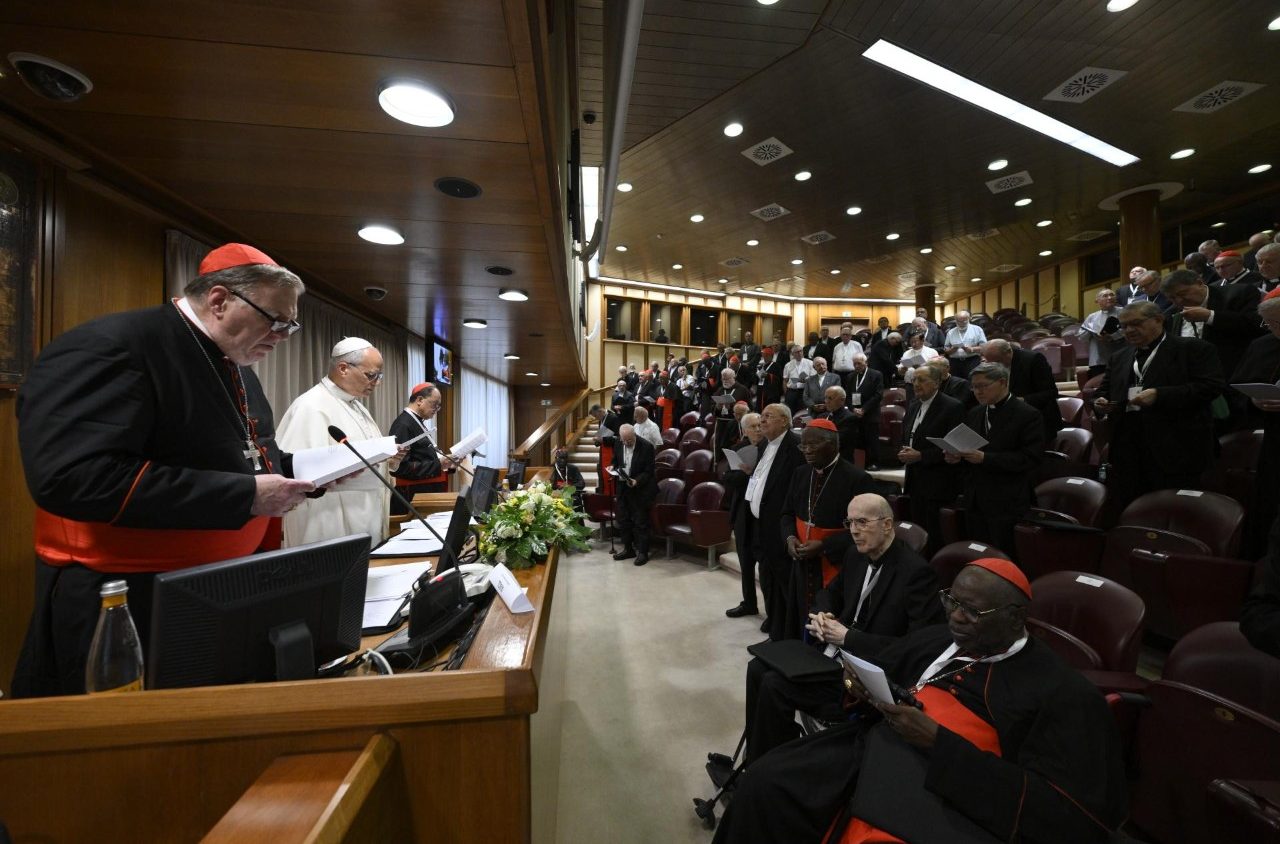
Newsroom (28/06/2026 Gaudium Press ) From the New Synod Hall at the Vatican, Pope Leo XIV delivered a sweeping and reflective closing address to the Extraordinary Consistory of Cardinals, concluding two days of deliberations marked by urgency, unity, and concern for a fractured world.
The Consistory, held from 26 to 27 June 2026, gathered cardinals from across continents and cultures to reflect on the Church’s mission amid mounting global crises. At the outset of his address, the Pope turned attention beyond the Vatican walls, expressing solidarity with the people of Venezuela, who have been “severely struck by the violent earthquake of these days.”
“We assure our prayers for the victims, for their families, and for all those suffering the consequences of this tragedy,” he said, extending the concern of the entire College of Cardinals. He also called for sustained international solidarity and entrusted rescue workers to divine protection.
A Church Rooted in Gratitude and Mission
Pope Leo framed the Consistory as an experience not only of discussion but of shared discernment. “We now come to the end of these days with a deep sense of gratitude,” he said, praising the “freedom, fraternity, and ecclesial spirit” that shaped the gathering.
He emphasized that the Church’s work is ultimately guided by Christ, who “goes before us, gathers us, speaks through our brothers, and leads us in mission.” For the Pope, the diversity present among the cardinals—spanning cultures, traditions, and pastoral realities—was itself a sign of hope.
Synodality Beyond Structure
At the core of his address was a renewed insistence on synodality—not as a procedural framework but as a fundamental expression of the Church’s identity.
“The real question of synodality is not who has the power to decide,” Pope Leo stated, “but how do we together safeguard the gift that the Lord has entrusted to his Church?”
He described synodality as a process rooted in encounter, deepened through mutual listening, and guided by discernment under the Holy Spirit. Cardinals were urged to actively foster this vision within their local Churches, ensuring it is understood not as bureaucracy, but as shared responsibility in faith.
Confronting a Deeper Human Crisis
While acknowledging the visible wounds of war, poverty, and injustice, Pope Leo pointed to a more profound and less visible crisis shaping the modern world.
“Behind these tragedies lies an even deeper crisis,” he said, citing loneliness, fractured relationships, and a widespread loss of hope. The inability to recognize others as “brothers and sisters” was identified as a defining challenge of the age.
Particular concern was expressed for young people, whose search for meaning and authenticity often leads to profound suffering. In some cases, he noted, this despair culminates in the tragic decision to take one’s own life—“one of the deepest wounds of our time.”
The Pope also reaffirmed the central role of the family as a foundation for healthy relationships and hope. In this context, he announced a forthcoming October meeting with leaders of the Eastern Churches and presidents of episcopal conferences to evaluate the reception of Amoris Laetitia, with direct participation from families.
Challenging the Logic of War
Turning to the question of peace, Pope Leo highlighted a key insight from the encyclical Magnifica humanitas: that war emerges not only from geopolitical conflicts, but from a pervasive “culture of power” embedded in human relationships, economics, politics, technology, and even religion.
To counter this, he called for a renewed commitment to dialogue, cooperation, and multilateral engagement. He also emphasized the importance of lay participation in public life, guided by the Church’s social teaching.
Significantly, the Pope defended non-violence as an “evangelical option,” clarifying that it is not passive resignation but an active refusal to replicate cycles of hatred. He revealed that several working groups had called for deeper theological and pastoral reflection on legitimate defense in light of evolving forms of conflict.
Witness Before Structure
Pope Leo cautioned against relying solely on institutional reform to renew the Church. True transformation, he argued, begins with credible witness.
“The Church is called to become ever more fully what it proclaims,” he said, underscoring that structural changes bear fruit only when rooted in genuine encounter with Christ and a vibrant sacramental life.
He also confirmed his intention to continue convening this annual gathering of cardinals, signaling an ongoing commitment to collective discernment, though the date for next year’s meeting has yet to be set.
A Final Appeal for Peace
In his closing words, Pope Leo adopted the unanimous appeal that emerged from the Consistory, urging its message to be carried to “all the churches and peoples of the world.”
“God continues to open paths of reconciliation and peace in history,” he declared. “We have the responsibility to walk them with courage and to help the world recognize them.”
Expressing gratitude to all who contributed—including relators, moderators, and organizers—he concluded by entrusting the fruits of the gathering to the Virgin Mary.
“May she teach us to preserve unity in diversity and to serve the Gospel of peace with humility, courage, and hope.”
- Raju Hasmukh with files from Vatican News
Related Images:


