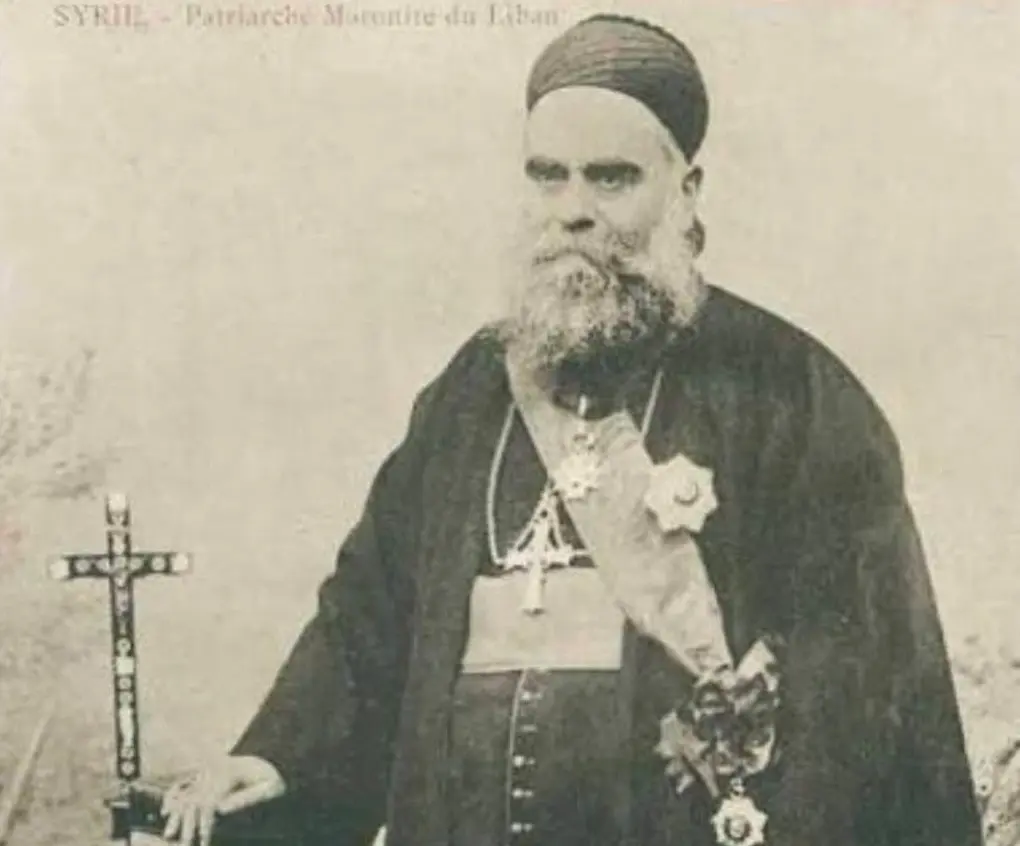
Healing of a Muslim Druze soldier in Lebanon was recognized as the miracle that led to the beatification of Patriarch Elias Hoyek.
Newsroom (28/07/2026 Gaudium Press ) The beatification of Maronite Patriarch Elias Hoyek, one of the most influential figures in Lebanon’s modern history, has drawn particular attention to the extraordinary healing of a Muslim Lebanese soldier that the Catholic Church recognized as a miracle attributed to his intercession.
The case, officially accepted by the Vatican’s Dicastery for the Causes of Saints, became the decisive event that paved the way for Hoyek’s beatification, celebrated on Saturday at the Maronite patriarchal headquarters in Dimane. The ceremony was led by Cardinal Bechara Boutros Rai, with Cardinal Marcello Semeraro representing Pope Leo XIV.
What makes the recognized miracle especially remarkable is that it involved neither a Catholic nor a member of the Maronite Church. The beneficiary was a Muslim man of Druze ethnicity, a married father of three from the Lebanese town of Hasbaya who served as an officer in the Lebanese army.
A Debilitating Condition
According to documentation released by the Dicastery for the Causes of Saints, the soldier began suffering severe pain in his back and spine in 2005. His condition dramatically worsened after he fell from a height of approximately five meters.
Medical examinations, including a computed tomography (CT) scan, diagnosed him with bilateral spondylolysis, a chronic spinal disorder. The injury left him confined to complete bed rest, and for months there was no significant improvement in his condition.
The persistent pain and physical limitations prevented him from living normally, while medical assessments continued to indicate a stable but serious condition.
A Dream and an Unexpected Recovery
The turning point came in April 2005.
According to his testimony, the soldier experienced a dream in which he saw an elderly man dressed in white and carrying a staff. The figure was unknown to him at the time.
The following morning, he awoke completely free of pain.
The recovery was immediate and total. After months of suffering, he found himself able to move normally again and eventually resumed his regular life, including his military duties.
Only later did he identify the man from his dream as Patriarch Elias Hoyek.
What drew particular attention during the Vatican’s investigation was the soldier’s insistence that he had never heard of Hoyek before the experience and therefore could not have consciously associated the figure in the dream with the Maronite patriarch.
Why the Vatican Accepted the Miracle
In its evaluation of the case, the Dicastery for the Causes of Saints stated that the moral certainty of Hoyek’s intercession rested on several objective factors.
Among the most significant were the sudden and medically inexplicable nature of the healing and the striking correspondence between the details of the dream and the historical figure of the patriarch, whom the soldier claimed not to know beforehand.
The Vatican also addressed the unusual circumstances surrounding the event. Unlike many reported miracles, there had been no explicit prayer or request for Hoyek’s intervention before the healing occurred.
However, the dicastery noted that divine action through dreams is well documented throughout both the Old and New Testaments. It further emphasized that some of the miracles performed by Jesus Christ involved individuals who had not made a prior request for healing, meaning the lack of an explicit invocation did not exclude the possibility of supernatural intervention.
A Symbol of Interfaith Resonance
Beyond the medical aspects of the case, many have pointed to its broader significance.
The recognized miracle occurred within the Druze community, one of the Middle East’s religious minorities, and involved a Muslim soldier rather than a member of the Maronite faithful. For supporters of Hoyek’s cause, this detail carries particular symbolism given the patriarch’s longstanding commitment to dialogue and coexistence among Lebanon’s diverse religious communities.
Hoyek, who lived from 1843 to 1931 and founded the Congregation of the Maronite Sisters of the Holy Family, remains a prominent figure in Lebanese history. His beatification now links his legacy not only to his religious and national leadership but also to a healing that crossed communal and religious boundaries.
For the Catholic Church, the recovery of the Lebanese soldier became more than a personal story of healing. It became the miracle that ultimately led to the recognition of Elias Hoyek as Blessed, bringing one of Lebanon’s most influential church leaders a step closer to sainthood.
- Raju Hasmukh with files from ACI Prensa