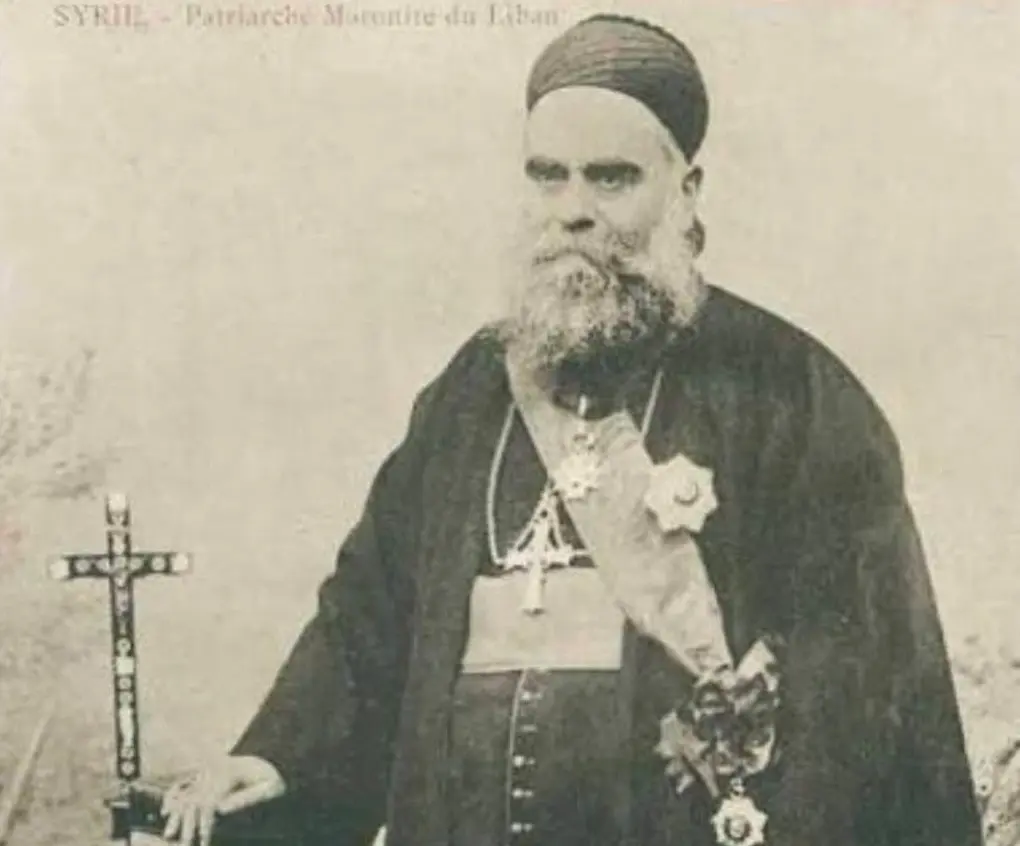
Maronite Church celebrates the beatification of Patriarch Elias Peter Hoyek, revered spiritual leader and key architect of Greater Lebanon.
Newsroom (28/07/2026 Gaudium Press ) The Maronite Catholic Church has celebrated the beatification of Patriarch Elias Peter Hoyek, honoring a religious leader whose legacy extends far beyond the Church and into the foundations of the modern Lebanese state.
The beatification ceremony took place on July 25 at the Maronite Patriarchate’s summer residence in Dimane and was presided over by Cardinal Bechara Boutros Rai, the 77th Maronite Patriarch of Antioch, according to Vatican news agency Fides. Representing Pope Leo XIV was Cardinal Marcello Semeraro, Prefect of the Vatican’s Dicastery for the Causes of Saints.
The event drew senior religious and political figures, including Lebanese President Joseph Aoun and Prime Minister Nawaf Salam, alongside Eastern Catholic patriarchs, bishops, clergy, and hundreds of faithful gathered to witness a historic moment for Lebanon’s largest Christian community.
Hoyek becomes the second Maronite patriarch to be beatified by the Catholic Church, following the beatification of Patriarch Estephan al-Douaihy on Aug. 2, 2024. His elevation to the rank of “Blessed” follows Pope Leo XIV’s approval of the cause after Pope Francis recognized Hoyek’s heroic virtues in 2019.
With the beatification, Hoyek joins the ranks of Lebanese holy figures proposed by the Church as models of evangelical life, a group that includes the widely venerated St. Charbel Makhlouf.
In his homily, Cardinal Rai described Hoyek as “a luminous figure in the history of the Church and the nation,” highlighting a life that combined spiritual leadership, social service, and political vision during some of the most turbulent periods in Lebanese history.
Born on Dec. 4, 1843, in Helta in northern Lebanon, Hoyek pursued studies in both Lebanon and Rome before being ordained a priest in 1870. He rose through the ranks of the Maronite Church and was elected Patriarch of Antioch of the Maronites in 1899, a position from which he would play a pivotal role in shaping the future of Lebanon.
His influence was felt not only in ecclesiastical affairs but also in education, social welfare, and religious life. In 1895, together with Mother Rosalie Nasr and Sister Stéphanie Kardouch, Hoyek founded the Congregation of the Maronite Sisters of the Holy Family. The congregation became the first apostolic women’s religious institute within the Maronite Church and remains part of his enduring legacy.
Hoyek’s reputation for compassion was particularly evident during the famine that devastated Lebanon during World War I. As widespread hunger and suffering gripped the country, he ordered monasteries and convents to open their doors to those in need, regardless of religious affiliation. The decision reflected his commitment to serving all communities during a humanitarian crisis that affected the region.
Beyond his pastoral work, Hoyek is widely remembered for his political role in the creation of modern Lebanon. Following the war, he represented Lebanon at the 1919 Versailles Peace Conference, where he advocated for Lebanese independence and international recognition of what he viewed as the country’s historic borders. His efforts earned him the enduring title of the “Father of Greater Lebanon,” and he remains widely regarded as one of the nation’s founding figures.
The Vatican’s recognition of a miracle attributed to Hoyek’s intercession paved the way for his beatification. The decree was issued on May 22, 2026, after Church authorities approved the case involving Nayef Abou Assi, a Druze officer in the Lebanese Army.
According to the recognized miracle, Abou Assi recovered in 1965 from a serious spinal illness after dreaming of the patriarch. The account became the central miracle required for Hoyek’s advancement in the canonization process.
Hoyek died on Dec. 24, 1931, in Bkerké, the seat of the Maronite Patriarchate northeast of Beirut. His remains are preserved in Ibrine within the chapel of the congregation he founded.
The significance of the beatification extends beyond the Church at a time when Lebanon continues to grapple with political paralysis, economic hardship, and widespread calls for institutional renewal. In a country where the presidency is reserved for a Maronite Christian under the power-sharing system, the Maronite patriarchate occupies a unique position of religious, moral, and political influence.
The Maronite Church, an Eastern Catholic Church in full communion with the pope and rooted in the Syriac tradition of St. Maron, has long been a central institution in Lebanese public life. Its patriarch, based in Bkerké and residing in Dimane during the summer months, remains a prominent voice in national affairs.
For many Lebanese, the beatification of Hoyek serves as both a recognition of a historic church leader and a reminder of a figure whose vision helped define the nation. More than nine decades after his death, the patriarch remembered as the “Father of Greater Lebanon” continues to occupy a distinctive place in the country’s religious and national consciousness.
- Raju Hasmukh with files from UCA News