








Israel probes soldier over Virgin Mary statue incident in Lebanon as tensions rise and prior acts against Christian symbols spark backlash.
Newsroom (07/05/2026 Gaudium Press ) Israel’s military has launched an investigation into a soldier photographed smoking and placing a cigarette in the mouth of a statue of the Virgin Mary in the occupied southern Lebanese village of Debel, an incident that has drawn condemnation from local religious leaders and renewed scrutiny over troop conduct.
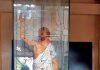
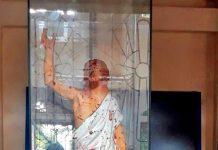
The image, taken several weeks ago but circulated online on Wednesday, adds to a series of controversial actions involving Israeli soldiers in the same village. Last month, another soldier was photographed striking a statue of Jesus on a cross with a sledgehammer, prompting international backlash and disciplinary action.
In a statement, the Israel Defense Forces (IDF) said it viewed the latest incident with “utmost severity,” emphasizing that the soldier’s behavior “completely deviates from the values expected of its personnel.” IDF spokesperson Lt. Col. Nadav Shoshani confirmed that “command measures” would be taken following the investigation.
Local and Religious Reaction
The incident has provoked strong reactions from Debel’s Christian community. Father Fadi Felfeli, head of the village congregation, described the act as deeply offensive.
“Honestly, this issue really provoked us, especially after the apology regarding the cross,” he told the BBC. He added that such behavior reflects “individuals within the army that lack ethics and values and are bigoted,” calling it evidence of “fanaticism.”
Although the Virgin Mary statue was not physically damaged, Father Felfeli condemned the act as “unethical,” saying it demonstrated “extremism and intolerance” toward a village that “values peace and neutrality and is not involved in the war.”
The Custodia Terrae Sanctae, representing the Roman Catholic Church in the Holy Land, also denounced the act as “disrespectful and outrageous behaviour.” It called on Israeli authorities to “send a clear message that such behaviour is unacceptable” and to handle the case with seriousness.
Pattern of Incidents
The episode is part of a broader pattern of alleged misconduct in Debel. In addition to the destruction of the Jesus statue, footage has surfaced showing Israeli soldiers damaging solar panels with military excavators. That incident remains under investigation.
The two soldiers involved in vandalizing the statue of Jesus were removed from combat duty and sentenced to 30 days in military prison following widespread condemnation.
Despite IDF assurances that it “respects freedom of religion and worship” and has “no intention of harming civilian infrastructure, including religious buildings or religious symbols,” recent incidents have strained Israel’s relations with Christian communities and raised questions about discipline and oversight.
Ongoing Conflict Context
The investigation comes amid continued hostilities in southern Lebanon. Thousands of Israeli troops remain deployed in the area following a US-brokered ceasefire that took effect on April 16. However, the truce has failed to halt fighting between Israel and the Iran-backed group Hezbollah.
Israeli strikes have persisted daily, with the Lebanese health ministry reporting more than 120 deaths in the past week, including civilians. Since the war began on March 2, at least 2,715 people have been killed in Lebanon.
Hezbollah has continued launching rockets, drones, and mortars at Israeli positions in southern Lebanon and northern Israel. Israeli authorities report that 17 soldiers and one civilian have been killed in southern Lebanon, along with two civilians in northern Israel.
On Wednesday night, an Israeli airstrike targeted the Dahieh suburb of Beirut for the first time since the ceasefire began. The IDF said the strike killed Ahmed Ali Balout, a commander in Hezbollah’s elite Radwan Force, though there was no immediate confirmation from Hezbollah.
While fighting remains at a lower intensity than before the ceasefire, violations by both sides have eroded the agreement, prolonging instability in the region.
Against this backdrop, incidents involving religious sites risk further inflaming tensions, particularly in communities like Debel that have sought to remain outside the conflict.
- Raju Hasmukh with files from BBC and Times of Israel
Related Images: