






Pope Leo XIV surprises Lebanese priests with a video call, urging peace as tensions persist along the Israel-Lebanon border.
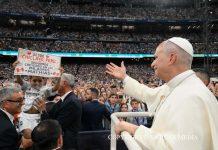
Newsroom (07/05/2026 Gaudium Press )Pope Leo XIV made an unexpected virtual appearance on Wednesday, joining a video call with 13 Catholic and Maronite priests serving in southern Lebanon near the Israeli border. Speaking from Rome, the pontiff offered prayers and words of encouragement to clergy living amid ongoing instability.
The priests, representing villages including Rmeish, Ain Ebel, Debel, and Marjayoun, had initially gathered online for a routine meeting with the Vatican’s ambassador to Lebanon, Archbishop Paolo Borgia. During the call, Borgia revealed that the pope was also present and wished to address them directly.
Father Najib al-Amil of Rmeish described the moment as reassuring. He said the pope’s message brought comfort to communities living under constant tension.
A Message of Peace Amid Ongoing Conflict
During the brief call, conducted in French and lasting about a minute, Pope Leo urged the priests to remain in their hometowns and continue their ministry.
“Pray with me so that peace prevails. God willing, peace is near,” al-Amil quoted the pope as saying.
The outreach comes as southern Lebanon remains volatile despite a ceasefire that took effect on April 17. Clashes between Israel and Hezbollah have continued, with violence largely concentrated in the south.
On Wednesday, Israel launched its first strike in Beirut since the ceasefire, targeting what officials described as a Hezbollah commander. The strike destroyed upper floors of a residential building in the city’s southern suburbs. Hezbollah did not immediately respond.
Rising Concerns Among Christian Communities
Although Christian-majority villages along the border have largely avoided the widespread destruction seen in other parts of southern Lebanon, recent incidents have heightened anxiety among the faithful.
Days before the papal call, Israeli forces demolished a Catholic convent in Yaroun, according to local officials and Lebanon’s state news agency. The Israeli military said it had struck a structure believed to be linked to Hezbollah infrastructure and stated it was unaware the building was a religious site.
Local sources disputed that account, saying the destroyed building was indeed a convent, while images released by the military showed a neighboring structure.
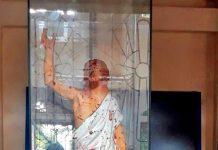
Additional incidents have drawn condemnation, including images of an Israeli soldier damaging a statue of Jesus in Debel and another placing a cigarette in a statue of the Virgin Mary. An Israeli military spokesperson said the behavior violated the army’s values and would be treated with seriousness.
A Region Under Strain
Christians make up roughly one-third of Lebanon’s population of five million, the highest proportion in the Middle East. Maronite Catholics are the largest Christian group, and Lebanon’s political system reserves the presidency for a Maronite.
The current conflict escalated on March 2, when Hezbollah launched rockets into northern Israel, shortly after the United States and Israel initiated military action against Iran. Israel has since conducted extensive airstrikes and a ground offensive in southern Lebanon, capturing multiple border areas.
Pope Leo, who visited Lebanon in November during his first trip abroad as pontiff, has maintained a visible concern for the country. He recently shared that he carries a photograph of a young Lebanese boy—killed during the conflict—who had welcomed him during that այց.
His outreach this week, though brief, reflects a continuation of personal pastoral gestures by the papacy, reminiscent of Pope Francis’ regular calls to clergy in conflict zones.
For priests and communities living along Lebanon’s southern frontier, the message offered a moment of connection—and a renewed appeal for peace in a region where it remains fragile.
- Raju Hasmukh with files from Crux Now
Related Images: