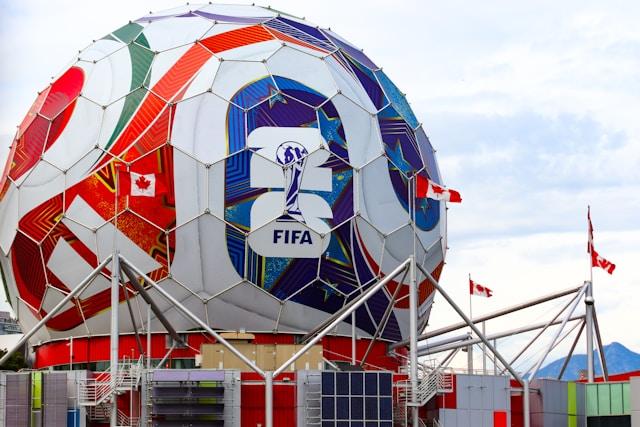
German bishops stress unity, human dignity, and fairness at the World Cup, while a national coach reflects on faith, prayer, and community.
Newsroom (11/06/2026 Gaudium Press ) As the FIFA World Cup kicks off across North America, voices from Germany’s Catholic Church are drawing attention not only to the spectacle of global football but also to its broader ethical implications. Leaders of the German Bishops’ Conference (DBK) have underlined the unifying potential of sport while warning that an event of such scale must also uphold values of human dignity, fairness, and social responsibility.
Speaking in Bonn, Bishop Stefan Oster, the DBK’s sports bishop and Bishop of Passau, emphasized that football has a unique capacity to bridge differences at a time when global divisions are deepening. “Especially in a time marked by wars, social tensions, and growing polarization, sport can open spaces for encounter and build bridges across borders, languages, and cultures,” he said.
The decision to host the World Cup across the United States, Mexico, and Canada, Oster noted, underscores football’s ability to bring together people from varied origins and life experiences. In this context, the tournament becomes more than a competition—it is a global meeting point reflecting both diversity and shared humanity.
Beyond the Pitch: Social Responsibility in Focus
However, the bishop cautioned against viewing the tournament solely as entertainment. Major sporting events, he argued, are inseparable from the social realities in which they unfold. Issues such as migration, social justice, inclusion, and the protection of vulnerable populations are inevitably part of the broader context.
“Such a World Cup should not only be a celebration of football, but also a sign that fairness and respect have significance beyond the realm of sport,” Oster said. He also warned against reducing football to purely economic interests, stressing that the sport’s “credible power” lies in its focus on people—athletes, fans, volunteers, and especially those who often remain on the margins.
The bishop’s remarks highlight an ongoing debate about the role of mega sporting events in society. While global tournaments can unify audiences and inspire millions, they also raise questions about inequality, resource allocation, and the treatment of disadvantaged groups.
Historical Reflection and Contemporary Challenges
Oster also drew a connection between the World Cup and a significant historical milestone: the 250th anniversary of the United States, celebrated around the same time as the tournament. This anniversary, he suggested, serves as an opportunity to revisit foundational principles rooted in equality and inalienable rights.
Referencing the ideals of the American Founding Fathers, he noted that democratic freedoms in the United States have historically expanded to become more inclusive. Yet he expressed concern that in many areas today, there are signs of regression.
In this context, Oster echoed the stance of U.S. bishops, emphasizing the importance of safeguarding the dignity of every person—particularly migrants and those in vulnerable situations. His remarks situate the World Cup within a broader ethical and political landscape, where questions of human rights remain pressing.
Faith on the Sidelines: Kronenberg’s Personal Journey
While church leaders addressed the global significance of the tournament, a personal perspective came from within the German national team. Andreas Kronenberg, the team’s goalkeeping coach, shared how Christian faith has shaped his life and outlook.
In an interview with the Münster-based publication Kirche und Leben, Kronenberg described how his faith emerged during a difficult period marked by temporary unemployment as a professional footballer. Facing uncertainty, he began searching for direction—and found it in spirituality.
He recalled a profound realization during that time: “Someone is obviously interested in you—and that someone was God.” This insight led him to explore the Bible and the life of Jesus Christ more deeply. He said he remains particularly moved by Jesus’ attention to marginalized individuals and his ultimate sacrifice.
“Every time I reflect on this question, I become very humble,” Kronenberg said, adding that he often imagines what it would have been like to meet Jesus personally.
Daily Practice and Professional Balance
Prayer now plays a central role in Kronenberg’s daily routine. Each morning begins with quiet reflection, during which he either prays or reads scripture. These moments, he said, are often accompanied by a deep sense of gratitude.
Despite this personal devotion, Kronenberg drew a distinction between his faith and his professional responsibilities. While values such as fairness and respect align with Christian teachings, he suggested that the essence of faith lies in grace rather than direct application in coaching tactics.
Nevertheless, he acknowledged the importance of shared values within the team environment. He has participated in moments of collective prayer with members of the national squad, describing them as meaningful experiences.
A Call for Community in Divided Times
Kronenberg also addressed broader societal challenges, echoing themes raised by Bishop Oster. In an era marked by increasing division, he called for renewed emphasis on community and mutual respect.
“Especially now, at a time when our society is threatening to become divided and drift apart, I believe we should approach each other with even greater openness,” he said. He emphasized the importance of constructive dialogue, respect for differing opinions, and a collective effort to strengthen social cohesion.
A Tournament of Meaning
As the World Cup unfolds, the perspectives offered by both church leaders and those directly involved in the sport suggest that its significance extends far beyond the pitch. Whether viewed through the lens of global unity, ethical responsibility, or personal faith, the tournament serves as a reminder of football’s far-reaching influence.
In a world grappling with conflict and fragmentation, the message from Germany’s bishops—and echoed by figures within the sport—is clear: football has the potential not only to entertain but also to inspire, connect, and uphold universal values of dignity and respect.
- Raju Hasmukh with files from KNA