






Holy Land Christians face closure, emigration and economic collapse as tourism disappears, threatening centuries-old communities.
Newsroom (23/07/2026 Gaudium Press) The Christian communities of the Holy Land are confronting an existential crisis, according to church leaders, clergy and local residents who warn that without urgent practical support, centuries-old Christian institutions may not survive.
Among those raising the alarm is Archbishop Mor Anthimos Jack Yakoub, Patriarchal Vicar of the Syriac Orthodox Church in Jerusalem. Alongside other Palestinian Christian leaders, he has emphasized that while prayers and solidarity remain important, tangible assistance is now essential if Christianity is to endure in the land where the faith was born.
The Syriac Orthodox community illustrates the scale of the challenge. With just over 2,000 members spread between Jerusalem and Bethlehem, the Church is struggling to sustain itself amid a prolonged collapse in pilgrimage and tourism. Church leaders say that without the return of visitors in significant numbers, many institutions risk losing the financial foundation necessary to remain open. Schools, churches and community services that depend heavily on pilgrim spending and tourism-related income face an uncertain future.
Nowhere is the impact more visible than in Bethlehem. The city, revered by Christians worldwide as the birthplace of Jesus, presents a stark picture of economic paralysis. The Church of the Nativity, jointly administered by the Greek Orthodox, Armenian Apostolic and Roman Catholic churches, stands largely empty. Nearby, the Franciscan hostel has closed its doors, souvenir shops remain shuttered, and Manger Square has lost the bustle that once defined one of Christianity’s most important destinations.
The consequences extend far beyond the tourism sector. Local Christian institutions increasingly depend on charitable support to meet basic needs. In Bethlehem, both the Polish orphanage known as the House of Peace and the long-established La Crèche Orphanage rely heavily on donations and community assistance. The Salesian Bakery has become a critical lifeline, supplying bread not only to these institutions but also to broader segments of the local Christian population.
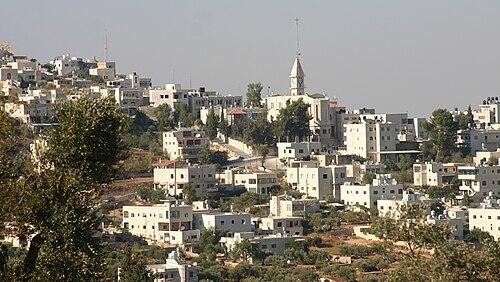
The crisis is equally evident in Taybeh, the last wholly Christian town in the Palestinian territories. Located north of Ramallah, the community is facing mounting economic and social pressures. The Khoury family, one of the town’s most prominent Christian families, has been forced to close its hotel, while its brewery operates at a loss. Residents report that roadblocks and acts of vandalism have restricted access to farmland and agricultural production, undermining local livelihoods.
As conditions deteriorate, many Christians are choosing to leave. Increasing numbers are reportedly departing through Jordan and seeking refugee status abroad, including in Portugal. For many families, emigration has become a difficult but increasingly rational response to dwindling economic opportunities and uncertainty about the future.
Yet despite these hardships, local Christian leaders continue to search for ways to sustain their communities. In Taybeh, Catholic parish priest Fr. Bashar Fawadleh has intensified fundraising efforts while expanding the parish’s social role. Through schools, medical clinics and community organizations, the Catholic parish has become the town’s largest employer, helping to preserve jobs and maintain essential services.
The Salesians in Bethlehem are playing a similar role. Beyond operating their bakery, they continue to provide vocational and technical education to young people, preparing future generations with practical skills that could prove vital should economic conditions improve. According to Fr. Jesudoss Arockiam, rector and director of the Salesian Institution in Bethlehem, the organization remains deeply involved in supporting vulnerable residents throughout the city despite growing financial pressures.
For many Christian institutions, however, goodwill alone is no longer sufficient. Donations have become increasingly important as local resources diminish. Church leaders and supporters argue that international aid directed toward schools, orphanages, clinics and community programs offers one of the few realistic ways to preserve a Christian presence in the Holy Land during the current crisis.
There are signs that support exists. Wiesław Kuceł, Poland’s chief representative in Ramallah, says thousands of Polish pilgrims are eager to return to Bethlehem once conditions allow. Yet significant obstacles remain. Travel warnings maintained by the European Union and individual member states have created insurance challenges for tour operators, making it difficult for the pilgrimage industry to restart at scale.
Meanwhile, religious orders continue their work on the ground. The Polish Sisters of St. Elizabeth of Hungary care for abandoned children at the House of Peace orphanage, while the Daughters of Charity of St. Vincent de Paul oversee La Crèche Orphanage. Both institutions face rising needs while depending heavily on donations and community support. Small acts of generosity often have outsized effects. Staff recall special moments such as pizzas donated to orphaned children through contributions from supporters in Australia, reminders that international solidarity still reaches Bethlehem even in difficult times.
Among Palestinian Christians, there is also a growing emphasis on the concept of Ṣumūd, a term describing steadfastness and the determination to remain on one’s land despite adversity. Many local residents regard this daily perseverance as a more meaningful expression of solidarity than headline-grabbing campaigns conducted abroad.
For those determined to remain, the spirit of Ṣumūd is embodied by ordinary families, clergy and community leaders who continue to serve their towns despite mounting pressure. Figures such as Cardinal Pierbattista Pizzaballa, the Latin Patriarch of Jerusalem, Archbishop Mor Anthimos Jack Yakoub, parish priests, religious sisters and international supporters are working to ensure that Christian life in the Holy Land does not disappear.
The future remains uncertain. Yet for communities in Jerusalem, Bethlehem and Taybeh, the challenge is no longer simply preserving historic churches or maintaining religious traditions. It is about ensuring that living Christian communities continue to exist in the very places where Christianity began.
As many local leaders argue, the Holy Land now requires more than expressions of concern. Alongside prayer and moral support, they say, practical assistance, renewed pilgrimage and sustained international engagement will be essential if one of the world’s oldest Christian populations is to survive for future generations.
- Raju Hasmukh with files from European Conservative
Related Images:


