







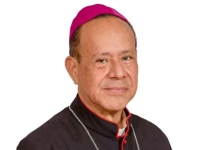


Cardinal Mario Zenari reflects on 17 years as nuncio in war‑torn Syria, calling Christians to be a bridge in an ecumenism of suffering and citizenship of blood.
Newsroom (17/02/2026 Gaudium Press ) The memories Cardinal Mario Zenari carries from Syria are not primarily of diplomatic receptions or official speeches, but of suffering faces: the children to whom he “dedicated his cardinal’s hat” and the “faces of those who have disappeared,” including bishops and a Jesuit confrere who vanished into the darkness of war. In his own words, the emotional baggage with which he leaves Damascus after 17 years as apostolic nuncio far outweighs his physical luggage; it is the weight of shared martyrdom, of a Church that has chosen to remain beside a “destroyed and humiliated” people.
For Zenari, Syria is no longer the vibrant country he encountered in 2009, when the celebrations for the 2,000th anniversary of Saint Paul’s birth were filling Damascus—the “city of the Apostle”—with prayer and hope. That land, once “an exemplary country for coexistence, a mosaic that is now beginning to crack,” has become the symbol of what he calls the world’s gravest humanitarian catastrophe since the Second World War: hundreds of thousands of victims, including 29,000 children; 13 million refugees, seven million internally displaced, and more than 100,000 missing persons. Out of this abyss, the cardinal draws a demanding Christian reading: only an “ecumenism of suffering” and a “citizenship of blood” can be the foundation for rebuilding Syria’s future, and the remaining Christians must accept the vocation “to be a glue,” guarantors and promoters of unity, a bridge between wounded communities.
From Country Parish Dream to “Field Nuncio”
Mario Zenari’s story begins far from the battle-scarred neighborhoods of Aleppo or Homs. Born on 5 January 1946 in the province of Verona, in northern Italy, he entered the diocesan seminary of the Scaliger Church, where he attended middle and high school, before completing studies in philosophy and theology. Ordained a priest on 5 July 1970, he dreamed of becoming a parish priest, “preferably in the countryside,” close to people and their daily struggles. That pastoral desire would never leave him, even as the Church entrusted him with the demanding path of diplomacy.
In 1976 he moved to Rome, entering the Pontifical Ecclesiastical Academy for diplomatic formation while also obtaining a degree in canon law at the Pontifical Gregorian University. Four years later, in 1980, he formally entered the diplomatic service of the Holy See. His postings took him across a Europe and a world in transition: Germany, where he witnessed the fall of the Berlin Wall; the International Atomic Energy Agency (IAEA); and the Organisation for Economic Co-operation and Development (OECD). These experiences revealed to him how profoundly history can change in a few years and how attentive the Church must be to the “signs of the times,” even in institutional and geopolitical arenas.
On 12 July 1999, Saint John Paul II appointed him apostolic nuncio to Ivory Coast and Niger, and in 2004 he was sent as nuncio to Sri Lanka. Each assignment had its own share of tensions and fragilities, but nothing would prepare him for the long Via Crucis of Syria. On 30 December 2008, Benedict XVI transferred him to Damascus as apostolic nuncio. Several years later, his successor, Pope Francis, would elevate him to the College of Cardinals at the consistory of 19 November 2016 and appoint him a member of the Dicastery for the Eastern Churches, recognizing not only his diplomatic experience but the evangelical testimony of a man who chose to remain in the midst of war.
Damascus: From Pauline Jubilee to Ruins
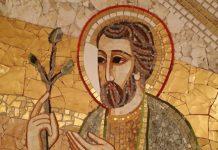
When Cardinal Tarcisio Bertone, then Secretary of State, asked him to go to Syria, Zenari did not hesitate. He recalls leaving the office, immediately requesting paper and an envelope, and writing that he would “gladly accept” the proposal of Pope Benedict XVI. The timing seemed providential: it was the eve of the Pauline Year, and he was looking forward to living in Damascus, the city of Saint Paul, during the commemoration of the Apostle to the Gentiles.
He arrived in early 2009, when celebrations for the 2,000th anniversary of Paul’s birth were already underway. The first impression was of a dynamic and religiously rich reality, “a wonderful experience” for a Church called to witness to the Gospel in a society that—despite existing limits—offered a certain model of coexistence among different communities. For a few years, Zenari lived the mission of a nuncio in a country that still seemed relatively stable, a crossroads of traditions where Christians could profess their faith and contribute to public life.
Then came the tragedy of war. Looking back, Zenari divides his 17 years into three distinct phases: the two years before the conflict; 14 years of bloody war; and the last period under the new leadership that followed Bashar al-Assad’s fall and the rise of the HTS militias led by Ahmed al-Sharaa. These three phases did not just transform Syria; they transformed the nuncio himself, who admits that he is no longer the same person after such an intense human and spiritual experience. What began as a jubilee time of memory and mission became a prolonged Passion, in which the Church in Syria—together with its shepherds—walked the Way of the Cross alongside the entire population.
“A Destroyed and Humiliated Syria”
If one asks Cardinal Zenari what most marked these years, his answer is immediate: “the suffering of the people, an enormous, enormous, enormous suffering.” He evokes the statistics that have become tragically familiar, but which for him are always linked to concrete faces and stories. Half a million victims, among them 29,000 children; 13 million refugees, more than half the population; seven million internally displaced persons, making Syria the country with the world’s highest number of internal displacements; six million refugees in neighboring countries; and more than 100,000 missing persons, some of whom he knew personally. These numbers are not just data points; they are, for Zenari, a cry that must be heard by the universal Church.
The war did not only destroy buildings; it shattered social cohesion. Syria, he recalls, had been a model country for coexistence, a delicate mosaic of ethnic and religious communities. Now that mosaic “is beginning to crumble,” its tiles scattered by years of violence, mistrust, and fear. Hospitals, schools, and factories have been devastated, leaving the population without essential services. He points to a simple but eloquent example: until a year ago, in some areas there was just one hour of electricity per day. In this context, he speaks of a “poverty bomb” that has exploded after the war, with more than 90% of the population now living below the poverty line. The material ruins mirror the moral and spiritual wounds of a nation that has seen its young people killed, displaced, or forced into exile.
Yet, amid this desolation, Zenari sees a sign of hope: the resilience of the Syrian people. He confesses that everyone, himself included, has been struck by their capacity to endure, to resist, to carry on despite everything. Families who have lost everything still find the strength to rebuild a home, to send their children to school, to gather in churches or mosques for prayer. This resilience, he suggests, is a grace that calls for solidarity and accompaniment, not abandonment. It is also a reminder to the international community that Syria cannot be reduced to a geopolitical file or a forgotten conflict.
The Nuncio’s Vocation: Empathy in the Midst of Ruins
In a world where diplomacy often appears technical and distant, Zenari offers a deeply pastoral vision of the nuncio’s role, especially in conflict zones. The formation at the Pontifical Ecclesiastical Academy is important, he acknowledges; there one learns rules and norms that are always valid. But in situations like Syria, a different quality is indispensable: the capacity to “empathise with history,” because clear, up-to-date, and detailed guidelines are not always available.
The nuncio must be ready to compromise, to live in the concrete reality before him, to look into the eyes of the person with whom he speaks. Zenari’s years in Damascus confirmed for him that the diplomatically correct answer is not always the evangelical one; often it is necessary to remain close to a suffering population, even at the cost of one’s own safety or comfort. Perhaps this is why he has been called a “field nuncio,” a “war nuncio”—titles that echo Pope Francis’ image of the Church as a “field hospital.”
To young Vatican diplomats, he offers a simple but demanding advice: “live with the people.” Beyond rules and instructions, they must cultivate an ability to share the situations they encounter, to be open, to adapt to reality with God’s help. The dream that led him to the seminary—the dream of being a parish priest in the countryside—reappears here as a key to understanding his mission: even as a nuncio, he wanted to remain a pastor, a shepherd among the people entrusted to him. His story suggests that Catholic diplomacy, at its best, is not the opposite of pastoral care but one of its most delicate and challenging expressions.
Scarlet as a Sign of Blood
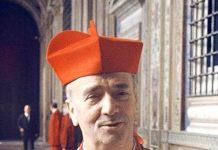
When Pope Francis unexpectedly created him a cardinal, Zenari interpreted the scarlet color of the biretta not as a personal honor but as a sign of blood. In his first interview after the appointment, he explicitly dedicated his cardinal’s hat to “the many innocent victims, to the Syrian children,” saying that he offered it to them. For him, accepting the red was embracing the reality that Syria had become “a nation of martyrs,” a description he roots in the long Christian history of that land.
He recalls the great Saint Ignatius of Antioch, the early Christian communities of the region, and the martyrs Cosmas and Damian. In Roman times, Syria was already a land sanctified by the blood of witnesses; this vocation has endured through the centuries. Zenari cites the martyrs of Damascus in 1860—some of whom were canonized just two years ago—and the martyrs of 22 June of the previous year, killed in a terrible terrorist attack during the Eucharistic celebration at the Greek Orthodox church of Mar Elias in Damascus. In each epoch, the Church has been purified and renewed by those who gave their lives rather than renounce Christ.
This “ecumenism of blood,” a phrase dear to Pope Francis as well, has strengthened bonds between Christian communities in Syria. Each Church—Eastern, Catholic, Orthodox—has had its martyrs in the recent conflict, some of whom Zenari knew personally. He sees in their shared witness a powerful source of unity that goes beyond doctrinal and canonical divisions. The blood of martyrs, he insists, speaks a language that all Christians can understand: fidelity, charity, forgiveness. It is a language that calls believers not only to remember the dead but to live a more coherent and courageous faith.
Citizenship of Blood: A New Foundation for Syria
Beyond the Christian sphere, Zenari proposes a broader concept: a “citizenship of blood” that unites all Syrians. While recognizing the importance of ecumenism of blood among Christians, he insists that there is a more fundamental sharing: all communities have suffered, all have shed blood. This shared suffering, he argues, must become the foundation of the new Syria.
He points to recent episodes to illustrate this citizenship of blood: the terrible images from the previous March on the Mediterranean coast, where the massacre of Alawites did not spare Christians; the barbaric killings last July in the Suwayda area, with the vast majority of victims belonging to the Druze community; and the ongoing clashes with Kurdish groups. In each case, he notes, Syrians of different backgrounds have been victims of the same violence, targeted not only for their identity but for living in a broken country.
If blood and suffering are the common denominator, Zenari urges, let Syrians try to live as brothers and sisters, as citizens of the same nation, standing on this blood as on a tragic but real foundation. He recognizes that, on the international level, there have been certain signs of political success: Interim President Ahmed al-Sharaa has been welcomed to the White House by President Donald Trump and invited to speak at the United Nations. Nevertheless, “internally there remain major problems between the groups.” Diplomatic recognition alone cannot heal fractures that run through families, villages, and regions. What is needed is a renewed social pact rooted in mutual recognition of wounds and in a shared commitment to prevent new bloodshed.
Christians as Glue and Bridge
Within this fragile and contested process of national reconstruction, Zenari sees for Christians a mission that is both modest and decisive. On the one hand, the numbers are stark: “we have lost 80% of Christians of all denominations,” including Catholics, Orthodox, and Protestants who have left the country. Communities that once flourished in Aleppo, Homs, or the Jazira region now find themselves drastically reduced; parishes that were full before the war now count only a small flock.
Yet for those who have remained, the cardinal discerns a specific vocation: to be “a glue,” “guarantors and promoters of this internal unity,” to “act as a bridge.” This mission cannot be improvised; it requires years of patient work, the kind of work that often goes unnoticed but is essential to social healing. Christians, he suggests, can help different communities to meet, to negotiate, to forgive, drawing on the Gospel’s call to reconciliation and their long tradition of living among diverse neighbors.
Zenari continues to see “a future for Christians in Syria.” Even if they become a small group, their role as a bridge remains essential. This perspective is deeply rooted in Catholic social teaching, which affirms that the Church’s presence is not measured by numbers alone but by its capacity to serve the common good, especially in contexts where dialogue seems impossible. The Syrian Church, wounded and diminished, is thus called to a missionary presence that is both contemplative and active: rooted in prayer and the sacraments, yet fully engaged in building a more just and fraternal society.
Faces of the Missing: Ecumenism of Suffering
Among the many images etched into his memory, two stand out for Zenari as he leaves his post: the suffering of children and the faces of the missing. Some have been missing for 13 years, he notes, and he knew them personally. Their families still hope for news and live in a kind of suspended grief, a wound that never closes. The cardinal remains in contact with some of these families, sharing their anguish and their faith.
He mentions in particular Christians such as the two metropolitans of Aleppo: Yohanna Ibrahim of the Syriac Orthodox Church and Boulos (Paul) Yaziji of the Greek Orthodox Church. They disappeared while trying to serve the Church and mediate in a context of violence, and their fate remains uncertain. Alongside them, he recalls the Italian Jesuit Father Paolo Dall’Oglio, whose commitment to dialogue and reconciliation had made him a prophetic figure both within and beyond Syria’s borders. These names are emblematic of the more than 100,000 missing persons whose families still await an answer.
For Zenari, this reality reveals another dimension of what he calls “ecumenism of suffering.” It is not only that Catholics, Orthodox, and Protestants share the same dangers and losses; it is that their wounds are interwoven in the same story of the Cross. The faces of missing bishops and priests stand beside those of countless lay people, Muslims and Christians, Druze and Kurds, all victims of the same spiral of violence. Together with citizenship of blood, this ecumenism of suffering becomes, in his view, one of the “foundations” on which to build a new Syria, a country that will never forget the price of division and hatred.
After Damascus: Rest, Prayer, and the Old Dream
At 80, having concluded an assignment extended beyond its normal term by Pope Francis, Cardinal Zenari acknowledges that he arrives from Syria “really tired,” not only because of his age but because of the intensity of these years. For the coming months, he plans to rest and to settle at the Casa Santa Marta, the Vatican residence where Pope Francis also lived and which now houses about 70 priests working in the Curia, along with some nuncios. There, he will have time to pray, reflect, and begin to “digest” the experience that Providence gave him.
Yet the old dream of the young priest from Verona has not faded. He confides that he would like to do some pastoral work “as an assistant and, why not, as a country parish priest.” The man who became known as a “war nuncio” in one of the most complex theatres of recent history still longs for the simplicity of a rural parish, where he can celebrate the sacraments, preach, and accompany ordinary people in their joys and sorrows. It is as if, after decades of high-level missions, he wishes to end his ministry where it all began: in direct contact with a concrete community, in the humble exercise of the priesthood.
This desire carries a message for the wider Church. It suggests that, even in the highest responsibilities, the heart of the priestly and episcopal vocation remains the same: to be close to God and close to the people. Zenari’s journey—from the diocesan seminary of Verona to the devastated neighborhoods of Damascus, from the diplomatic corps to the College of Cardinals—can thus be read as a long pilgrimage in which the Church, through one of her sons, has sought to remain close to a crucified nation. Now, as he entrusts the future of Syria to God and to those who will continue the work of peace, he returns to his original dream: to be, simply, a pastor who listens, consoles, and walks with his flock.
- Raju Hasmukh with files from Asianews.it