








At St. Michael’s Cathedral, Cardinal Frank Leo reflects on anointing, priesthood, and the call to holiness during Toronto’s Chrism Mass.
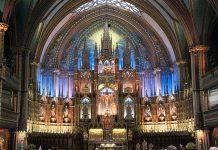
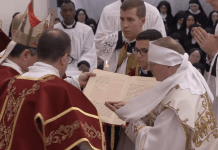
Newsroom (31/03/2026 Gaudium Press ) St. Michael’s Cathedral Basilica was filled with reverent anticipation as clergy, religious, and faithful gathered for the Chrism Mass — one of the most significant liturgies of Holy Week. Cardinal Frank Leo, Archbishop of Toronto, led the celebration, reflecting deeply on the sacred oils, the priesthood, and the universal call to holiness that ties the Church together.
“This Mass,” he began, “gathers the entire people of God for a day that is consecrated, religious, and great.” In this annual rite, three sacred oils are blessed and consecrated: the oil of catechumens, the oil of the sick, and the holy chrism. Each, he explained, symbolizes God’s active presence in the Church’s sacramental life — from baptism and confirmation to ordination and the anointing of the sick.
The Oils That Shape the Christian Journey
Cardinal Leo invited the assembly to contemplate the spiritual meaning of anointing. From the moment of baptism, he said, Christians are marked by holy oil as sons and daughters of God. Confirmation deepens this gift through the fragrance of chrism, empowering believers to “fight the good fight” and bear witness to the faith.
“What is our relationship to these oils? We are all first anointed at baptism, a truly wonderful day in our life when we entered God’s family. We do well to remind ourselves of that first call to faith and illumination through the oil of catechumens and holy chrism.
We were strengthened at confirmation with holy chrism, committed to fight the good fight, as St. Paul puts it, to witness to Christ and to spread his kingdom here on earth. Some of us here this morning received an anointing at ordination as well, which changed our life forever and conformed us to the image of Christ, the Good Shepherd. It was an unforgettable day.
We also use anointings for the consecration of a church, the blessing of an altar, and vessels for Mass. And then we hope to be anointed before we exit this valley of tears, as St. Teresa of Ávila puts it, and return back home. Some perhaps have experienced being present, or some of us have even anointed someone you love who was passing away. That final anointing is cherished and brings hope and consolation to an aching heart and to an aching family.
Particularly symbolic is the holy chrism, which is olive oil mixed with balsam and denotes not only strength, but also the aroma of Christ, which we are called to share. These oils are critical to our walk of faith and mark those significant milestones and sacraments, those events of our journey. We do well to recall their presence in our lives and to remember who we are and what our mission is, the mission we are called to accomplish.”
He reminded the priests present of their own anointing at ordination — a defining moment that conforms them to Christ, the Good Shepherd. “Holy chrism,” he explained, “symbolizes not only strength but the aroma of Christ, which we are called to share.” These oils, he said, trace the milestones of faith, providing continuity and grace across every season of life.
A Parable from the Road: The Oil of Our Lives
With a gentle smile, the Cardinal turned from theology to personal reflection. He recalled his father’s advice when he first learned to drive: “Check the oil every time you put in gas.” Years later, he noted, the lesson still applies — not just to engines but to the soul.
“Proper maintenance matters for cars — and even more for priests of Christ and Holy Mother Church,” he said. Spiritual depletion, like engine neglect, eventually halts movement. The renewal of ordination promises, he told the clergy, serves as that vital “check-up” for the heart.
The Demands and Grace of Priesthood
Turning to the challenges of ministry, Cardinal Leo spoke candidly about loneliness, long hours, misunderstandings, and the quiet sacrifices priests make in service to the flock. Yet, he emphasized, Christ’s presence endures through every trial. Citing the Rule of St. Benedict, he highlighted the authentic leadership that seeks the good of others above command or control.
He also referenced the Vatican II document on the priesthood PRESBYTERORUM ORDINIS paragraph 3 , reminding priests that their calling both separates and unites them — set apart for sacred service, yet deeply woven into the lives of the people. “They must live among humanity as good shepherds,” he said, “drawing all to one fold under Christ.”
A Community of Gratitude and Hope
Before the renewal of priestly promises, Cardinal Leo offered heartfelt thanks to jubilarians marking 25 to 60 years of ordination, praising their fidelity and steadfast love for God’s people. He prayed for the ill, elderly, and newly ordained; for immigrant priests serving far from home; and for a flourishing of vocations across the Archdiocese.
“Thank you, brothers,” he said, “for your kindness, fraternity, and sacramental love.” His words carried both gratitude and challenge — an invitation to deeper unity and renewed zeal in ministry.
A Final Call to Holiness
As the homily drew to a close, Cardinal Leo shared the testimony of Blessed Alfredo Ildefonso Schuster, the Benedictine monk and Archbishop of Milan who stood firm in faith even under fascism. Facing death, Bl. Schuster had said, “I have no other reminder than an invitation to holiness. People may doubt our preaching, but before holiness, they believe, kneel, and pray.”
With that, Cardinal Leo’s voice softened. “Dear fathers,” he concluded, “let us pursue holiness in life and ministry. Praise to you, Lord Jesus Christ. Amen.”
In the solemn stillness of St. Michael’s, his words lingered — a call not only to priests, but to all the faithful who share in the Church’s mission to bring Christ’s fragrance of hope into the world.
- Raju Hasmukh
Related Images: