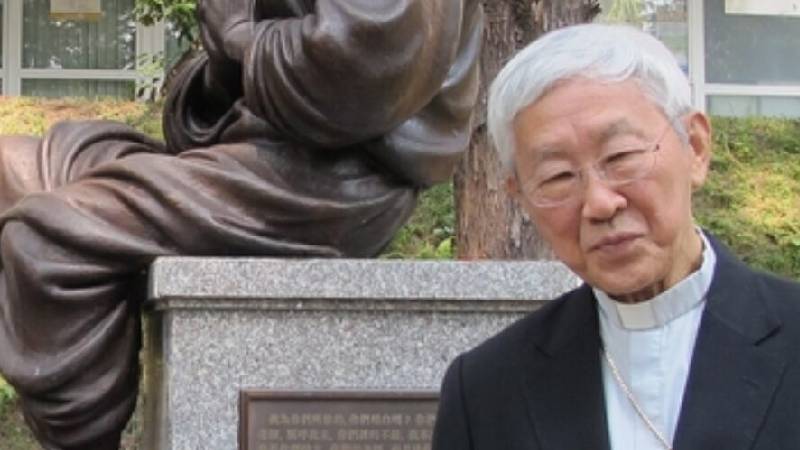
Cardinal Joseph Zen’s meditation links biblical parables to faithfulness, perseverance, family life, and the challenges facing believers.
Newsroom (29/07/2026 Gaudium Press ) Cardinal Joseph Zen, Bishop Emeritus of Hong Kong, has published a meditation on his personal blog titled “Parables of the Kingdom,” offering a reflection on Scripture readings associated with July 27, 2026, the Monday of the Seventeenth Week in Ordinary Time. Drawing together several biblical parables, Zen explores themes of divine calling, perseverance in faith, spiritual vigilance, and the importance of family life within the Christian journey.
At the center of the meditation are readings from the Book of the Prophet Jeremiah and the Gospel of Matthew. Zen begins with Jeremiah 13:1-11, often referred to as the “Parable of the Girdle.” In the passage, God compares His relationship with Israel to a close-fitting belt. According to Zen’s interpretation, the image illustrates God’s love and special relationship with His chosen people. However, when Israel turns to false gods and abandons its covenantal fidelity, the belt becomes rotten and useless, symbolizing spiritual decline and the loss of its intended purpose.
Zen then turns to the Gospel reading from Matthew 13:31-35, where Jesus compares the Kingdom of Heaven to a mustard seed and to yeast. Though both begin in small and seemingly insignificant ways, they ultimately produce remarkable growth and transformation. For Zen, these images demonstrate the hidden yet powerful action of divine grace, which unfolds gradually and often quietly in human lives.
He further connects these passages with the Gospel proclaimed on the previous Sunday, which included the parables of the treasure hidden in a field and the pearl of great price. In those parables, individuals willingly sell everything they possess in order to obtain something of incomparable value. Zen argues that these images collectively describe the stages of Christian discipleship.
According to the cardinal, the first step toward the Kingdom of Heaven is recognizing God’s call, discovering the “treasure,” and identifying the “pearl” worth giving one’s life to. Yet he stresses that such recognition is only the beginning. The believer must continue faithfully, allowing the mustard seed to grow and the yeast to work. Without perseverance, he warns, one risks becoming like the deteriorated belt in Jeremiah’s parable.
Zen highlights the Church as the place where believers encounter and follow Christ. He encourages Christians to remain grateful for their faith and to live as committed disciples through humility and courage. In his reflection, belonging to Christ involves more than an external relationship; it means entering into a deeper spiritual communion as members of His body.
A significant portion of the meditation focuses on obstacles that believers face in maintaining their commitment. Zen identifies what he describes as three persistent forces of temptation: personal desires and passions, worldly influences, and the devil. He emphasizes the reality of spiritual struggle and encourages prayer, including devotion to the Archangel Michael, whom Christians traditionally invoke for protection.
The cardinal also cautions against cultural influences that, in his view, can lead believers away from their faith commitments. At the same time, he places particular emphasis on personal responsibility, arguing that habitual wrongdoing, even in seemingly minor matters, can weaken a person’s moral resolve over time. He encourages regular self-examination and prayer as safeguards against such spiritual erosion.
Zen additionally addresses questions of morality and family life, presenting views rooted in traditional Catholic teaching. He argues that contemporary society faces a deeper crisis connected to a loss of meaning and purpose. Referencing reports from a gathering of cardinals held at the end of June, he notes that participants discussed the challenges of evangelization in the modern world and identified the loss of life’s meaning as a fundamental concern.
Within that context, Zen places strong emphasis on the family as a central institution in both society and the Church. He contends that protecting and strengthening family life should be a major pastoral priority. In his reflection, he describes family health and stability as essential to preserving human dignity, transmitting faith, and sustaining communities.
The cardinal concludes with a call to action directed toward the entire Catholic community, including bishops, priests, religious, married couples, and single parishioners. Rather than focusing solely on resisting social challenges, he encourages an active commitment to doing good, helping others, and strengthening families. Such positive engagement, he argues, enables believers to persevere in faith and charity.
Ending on a note of prayer, Zen invokes the intercession of saints and asks that young people be filled with confidence in what he describes as God’s plan of love. Through his meditation, the veteran church leader presents the parables of Scripture not simply as stories from the past, but as enduring guides for faithfulness, perseverance, and Christian mission in the contemporary world.
- Raju Hasmukh with files from INfocatholica