














Families of 2019 Sri Lanka Easter bombing victims protest alleged political moves to shield ex-spy chief, urging justice and transparency.
Newsroom (12/06/2026 Gaudium Press ) Nearly seven years after the devastating Easter Sunday bombings in Sri Lanka, calls for justice resurfaced with renewed urgency as relatives of victims and survivors took to the streets, accusing political actors of attempting to shield a former intelligence chief implicated in the attacks.
Around 200 demonstrators gathered on June 11 near St. Sebastian’s Church in Negombo—one of the primary sites targeted in the 2019 attacks—to protest what they described as a coordinated campaign to protect Suresh Sallay, who served as Director of Military Intelligence at the time of the bombings. The church, located about 35 kilometers from Colombo, became a symbolic focal point for demands for accountability and transparency.
Protesters carried placards urging authorities to “identify those corrupt individuals obstructing the investigations” and to “immediately stop interfering with lawful investigations.” Their message was clear: justice must not be compromised by political interests.
Growing Political Tensions Around Investigation
The protests come amid rising controversy over Sallay’s alleged role in the attacks. Public Security Minister Ananda Wijepala told parliament on June 10 that Sallay had “directed” the coordinated bombings. Sallay, however, has strong backing from political figures linked to the Sri Lanka Podujana Peramuna (SLPP), the party led by former President Gotabaya Rajapaksa.
Supporters of Sallay have launched multiple campaigns asserting his innocence, including street demonstrations, press conferences, and social media efforts calling for his release. This public defense contrasts sharply with the accusations leveled against him and has deepened concerns among victims’ families about political interference in the judicial process.
Sallay was arrested in February this year under the Prevention of Terrorism Act. On June 6, he began a hunger strike, while his legal counsel argued in court that he is suffering from depression, anxiety, and post-traumatic stress disorder.
A Tragedy That Reshaped Sri Lanka
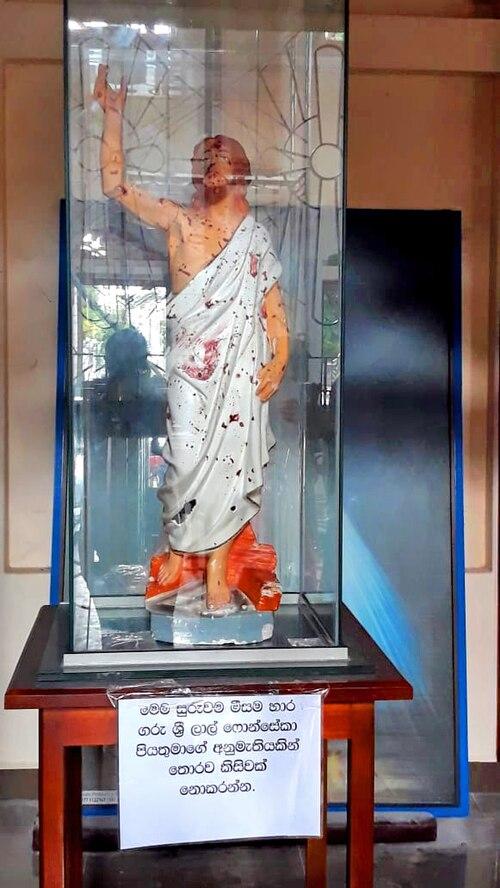
The Easter Sunday attacks on April 21, 2019, remain one of the deadliest acts of terrorism in Sri Lanka’s history. Suicide bombers struck three churches and three high-end hotels, killing 269 people and injuring approximately 500 others. Many of the victims were Catholics attending Easter services.
Although the attacks were attributed to a little-known Islamic extremist group, critics and analysts have long suggested that the tragedy may have been part of a broader political conspiracy designed to destabilize the country and influence electoral outcomes.
Later that year, the SLPP secured a sweeping electoral victory, bringing the Rajapaksa family back to power. Their rule lasted until 2022, when widespread protests over economic and political crises forced President Gotabaya Rajapaksa to resign and flee the country.
New Government, Renewed Promises
In 2024, a new left-leaning administration led by President Anura Kumara Dissanayake came to power, promising to accelerate investigations into the Easter attacks and hold those responsible accountable. For many victims’ families, this raised hopes that long-delayed justice might finally be delivered.
However, recent developments and the visible political backing for Sallay have reignited fears that powerful interests could still influence the outcome.
Voices of Survivors and Advocates
Survivors and relatives attending the Negombo protest expressed frustration over what they see as years of obstruction and manipulation. Sandamali Fernando, who survived the bombing at St. Sebastian’s Church, criticized those now rallying behind Sallay.
“They never stood for justice for the victims over the past seven years,” she said, adding that it is “a disgrace” for politicians expected to represent the public to side with suspected perpetrators.
Another protester, Sithuki Mary, accused political actors of attempting to derail the investigation by supporting a suspect who has allegedly failed to cooperate with authorities.
“These are the people who created false reports, twisted the law, and committed heinous crimes,” she said.
Broader Public Outcry
The sentiment was echoed in a parallel protest held in Colombo, where hundreds gathered to denounce what they described as attempts to cover up the truth behind the attacks. Legal experts also joined the chorus of concern.
Lawyer Amila Egoda Mahawatte, chairman of Lawyers for Truth and Justice, stated that the public supports the ongoing investigations and demands full disclosure of who orchestrated the bombings.
“Politicians have campaigned constantly to cover up this crime,” he said. “But the public now wants to know the truth.”
A Long Road to Accountability
As Sri Lanka continues to grapple with the legacy of the Easter Sunday attacks, the protests underscore a broader struggle between demands for justice and allegations of political interference. For victims’ families, the issue is deeply personal—and unresolved.
Their message remains unequivocal: accountability must prevail, regardless of political affiliations, and the truth behind one of the country’s darkest chapters must finally come to light.
- Raju Hasmukh with files from UCA News