






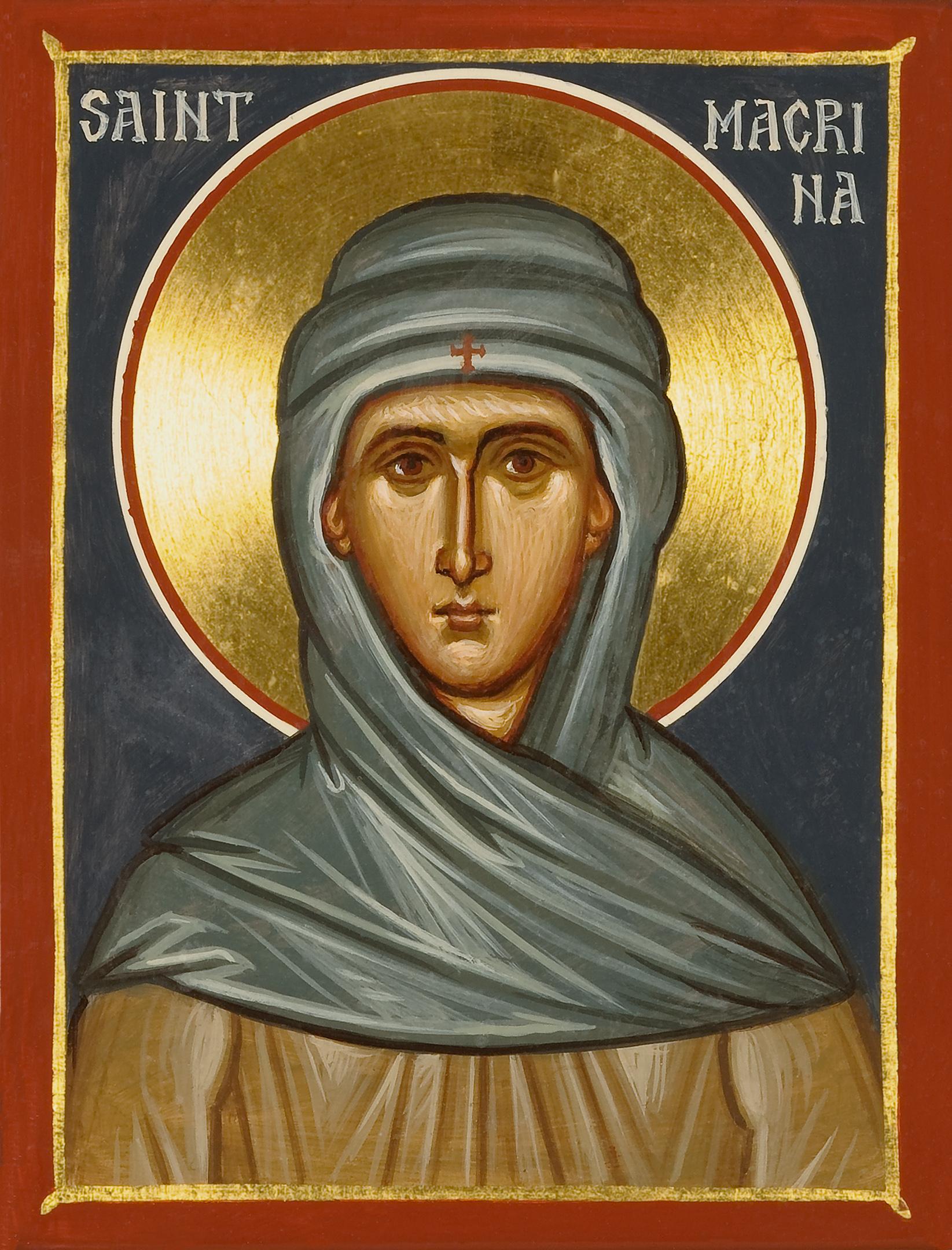
Saint Macrina the Younger was the daughter of Emmelia and Basil the Elder, and the sister of Basil, Bishop of Caesarea; Gregory, Bishop of Nyssa; and Peter, Bishop of Sebaste.
Newsroom (20/07/2026 Gaudium Press ) On July 19, the Church celebrates the memorial of Saint Macrina.
Born in Caesarea in the year 327, Macrina the Younger was the daughter of Emmelia and Basil the Elder, and the sister of Basil, Bishop of Caesarea; Gregory, Bishop of Nyssa; and Peter, Bishop of Sebaste.
Macrina was the eldest, the “little mother,” the protector, the tireless one, of whom Saint Basil says with emotion that she was a perfect educator.
Her mother drew inspiration from Sacred Scripture in raising her daughter, seeking in the Wisdom of Solomon guidance for her education, while the Psalter, the Psalms, served as the young girl’s tutor. She wanted her daughter, Saint Macrina, to become a woman of the Word of God.
At the age of twelve she became engaged, but when her fiancé died, she thought of nothing else but dedicating herself to the education of her brothers.
In 373, Emmelia, her mother, died. The “children,” already grown and formed, would come from time to time to visit the “Great Macrina,” as they had called her since their distant childhood.
As she was about to die in the year 379, Gregory found her lying on a board, clothed in her hair shirt. He took her gently and placed her on a bed, where the dying woman, recalling the past, began to thank God for all that He had graciously seen fit to grant her:
“Lord, You have taken away my fear of death. Through You, true life begins when this present life ends. We shall sleep for a little while, then You will raise us again at the sound of the trumpet.”
Then:
“You saved us from the curse and from sin, coming for our sins and our curse.”
Holding the iron crucifix, which contained a relic of the Savior’s Cross and which she had always carried with her, she died in peace and was buried near her father and mother [1].
What did this “Great Macrina” do? Apparently nothing. She raised three children who later became great saints. And what else? She educated them at home, magnificently, while praying and living a pious, ordinary life. Through this she became holy, acquired heroic virtue, and is now in Heaven. The Church canonized her [2].
[1] Cf. ROHRBACHER, René François. Lives of the Saints. Volume XIII. São Paulo: Editora das Américas, 1959, pp. 178-179.
[2] Plinio Corrêa de Oliveira.
The post “Saint Macrina the Younger, the one who raised her three saintly brothers” first appeared on Gaudium Press Español.
Related Images:


