






Violence following PSG’s victory sparks debate in France over youth, values, family roles, and respect for national and religious symbols.
Newsroom (01/06/2026 Gaudium Press ) What should have been a moment of national celebration quickly descended into disorder across France following Paris Saint-Germain’s victory in the Champions League. Scenes of jubilation were overshadowed by widespread unrest: cars were set ablaze, shops looted, and violent confrontations broke out between rioters and police. Authorities reported more than 400 arrests nationwide, including 283 in Paris alone. Several police officers were injured, and incidents involving mortar fire added to the gravity of the situation.
Among the most troubling aspects of the unrest was the visible presence of teenagers—some very young—captured in widely circulated images of the violence. While not all those involved were minors, the participation of youth has intensified public debate over deeper societal issues, extending beyond the events of a single night.
The unrest has prompted reflection on the state of public order, but also on broader questions: what values are being transmitted to younger generations, and what role institutions—particularly the family—play in shaping behavior?
Youth Participation Raises Deeper Questions
Observers note that the events highlight more than spontaneous celebration gone wrong. The involvement of adolescents in acts of vandalism and aggression suggests, for some commentators, a deeper erosion of cultural and moral frameworks.
For decades, the traditional role of the family as the cornerstone of education has been perceived as weakening. Parental authority, discipline, and the cultivation of responsibility are often viewed through a more critical lens in contemporary discourse. Meanwhile, notions such as effort, duty, and long-term accountability appear increasingly challenged by a culture centered on immediacy and individual desire.
Education, in its broadest sense, is not limited to academic instruction. It also encompasses the transmission of boundaries, respect for others, and the distinction between acceptable and unacceptable behavior. Critics argue that when these foundations are weakened, social tensions can manifest in visible and sometimes violent ways.
A Crisis of Values and Social Cohesion
The violence seen in Paris and other cities has been interpreted by some as symptomatic of a wider crisis—one affecting moral, educational, and even spiritual reference points. Incidents of looting and destruction, often driven by the pursuit of consumer goods, reflect what critics describe as a reversal of values, where material desire outweighs respect for property and communal life.
In this analysis, the problem extends beyond individual actions to include structural influences. Certain segments of the media are accused of normalizing vulgarity and glorifying transgression, while political discourse is sometimes faulted for focusing more on managing societal change than reinforcing core principles such as responsibility, authority, and respect for life.
Such perspectives suggest that the issue is not merely one of policing or security, but a broader challenge affecting the very conception of social order and shared identity.
The Joan of Arc Incident: Symbolism and Controversy
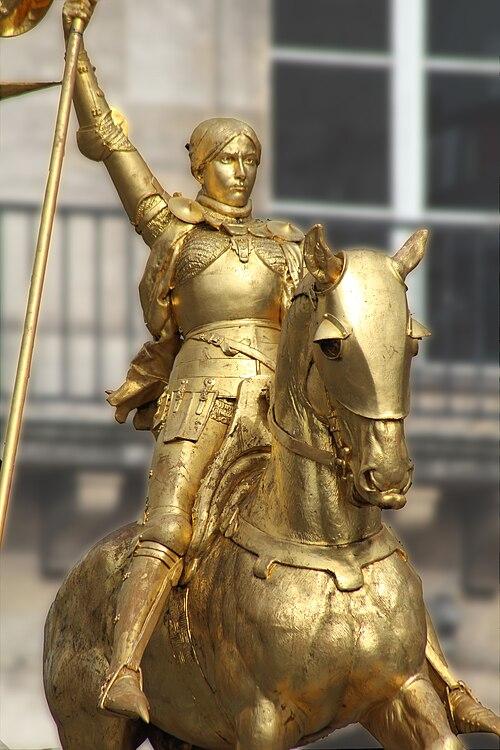
Amid the unrest, one incident in particular sparked widespread reaction. A photograph circulated online showing individuals climbing the equestrian statue of Saint Joan of Arc in Paris’s Place des Pyramides. The image was accompanied by a vulgar and provocative message.
The statue holds significant symbolic weight. Joan of Arc, canonized in 1920, is both a national heroine and a religious figure venerated by many. The monument serves as a site of annual commemoration and reflection, especially for Catholics who honor her sacrifice.
The timing added to the controversy. The incident occurred on May 30, the date of her liturgical feast in the Catholic calendar. For many observers, the juxtaposition of religious ceremonies taking place across the country with the perceived desecration of a monument heightened the sense of offense.
Critics argue that the act went beyond mere exuberance or vandalism, framing it instead as an expression of disregard for cultural and religious heritage. Others caution against overinterpreting the incident, suggesting it reflects broader patterns of disorder rather than targeted intent.
Religion, Heritage, and Public Sensitivity
The episode has reignited debate about the place of religious symbols in public life and the extent to which they are respected. Some voices argue that acts targeting Christian symbols often provoke less public reaction compared to similar incidents involving other religions, raising questions about consistency in societal responses.
The broader issue touches on the preservation of cultural memory and identity. Joan of Arc occupies a unique place in French history, bridging national and spiritual narratives. The treatment of her image, therefore, resonates beyond the immediate context of the unrest.
Beyond Security: Addressing Root Causes
While the majority of French youth remain uninvolved in such violence and aspire to stable, productive futures, the events following PSG’s victory underscore the limitations of purely security-focused responses.
Experts and commentators alike point to the need for a more comprehensive approach—one that addresses underlying social dynamics, including family stability, education, and the transmission of shared values. Without these foundations, they argue, efforts to maintain public order risk addressing symptoms rather than root causes.
A Moment of Reckoning
The events surrounding PSG’s victory have exposed tensions that extend far beyond a single night of celebration. They raise fundamental questions about authority, respect, and the cohesion of French society.
As France reflects on these incidents, the challenge will lie in balancing immediate responses to unrest with longer-term efforts to rebuild the frameworks that underpin social harmony. The debate is likely to continue, shaped by differing interpretations of responsibility, identity, and the values that define the nation’s future.
- Raju Hasmukh with files from Tribune Chretienne
Related Images:


