






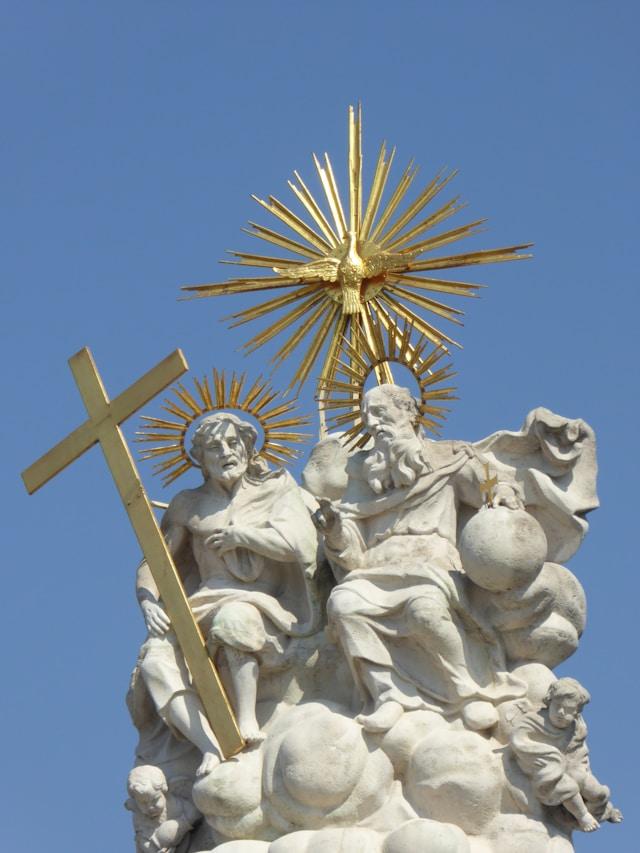
Pope Leo XIV visits Vallepietra’s Holy Trinity Shrine, praying at the famed mountain sanctuary steeped in faith, legend, and pilgrimage.
Newsroom (22/07/2026 Gaudium Press ) Pope Leo XIV made a surprise visit on Wednesday, 22 July 2026, to the Shrine of the Holy Trinity in Vallepietra, a centuries-old mountain sanctuary carved into the rock beneath Mount Autore in central Italy. The visit marks the latest in a series of private spiritual excursions undertaken by the pontiff during his summer stay at Castel Gandolfo.
According to the Holy See Press Office, the Pope travelled by car from Castel Gandolfo to the shrine, located on the border between the Lazio and Abruzzo regions. Once there, he spent time in prayer before the sanctuary’s revered fresco of the Holy Trinity and greeted members of the religious community as well as pilgrims gathered at the site.
Perched high in the Monti Simbruini at an elevation exceeding 1,800 metres, the shrine occupies a dramatic location that has long made it one of Italy’s most distinctive pilgrimage destinations. Built into a natural cave beneath towering rock formations, the sanctuary draws thousands of faithful each year, particularly around Pentecost and the Feast of St Anne on 26 July.
The Pope’s visit came just two days after another private spiritual journey, when he travelled to the Abbey of Montecassino on 20 July to pray for global peace.
A Sanctuary Shaped by Faith and Mystery
The origins of the Shrine of the Holy Trinity remain uncertain despite extensive historical research. Over centuries, various explanations have emerged, blending documented tradition with oral folklore passed down among generations of pilgrims.
The most well-known legend tells of a farmer plowing a field atop the mountain. According to the story, his oxen suddenly broke away and plunged toward a ravine some 300 metres below. Alarmed, the farmer rushed after them and found the animals kneeling before a mysterious image of the Trinity inside a small cave. The plow, tradition says, had become lodged among shrubs on a rocky ledge, leading to the discovery of the sacred painting.
Another tradition attributes the foundation of the shrine to St. Dominic of Sora, the 11th-century saint whose life is linked to numerous religious foundations across central Italy.
Beyond these accounts, many historians consider it more likely that the sanctuary originated with Eastern monks who sought refuge and solitude at the foot of Mount Autore. Supporters of this theory point to the artistic style of the shrine’s most treasured image, particularly the Greek-inspired blessing gesture displayed by the figures in the fresco.
The Ancient Fresco at the Heart of Pilgrimage
At the centre of the sanctuary’s spiritual life is a cave containing ancient religious artwork, including Gospel scenes and a Byzantine-style fresco depicting the Holy Trinity as three identical figures of Christ. The unusual representation has made the image one of the shrine’s defining features and a focal point for devotion.
Pilgrims entering the cave traditionally maintain silence as they pause in prayer before the fresco. A longstanding custom requires worshippers to leave through a door opposite the entrance while walking backwards, a gesture intended as a sign of reverence toward the sacred image and the “Three Persons” it represents.
The sanctuary also contains the Chapel of St. Anne, located at the foot of the staircase leading from the cave. Carved directly from living rock, the chapel emerged as devotion to St. Anne expanded during the 19th century. The small prayer space, opened in 1886, can accommodate only a handful of worshippers at a time, preserving its atmosphere of intimacy and contemplation.
A Pilgrimage Tradition That Endures
The Shrine of the Holy Trinity is renowned not only for its religious significance but also for the enduring tradition of pilgrimage on foot.
Each year, particularly during the days surrounding Pentecost, dozens of processions depart from communities throughout Ciociaria, the Sublacensis area, and neighbouring Abruzzo. Pilgrims travel through mountains and valleys carrying elaborately decorated banners representing their hometowns.
These banners are borne by dedicated standard-bearers who continue despite rain, summer heat, and physical exhaustion. Many pilgrims spend long hours walking and nights outdoors in order to reach the sanctuary, reflecting the depth of devotion associated with a pilgrimage regarded by many as the spiritual highlight of the year.
The gathering of vast numbers of faithful in such a remote mountain setting remains one of the most striking features of Vallepietra’s religious culture.
Religious Traditions Preserved Through Generations
Among the shrine’s distinctive customs is the performance of a sacred laude known as The Weeping of the Spinsters. Beginning in the early 18th century, the tradition took place on the forecourt of the sanctuary on the morning of the Feast of the Holy Trinity.
Women known as the “Zitelle,” dressed entirely in white and arriving from the nearby town of Vallepietra, performed the devotional chant, calling pilgrims to repentance and spiritual renewal. Though the tradition has evolved significantly over time, it continues to retain its powerful emotional and religious character.
The sanctuary grounds themselves have also developed over the decades. In the 1960s, an open-air altar protected by a large canopy in the shape of a Greek cross was constructed in front of the shrine, creating a space capable of accommodating large gatherings of pilgrims.
As visitor numbers increased, a museum was established to house the many ex-votos left by worshippers in gratitude for what they regarded as answered prayers and divine favors. The collection includes banners donated by pilgrimage groups, offering a visual record of the communities that have maintained the sanctuary’s traditions across generations.
Today, souvenir shops, religious articles, and local gastronomic specialties have become part of the economic life surrounding the shrine. Yet despite growing visitor activity, the Sanctuary of the Holy Trinity continues to be defined by its spiritual atmosphere, dramatic mountain setting, and centuries-old traditions of faith.
Pope Leo XIV’s visit has once again drawn attention to one of Italy’s most remarkable pilgrimage sites, where history, legend, and devotion continue to converge beneath the cliffs of Mount Autore.
- Raju Hasmukh with files from Vatican News
Related Images:


