






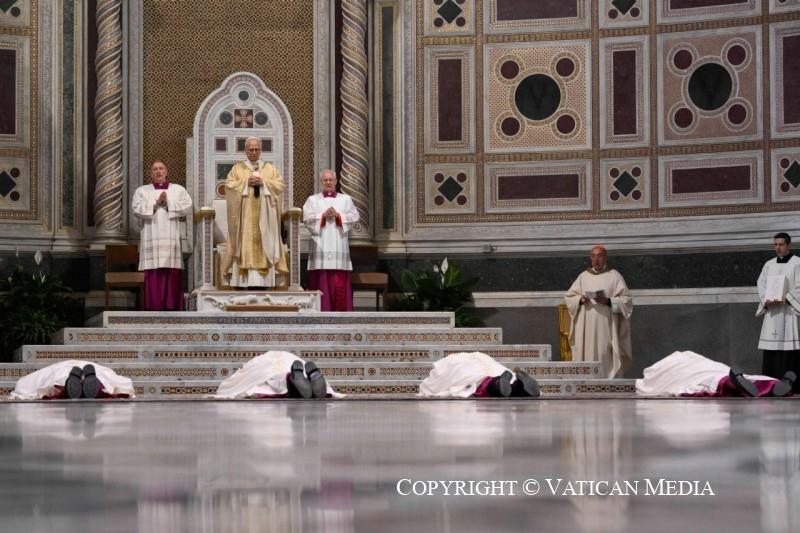
Pope Leo XIV emphasizes unity of tradition and progress in liturgy, urging fidelity, humility, and careful reform rooted in Vatican II.
Newsroom (27/05/2026 Gaudium Press ) In his weekly General Audience, Pope Leo XIV delivered a substantive reflection on the Second Vatican Council’s 1963 Constitution on the Sacred Liturgy, Sacrosanctum Concilium, underscoring the enduring challenge of balancing liturgical renewal with fidelity to tradition. Addressing pilgrims gathered for the audience, the Pope presented a theological and pastoral vision that highlights the Church as a living organism—one that must develop organically while remaining rooted in its doctrinal foundations.
Drawing on the teachings of the Venerable Pius XII, particularly the encyclical Mediator Dei, Pope Leo XIV recalled that the Church grows and adapts in response to changing circumstances, provided that its essential truth remains intact. “The Church is without question a living organism,” he reiterated, emphasizing that this vitality necessarily extends to the sacred liturgy, where development must always safeguard doctrinal integrity.
The Council’s Call for Liturgical Renewal
Pope Leo XIV situated the reforms of the Second Vatican Council within their historical and spiritual context. According to Sacrosanctum Concilium, the Council Fathers recognized “particularly cogent reasons” for renewing and promoting the liturgy. Their aim was multifaceted: to invigorate Christian life, adapt mutable elements of the Church to contemporary needs, foster unity among Christians, and attract all humanity into the Church.
This call for reform emerged from a broader movement within the Church, commonly referred to as the Liturgical Movement, which sought to deepen the faithful’s participation in the sacred rites. The Pope noted that this movement had already cultivated an awareness of the intrinsic connection between liturgical renewal and the vitality of the Church as a whole—a principle later articulated by Saint John Paul II.
“The Church not only acts but also expresses herself in the liturgy,” the Pope recalled, emphasizing that the Church “lives by the liturgy and draws from the liturgy the strength for her life.” In this sense, the liturgy is not merely a set of rituals but the very source and expression of Christian existence.
Tradition and Progress: A Dynamic Unity
At the heart of Pope Leo XIV’s reflection was a key principle articulated in Sacrosanctum Concilium: the need to preserve sound tradition while remaining open to legitimate progress. This balance, he explained, forms the core of the Council’s reform program.
Quoting Pope Benedict XVI, Leo XIV highlighted that tradition and progress are often mistakenly viewed as opposing forces. In reality, they are deeply interconnected. Tradition, he explained, is not static but “a living reality” that inherently contains the principle of development. Using a vivid metaphor, Benedict XVI described tradition as a river that carries its source within itself while moving forward toward its destination.
The Pope emphasized that this understanding allows for authentic development within the liturgy, distinguishing between immutable elements—those divinely instituted—and aspects subject to change. The latter, he noted, may not only be modified but sometimes must be, particularly when they no longer effectively express the inner nature of the liturgy or meet the needs of the faithful.
Careful Reform and Ecclesial Unity
While affirming the legitimacy of liturgical development, Pope Leo XIV stressed that any reform must be approached with rigorous care. The Council Fathers insisted that changes should occur only when genuinely required for the good of the Church and must be preceded by thorough theological, historical, and pastoral study.
Equally important is the principle that new forms should emerge organically from existing ones, ensuring continuity and coherence. This approach guards against fragmentation and confusion among the faithful, reinforcing the unity of the Church.
The Pope also reiterated a clear directive from the Council: no individual has the authority to alter liturgical texts or practices on their own initiative. Such actions risk undermining ecclesial communion, which liturgical reform is meant to strengthen.
A Call to Clergy: Fidelity and Humility
Addressing priests in particular, Pope Leo XIV issued a direct appeal to those responsible for celebrating the liturgy. He encouraged them to adhere faithfully to approved texts and regulations, emphasizing that this obedience is not merely procedural but rooted in spiritual disposition.
He called for an “inner attitude of openness and trust in God,” coupled with humility before divine greatness and a sincere commitment to unity within the Church. In this way, liturgical fidelity becomes a witness to the deeper realities it seeks to express.
Liturgy as a Force for Evangelization
The Pope also highlighted the historical role of the liturgy as a dynamic force for evangelization. Over centuries, the Church’s worship has been incarnated within diverse cultural forms, shaping and transforming them. This adaptability, he noted, has allowed the liturgy to remain a vital means of communicating the Gospel.
Today, Pope Leo XIV called for a renewal of this evangelizing energy—not through rupture with tradition, but through continuity with the Church’s authentic and living heritage. Such renewal, he said, must aim to introduce believers more deeply into the fullness of truth.
A Broader Appeal for Peace
Beyond his liturgical reflections, the Pope addressed ongoing global concerns, particularly the escalating conflict in Ukraine. Expressing deep concern over intensified violence and civilian suffering, he reaffirmed the Church’s commitment to peace.
“War does not solve problems; it exacerbates them,” he said, noting the destruction of homes, places of worship, and innocent lives. Entrusting all affected peoples to the care of the Virgin Mary, Queen of Peace, he called for solidarity and prayer amid the ongoing crisis.
Conclusion
Pope Leo XIV’s address offers a profound synthesis of continuity and renewal within the life of the Church. By reaffirming the principles of Sacrosanctum Concilium, he provides a roadmap for liturgical development that remains faithful to tradition while responsive to the needs of the present.
In doing so, he underscores a central conviction: that the vitality of the Church depends on a living tradition—one that grows, adapts, and ultimately leads the faithful more deeply into the mystery of Christ.

- Raju Hasmukh with files from Vatican News
Related Images:


