






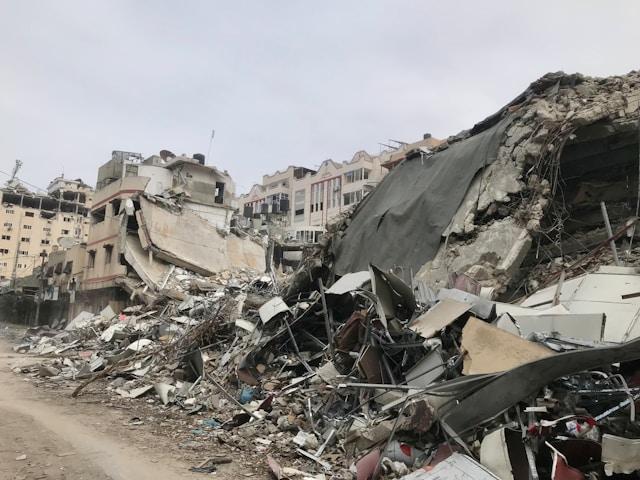
Pope Leo calls for humanitarian aid in Gaza, urges respect for human rights, and warns against AI-driven warfare lacking human accountability.
Newsroom (27/05/2026 Gaudium Press ) Speaking to journalists outside his residence in Castel Gandolfo on Tuesday evening, Pope Leo issued a renewed and urgent plea for international humanitarian assistance for Gaza, underscoring the need for universal respect for human rights.
Addressing reports concerning activists involved in the Gaza-bound Global Sumud Flotilla—some of whom were allegedly handcuffed and blindfolded—the Pope emphasized the fundamental dignity of every individual. “We must renew our appeal for the respect of the human rights” of all people, he stated firmly.
The pontiff painted a stark picture of the humanitarian situation, lamenting that civilians in Gaza continue to face severe deprivation. “Unfortunately, the people of Gaza are still not receiving humanitarian aid,” he said, noting that these conditions are fueling unrest and contributing to escalating tensions. The reported treatment of activists, he suggested, reflects broader complications arising from the crisis.
Pope Leo’s appeal extended beyond mere rhetoric. “I would also like to renew this not only as an invitation, but truly as an appeal,” he emphasized, calling on global authorities to step in with concrete support. He urged them to assist Gaza’s residents, facilitate humanitarian relief, and help initiate reconstruction efforts. “The people are truly suffering,” he added, stressing that their hardship remains ongoing and acute.
Warning Against Violence and Escalation
Responding to questions about violence faced by unarmed peace activists, the Pope offered a sobering reflection on the consequences of escalating conflict. He warned that such actions risk deepening divisions and perpetuating cycles of hostility.
“We are provoking more and more hatred,” he cautioned. “Violence does not help. From any side.” His remarks highlight a consistent Vatican stance advocating for de-escalation and diplomacy in global conflicts.
Instead of confrontation, Pope Leo urged a return to dialogue. He called for renewed negotiations as the only sustainable path forward, stressing that peaceful engagement must always be rooted in the respect of universal human rights. His message underscored the importance of diplomacy not only as a political tool but as a moral imperative.
Concerns Over Artificial Intelligence in Warfare
Beyond the immediate crisis in Gaza, the Pope turned attention to a broader and increasingly critical issue: the role of artificial intelligence in modern warfare.
Referencing recent conflicts, including those in Lebanon, he expressed concern that emerging technologies are distancing decision-makers from the human consequences of war. “War is being waged with AI, without thinking about human lives, which are truly victims of all this,” he observed.
The Pope warned that such developments risk eroding ethical accountability in conflict, as decisions become more automated and less connected to human judgment. This shift, he suggested, amplifies the danger of reducing human lives to mere data points within technological systems.
In response, Pope Leo reiterated his call for what he described as “disarmed artificial intelligence.” The phrase encapsulates his vision of technology that is guided by ethical principles and oriented toward peace rather than destruction.
Ongoing Dialogue with the Tech Sector
Highlighting efforts to address these challenges, the Pope revealed that the Vatican is actively engaging with leading technology firms. He specifically noted ongoing collaboration between the Dicastery for Promoting Integral Human Development and the AI company Anthropic.
“There was a kind of joint work,” he explained, describing a cooperative approach aimed at aligning technological development with ethical considerations. He added that both sides had extended invitations to continue and deepen this dialogue.
The partnership reflects a growing recognition within the Vatican that technological advances must be accompanied by moral reflection. By engaging directly with AI developers, the Church seeks to influence the ethical frameworks guiding innovation.
“I think it is very important: to continue the dialogue and truly seek a disarmed artificial intelligence,” the Pope concluded, emphasizing the urgency of shaping technology in ways that uphold human dignity.
A Dual Message of Compassion and Responsibility
Pope Leo’s remarks in Castel Gandolfo combined immediate humanitarian concerns with long-term ethical challenges. His appeal for Gaza underscores the urgency of alleviating human suffering, while his warnings about artificial intelligence highlight the evolving nature of global conflict.
Together, these messages reflect a broader vision that calls for compassion, accountability, and dialogue—both in responding to current crises and in shaping the future of technology and warfare.
- Raju Hasmukh with files from Vatican News
Related Images:


