






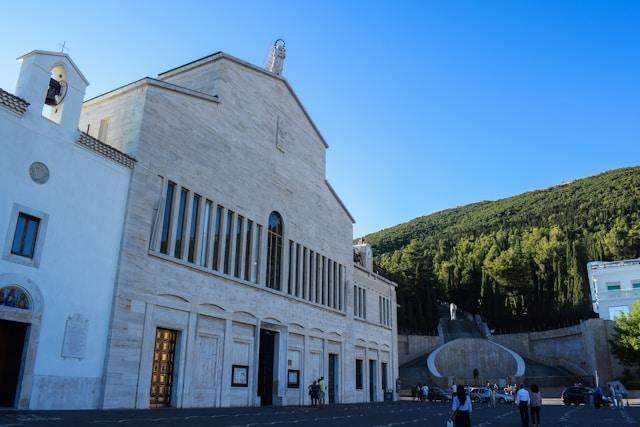
Pope Leo XIV establishes oversight commission for Casa Sollievo as unions protest crisis threatening hospital’s mission and future.
Newsroom (27/05/2026 Gaudium Press ) The Casa Sollievo della Sofferenza Foundation, one of Italy’s most prominent Catholic healthcare institutions, is entering a decisive phase of reform as Pope Leo XIV establishes a new Commission for Direction and Oversight aimed at revitalizing its governance and long-term sustainability.
Founded in San Giovanni Rotondo by Saint Pio of Pietrelcina—widely known as Padre Pio—the hospital has long stood as a symbol of faith-driven medical care. Now, amid mounting institutional tensions and labor unrest, the Vatican’s intervention underscores the urgency of adapting the historic institution to modern economic, technological, and administrative realities.
At the heart of the Pope’s decision is a chirograph that frames renewal not as an option but as a necessity. “The evolution of the times, of technology, of law, and of the economy,” the document states, places the Church’s healthcare mission under pressure to continuously evolve, particularly in sectors requiring strong investment and prudent management.
New Governance Structure with Broad Authority
The newly created Commission will operate with extensive authority across economic, patrimonial, and operational domains. It is tasked with analyzing the Foundation’s current condition, identifying reforms, and implementing measures to ensure greater efficiency, effectiveness, and sustainability.
The Commission will be chaired by Maximino Caballero Ledo, Prefect of the Secretariat for the Economy, and coordinated by Fabio Gasperini, Secretary of APSA (Administration of the Patrimony of the Apostolic See). Its membership includes senior Vatican and ecclesiastical figures: Archbishop Paolo Rudelli (Substitute of the Secretariat of State), Archbishop Giordano Piccinotti (President of APSA), and Archbishop Giorgio Ferretti of Foggia-Bovino.
Supporting their work is a Technical Committee composed of Dr. Benjamín Estévez de Cominges, Dr. Gino Gumirato, and Attorney Alessandro Ela Oyana.
Notably, the Commission will report directly to Pope Leo XIV on all major decisions. It must seek papal approval before implementing significant actions, especially those affecting the institution’s assets or statutory framework—a sign of the Vatican’s close oversight during this transitional period.
A Legacy Rooted in Faith and Care
Casa Sollievo della Sofferenza was founded with a mission that blends medical excellence with spiritual compassion. Padre Pio envisioned healthcare as an essential expression of Christian charity, insisting that caring for the body was inseparable from caring for the soul.
The hospital was established to provide “hospitality, assistance, and care to the sick, to pilgrims, and to their families,” drawing directly from the spirituality of its founder. Over decades, it has become a national reference point for both patients and pilgrims.
The Vatican’s intervention seeks to preserve that founding vision while ensuring the institution can meet contemporary challenges without compromising its identity.
Labor Unrest Reflects Deepening Institutional Strain
The papal decision comes at a time of acute internal tension. On May 2, unions representing hospital employees launched a hunger strike, describing it as an “act of extreme sacrifice” in response to what they characterize as a prolonged institutional crisis.
Organizations including Fp Cgil, Fp Cisl, Uil Fp, Fials, and Nursing Up have accused hospital management of failing to provide clarity on a recovery plan or guarantees regarding job security. According to union representatives, the situation threatens both employment and the quality of patient care.
The protest escalated following months of stalled negotiations, culminating in a public demonstration on May 4 through the streets of San Giovanni Rotondo. The march symbolized broader community concern about the future of an institution seen as both a healthcare cornerstone and a spiritual landmark.
Workers’ Demands Center on Mission and Stability
Union leaders have outlined four key demands: safeguarding high-quality patient care, protecting the rights and livelihoods of workers, preserving the hospital’s original mission, and enhancing its historical and social role within the region.
“We are not willing to watch a heritage of faith, solidarity and professionalism crumble,” union representatives declared, warning that the current crisis is unprecedented in the hospital’s nearly 70-year history.
They argue that recent management decisions risk undermining the very principles established by Padre Pio, transforming an institution rooted in compassion into one struggling under administrative uncertainty.
A Delicate Balance Between Reform and Identity
The Vatican’s move to establish the Commission can be seen as both a response to these tensions and a proactive effort to protect the hospital’s future. By combining high-level financial oversight with ecclesiastical leadership, the initiative aims to reconcile modern governance demands with the institution’s spiritual heritage.
Crucially, the Commission’s mandate emphasizes not only economic sustainability but also fidelity to mission—a dual objective that reflects the Church’s broader approach to healthcare.
The chirograph itself underscores this balance: renewal must occur without losing sight of the founding charism that made Casa Sollievo a beacon for the sick and vulnerable.
Looking Ahead: Renewal as an Act of Care
For Pope Leo XIV, the reform of Casa Sollievo della Sofferenza is framed not simply as administrative restructuring but as an extension of pastoral care. The creation of the Commission is described as a gesture rooted in the Church’s longstanding commitment to charitable works.
Decades after its founding, the hospital remains a place where patients seek not only treatment but also hope. The current phase of reform, while prompted by crisis, represents an effort to ensure that this legacy continues.
The coming months will be critical. As the Commission begins its work and unions continue to press their demands, the future of one of Italy’s most symbolic healthcare institutions hangs in the balance.
What remains clear is that both the Vatican and the workforce view Casa Sollievo della Sofferenza as more than a hospital—it is a living testament to a vision of care where faith and medicine meet.
– Raju Hasmukh with files from Vatican News
Related Images:


