






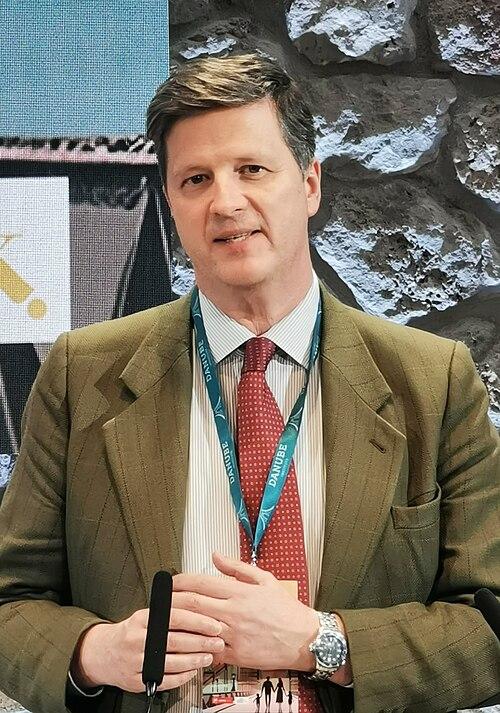
Archduke Eduard Habsburg reflects on his new guide to the Latin Mass, its impact on faith, and its growing appeal among young Catholics worldwide.
A Diplomat’s Guide to the Sacred: An Interview with Archduke Eduard Habsburg
Newsroom (04/06/2026 Gaudium Press ) The traditional Latin Mass has increasingly become both a focal point of devotion and a source of controversy within the Catholic Church. Drawing renewed interest—particularly among younger generations—it stands at the intersection of tradition, identity, and evolving religious life.
For Archduke Eduard Habsburg-Lothringen, Hungary’s former ambassador to the Holy See (2015–2025), the ancient liturgy is not merely a theological subject but a deeply personal journey. His new booklet, Discovering the Latin Mass: A Travel Guide for the Curious, seeks to demystify the experience for newcomers—especially those encountering it for the first time with confusion or hesitation.
In this in-depth interview conducted on May 27, Habsburg reflects on his motivations, his family’s transformation through the Vetus Ordo, and the broader cultural and spiritual currents shaping its resurgence.
“I Was Completely Confused”: The Origins of the Book
Q: Ambassador Habsburg, what do you hope Discovering the Latin Mass will achieve, and what inspired you to write it?
Habsburg:
“I wrote this little book because I did not have a small, handy explanatory brochure when I stumbled into my first traditional Latin Mass and was completely confused—indeed, even irritated. Nobody had prepared me for the differences in almost every aspect of the liturgy, so I was unable at first to appreciate it.”
That initial disorientation became the seed for the project. The booklet, he explains, is meant to prepare others so that they do not “immediately put up walls” when first exposed to the older form of the Roman Rite.
A Practical Guide for the Curious
Q: Who is the booklet aimed at, and can it be used during Mass itself?
Habsburg:
“This is not, in the first instance, a book for people who already attend the traditional Latin Mass. It is really for those who would like to try it… or who are simply curious.”
He also points out that it is geared toward skeptics—those “highly irritated by the Latin Mass” who may benefit from a clearer understanding.
Practicality is key. The guide includes illustrations and explanations of the different parts of the liturgy. “You can take this book to your first two or three Latin Masses,” he says, noting how visual cues—such as the position of the priest and altar server—help orient newcomers within the ritual.
A Family Transformed
Q: What impact has the traditional Latin Mass had on your life and your family?
Habsburg:
“The strongest impression the Latin Mass has made on me is what it has done for my children.”
While the Habsburg family had long been practicing Catholics, their discovery of the Latin Mass five or six years ago marked a turning point. “The entire family… began a completely new journey of deepening our faith.”
He describes a ripple effect: increased fidelity to daily prayer, regular recitation of the Rosary, and the practice of novenas. “The life of the liturgy spilled over into our daily life,” he says. “I have found something that truly gave our entire family a fresh start in the faith.”
An Ambassador Beyond Diplomacy
Q: Do you see your work as continuing a historic Habsburg role in preserving Catholic tradition?
Habsburg:
“I think it is far too early to predict what role the rediscovery of the traditional Latin Mass will play in Europe.”
While cautious about grand historical claims, he does describe himself as an “ambassador of the traditional Latin Mass” to those unfamiliar with it.
His transition from diplomat to author has given him newfound freedom. “As a diplomat, you have to be rather discreet… Now, I am far freer to speak about what is on my heart.”
A Youthful Revival Rooted in Silence
Q: Why do you think the Latin Mass is growing in popularity, especially among young people?
Habsburg:
“It is a phenomenon we see all over Europe and the world… especially in the United States, England, France, and also in Austria, Germany and Hungary.”
His explanation centers on contrast. The Latin Mass, he suggests, is “the absolute antithesis of today’s world.”
“It is very reverent and very quiet—very quiet. The silence is what most attracted me.”
For younger generations seeking meaning, he believes the rite offers both depth and permanence. “The ‘alienness’ of the Latin language, the reverence of the gestures… tells you that what is happening is very serious and very sacred.”
Why Passion Runs High
Q: Why does the Latin Mass generate such strong support and opposition?
Habsburg:
He identifies two key reasons for resistance. The first is generational: clergy formed in the mid-20th century were often taught that the old rite was “dusty and obsolete,” something to be left behind.
The second factor lies in perception. Some vocal advocates—particularly online—present the tradition in ways that appear “aggressive and loud,” reinforcing stereotypes of traditionalists as “harsh, judgmental and unwelcoming.”
“This creates an image… which I find very unfortunate,” he notes, adding that respectful and charitable dialogue is essential.
A ‘Creative Minority’ or Something More?
Q: Do you see Latin Mass attendees as a small ‘remnant’ preserving the faith?
Habsburg:
“It is true that the Latin Mass is attended by relatively small numbers… but compared with the number of practicing Catholics, those numbers look larger than one might think.”
He stops short of describing it as the sole bearer of future Catholic identity. Instead, he aligns with a broader vision:
“I believe that what Benedict XVI spoke about applies both to those who go to the traditional Latin Mass and to those who attend… reverent celebrations of today’s Mass.”
Together, he suggests, they form a growing, vibrant minority within the Church.
“If we look at the numbers… we can see that something is happening… I am full of hope for the Church.”
Bridging Understanding Through Simplicity
At its heart, Habsburg’s booklet is not a manifesto but a bridge—an accessible entry point into a form of worship that can initially feel foreign, even alienating.
By addressing confusion head-on and offering practical guidance, Discovering the Latin Mass aims to transform first impressions into opportunities for deeper encounter. For Habsburg, that journey—from irritation to reverence—is one worth sharing.
- Raju Hasmukh with files from NCRegister
Related Images:


