Cardinal Roche rejects a return to Summorum Pontificum, defends liturgical reform, recalls Pope Francis’ final words, and affirms Mass attendance.
Newsroom (30/07/2026 Gaudium Press ) Cardinal Arthur Roche, Prefect of the Dicastery for Divine Worship and the Discipline of the Sacraments, has firmly dismissed expectations that Pope Leo XIV will reverse the restrictions imposed on the celebration of the Extraordinary Form of the Roman Rite under Traditionis Custodes. Speaking in an interview with the British Catholic weekly The Tablet, the English cardinal stated unequivocally that the Pope “is not going back to Summorum Pontificum.”
The remarks represent one of the clearest indications yet from the Vatican’s chief liturgist that the current ecclesiastical framework governing the celebration of the pre-conciliar liturgy will remain in place. The interview, reported by Advaticanum, covered a wide range of subjects, including liturgical unity, the legacy of Pope Francis, the life of the universal Church, and contemporary moral challenges.
The Eucharist and the Question of Unity
For Cardinal Roche, the liturgical debate is inseparable from the Church’s understanding of unity. Reflecting on the role of the Eucharist, he described it as the privileged place where the faithful should gather together as one community.
“The Eucharist is the place where we should all be able to come together to celebrate Mass,” he said. “So if it starts to divide us, something is seriously wrong.”
Addressing concerns raised by some faithful attached to the ancient Roman liturgy, the cardinal questioned claims of persecution. He argued that where permissions have been granted under existing regulations, accusations of unfair treatment become difficult to sustain.
At the same time, Roche rejected the notion that the pre-Vatican II liturgy was inherently deficient. Instead, he framed the liturgical reforms that followed the Second Vatican Council as part of the Church’s broader missionary renewal. According to the cardinal, the Council sought to prepare Catholics for a more active evangelical mission, with the liturgy serving as a primary source of spiritual nourishment.
He specifically highlighted the expanded use of Sacred Scripture in the post-conciliar liturgy, noting that the faithful now receive a far richer exposure to biblical texts through Mass and the sacraments than was previously available.
Notably, Roche did not address Pope Leo’s recent request to the bishops of France regarding liturgical matters.
Active Participation and the Baptismal Priesthood
A central theme of the cardinal’s reflections was the role of the baptized faithful in the liturgical life of the Church.
Drawing a distinction between understandings of liturgical participation before and after the Council, Roche emphasized what he described as the post-conciliar recovery of the baptismal priesthood. While acknowledging that the ordained priest presides over the Eucharistic celebration, he stressed that the entire baptized community participates in the offering of worship.
“When Mass is celebrated, because the baptized people are a priestly people, they also celebrate with the priest,” he explained.
This perspective, he suggested, lies at the heart of the liturgical renewal promoted by the Second Vatican Council and remains essential to understanding contemporary Catholic worship.
Remembering Pope Francis’ Final Day
One of the most poignant moments of the interview came when Cardinal Roche recounted his memories of Pope Francis on the day before the late pontiff’s death.
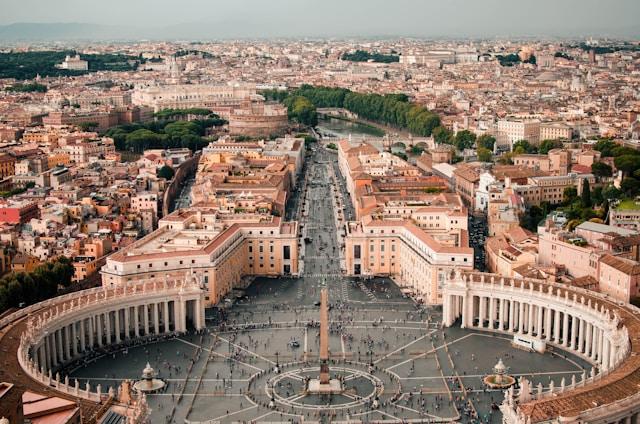
According to the cardinal, Francis expressed a desire to be taken to St. Peter’s Square despite his fragile condition. Doctors agreed, and he was transported in the popemobile to the end of Via della Conciliazione, allowing him one final encounter with the faithful.
Upon his return, Roche recalled, Francis was laid down and spoke words that would become his last.
“Thank you for bringing me to the people.”
The simple statement, as recounted by the cardinal, encapsulated a defining characteristic of Francis’ pontificate: his pastoral closeness to ordinary Catholics and his desire to remain near the people entrusted to his care.
A Living Church Beyond the Vatican
Cardinal Roche also challenged perceptions of the Vatican as detached from the realities facing Catholics around the world.
Reflecting on a recent consistory of cardinals, he described listening directly to churchmen serving in regions scarred by armed conflict. Their testimony, he said, offered a vivid and sobering account of war’s human cost.
In his own work, Roche regularly receives bishops during their ad limina visits and studies reports concerning sacramental life and liturgical celebrations in local churches. Although frequently invited to conferences and public events, he explained that he generally declines such engagements in order to concentrate on his responsibilities within the Roman Curia.
The cardinal spoke particularly warmly of bishops serving in poorer nations and areas of persecution. Their enthusiasm and vitality, he said, reveal the enduring strength of the Catholic faith.
“There is an energy with which they and their people live the faith,” Roche observed. “They arrive with a sparkle in their eyes, full of laughter, full of life.”
For him, these encounters serve as a reminder that the Church remains vibrant and alive even amid hardship and suffering.
The Meaning of Being a Practicing Catholic
Asked what constitutes a practicing Catholic, Cardinal Roche offered an answer rooted in sacramental life.
“I would say without a doubt that a practicing Catholic is someone who goes to Mass,” he stated.
While acknowledging that personal circumstances can sometimes complicate regular participation, he insisted that Catholic identity cannot be reduced to a purely theoretical or cultural affiliation.
“Being Catholic is about committing to Christ,” he said. “And commitment isn’t theoretical; it’s very real.”
Roche warned that when the discipline of commitment weakens, believers risk gradually drifting away from the substance of Catholic life and discipleship.
Defending Human Life in a Disposable Culture
The cardinal also addressed several moral questions confronting contemporary society, particularly those connected to the sanctity of human life.
Referring to St. Paul VI’s encyclical Humanae Vitae, Roche noted that while the document generated significant controversy following its publication in the 1960s, its teachings have remained central to Catholic moral doctrine. He argued that society has experienced a gradual erosion of respect for human life, describing a trajectory that has moved from widespread acceptance of contraception to abortion and an increasingly utilitarian view of the human person.
“And now we have slipped down the slippery slope from those days of the pill to abortion, without a second thought,” he said.
Turning to euthanasia, Roche drew upon his experiences as a hospital chaplain. He maintained that modern palliative care has advanced significantly and questioned claims that unbearable physical suffering inevitably necessitates assisted death.
True compassion, he argued, consists not in hastening death but in accompanying the sick with dignity while preserving their humanity for as long as possible.
“To be compassionate, truly compassionate, is to do everything possible to preserve the humanity of a situation for as long as possible.”
A Vision Centered on Unity, Participation, and Fidelity
Throughout the interview, Cardinal Roche presented a consistent vision of Catholic life rooted in ecclesial unity, active participation in the liturgy, fidelity to moral teaching, and a concrete commitment to Christ expressed through sacramental practice. His remarks leave little doubt that he sees the liturgical reforms of the Second Vatican Council as an enduring part of the Church’s mission and that he does not anticipate a return to the framework established by Summorum Pontificum.
At the same time, his reflections on Pope Francis, the vitality of local churches across the globe, and the Church’s witness to the dignity of human life reveal a broader pastoral concern: that Catholics remain united around the Eucharist and firmly anchored in the faith amid the challenges of the modern world.
- Raju Hasmukh with files from INfocatholica