






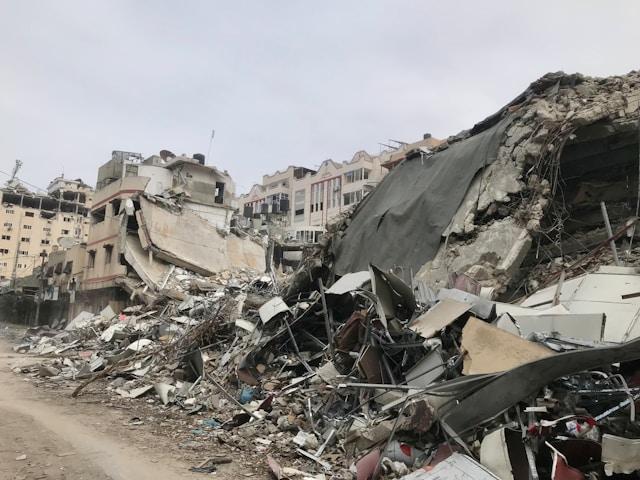
Escalating tensions in the West Bank as settlement expansion, land seizures, mosque attacks, and Bedouin displacement intensify.
Newsroom (23/06/2026 Gaudium Press ) A series of recent developments across the West Bank paints a stark picture of deepening tensions, marked by renewed settlement expansion, contested land seizures, attacks on religious sites, and mounting pressure on vulnerable Palestinian communities.
At the center of the latest controversy is Hebron, where Israel’s Higher Planning Council approved the construction of a new dormitory for settlers studying at the Shavei Hevron Yeshiva. The project, reported by the Israeli anti-occupation group Peace Now, involves adding two floors to an existing commercial structure on Al-Shalalah Street—located in the heart of Hebron’s historic market district, the Kasbah.
The move comes just one week after the same council decided to assume unilateral authority over planning and construction in the city. That shift has drawn sharp criticism from Peace Now, which described the development as emblematic of a broader policy trajectory. In a statement, the organization warned that “the government is racing toward annexation and apartheid,” highlighting Hebron as a particularly stark example of dual systems governing Israelis and Palestinians.
According to the group, the transformation of the Kasbah reflects a deepening divide, where Israeli settlers enjoy expanded rights while Palestinians face increasing restrictions, including closures of entire streets. Peace Now characterized the decision to strip Palestinians of planning authority as a “microcosm” of a wider annexation process, warning it could further entrench conflict and instability.
The building at the center of the dispute—known as the Valero House—has a complex history. Originally owned by a Jewish family in the early 20th century, it was transferred to Jordanian authorities in 1948 and later leased to Palestinian residents. Following Israel’s control of Hebron after 1967, the property entered Israeli administrative management. In September 2025, settlers moved into the building after it was assigned to the Shavei Hevron Yeshiva, in what has been framed as a form of restitution for pre-1948 ownership.
Hebron remains a focal point of friction. It is home to approximately 250,000 Palestinians and around 1,000 Israeli settlers concentrated in the Old City. The city’s governance has been governed in part by the 1997 Hebron Protocol, under which responsibilities were divided between Israel and the Palestinian Authority. However, the recent decision by Israeli authorities to take over planning responsibilities for settler areas and certain religious sites introduces a new layer of separation. Planning for Israelis will now fall under Israeli civil administration, while Palestinian areas remain under municipal jurisdiction.
Beyond Hebron, disputes over land and property continue to unfold. In East Jerusalem’s Silwan neighborhood, Israeli authorities’ June 15 decision to seize land adjacent to the Orthodox Monastery of Saint Onuphrius has provoked strong reactions. The Orthodox Patriarchate of Jerusalem condemned the move as “unlawful and illegitimate,” emphasizing the land’s documented ownership and its historical, archaeological, and religious significance.
The World Council of Churches (WCC) has also voiced concern. Its General Secretary, Rev. Prof. Dr. Jerry Pillay, described the action as a “serious violation” of church rights and raised broader questions about respect for property, religious institutions, and legal norms. The WCC reiterated its solidarity with the Patriarchate and called for protection of Christian heritage sites across Jerusalem and the wider region.
Religious tensions have also been exacerbated by attacks on Muslim sites. Jewish settlers reportedly set fire to two mosques in the West Bank—the Grand Mosque in Jiljiliya and the Al-Farouq Mosque in Mazari Al-Nubani—while defacing the former with Hebrew graffiti. The incidents triggered condemnation from several Muslim-majority countries, including Saudi Arabia, the United Arab Emirates, Qatar, Jordan, Egypt, Turkey, Indonesia, and Pakistan.
These acts are seen as part of a broader escalation in settler violence since the outbreak of the Gaza war in October 2023. Critics argue that such incidents have occurred with increasing frequency and impunity, contributing to a climate of insecurity across the Occupied Territories.
Particularly vulnerable are Palestinian Bedouin and herding communities. According to the Independent Commission for Human Rights (ICHR), settlement expansion and military restrictions have led to the displacement of 50 such communities since late 2023. A joint survey conducted with the Palestinian Central Bureau of Statistics documented at least 300 violations against these populations in April 2025 alone.
The findings underscore a pattern of land expropriation and restricted access to basic resources, placing significant strain on already marginalized groups. ICHR Director-General Ammar Dweik called for a comprehensive national response centered on development and human rights, emphasizing the need for legal protection, increased investment, and improved access to essential services.
Taken together, these developments highlight a rapidly evolving and increasingly volatile situation in the West Bank. As settlement expansion continues, land disputes intensify, and communal tensions rise, observers warn of deepening fragmentation and an uncertain path forward.
- Raju Hasmukh with files from Asianews.it
Related Images:


