Pope Leo XIV encourages Corpus Christi processions, highlights Eucharistic devotion, and offers prayers for priests and religious in the Middle East.
Newsroom (03/06/2026 Gaudium Press ) During his Wednesday General Audience, Pope Leo XIV called on Catholics worldwide to preserve and strengthen the public witness of faith expressed through Corpus Christi processions, while also extending heartfelt solidarity to clergy and religious serving in the Middle East.
The Pope’s remarks came as the Church prepares to celebrate the Solemnity of the Most Holy Body and Blood of Christ, commonly known as Corpus Christi—one of the most significant feasts in the Catholic liturgical calendar, dedicated to the Eucharist.
A Call to Renew Public Witness of Faith
Highlighting the spiritual and communal importance of Eucharistic devotion, Pope Leo XIV underscored the enduring value of Corpus Christi processions held in streets and public spaces across the globe.
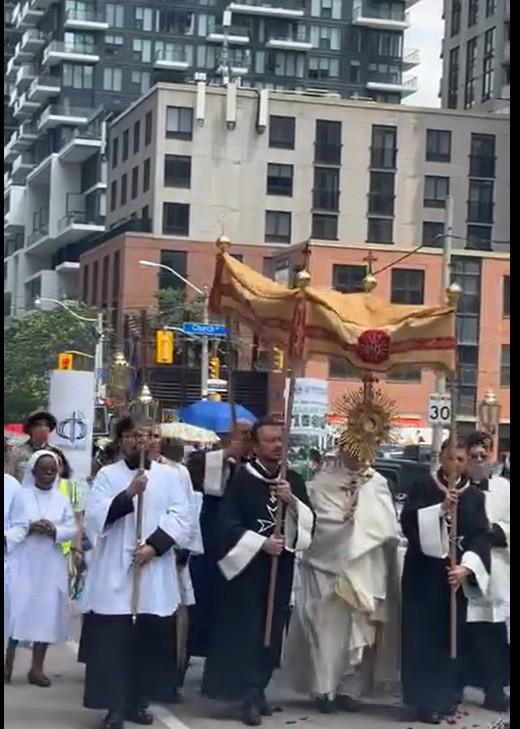
“An expression of popular Eucharistic devotion is found in the processions with the Blessed Sacrament,” the Pope said, noting their presence in “many towns and countries.” He encouraged the faithful “to keep alive this beautiful manifestation of public witness to the faith.”
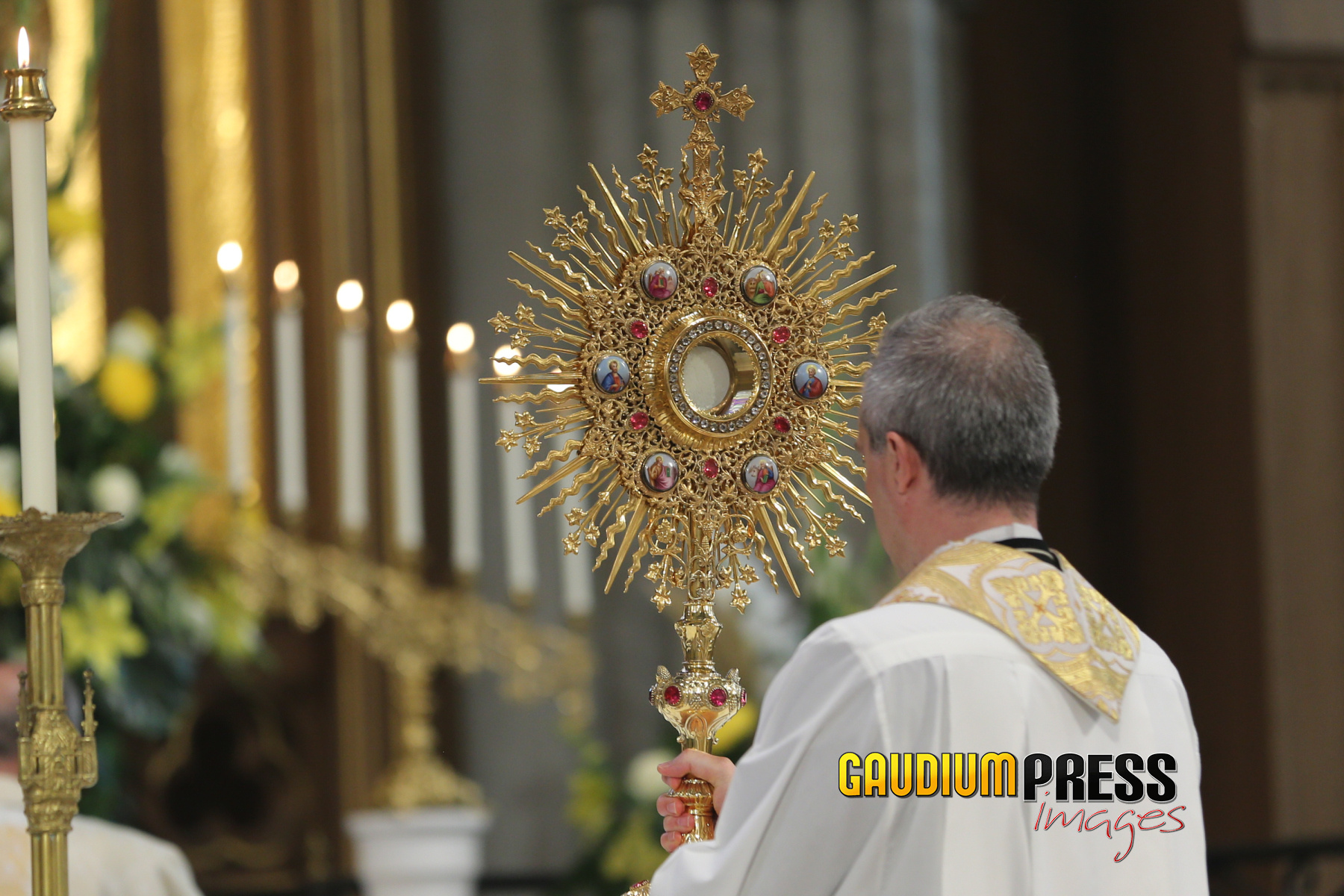
The tradition, deeply rooted in Catholic liturgy and piety, serves as a visible proclamation of belief in Christ’s real presence in the Eucharist. During such processions, the Blessed Sacrament—displayed in a monstrance—is carried through city streets, accompanied by prayer, hymns, and incense, symbolizing the Church’s mission to bring Christ into the world.
Reflecting on the Eucharist’s theological significance, the Pope added, “In the Eucharist we contemplate Jesus, bread broken and given for each one of us,” inviting believers to rediscover the sacrament as both a personal and communal encounter with Christ.
A Gesture of Solidarity with the Middle East
In his greetings, Pope Leo XIV turned attention to the often challenging circumstances faced by priests and religious in the Middle East. Offering spiritual closeness, he assured them of his continued prayer and support.
“I accompany with my prayer and my blessing your ministry and the hopes of your respective countries,” he said, acknowledging their perseverance amid hardship.
The Pope also addressed several religious congregations— including the Daughters of the Sacred Heart of Jesus, members of the Montfortian Family, and the Sisters of Our Lady of the Cenacle—encouraging them to embody hope.
He urged them to be “a sign of hope for all those who thirst for God, for His truth, and for His peace,” reinforcing the Church’s mission of witness and service.
The Meaning and Origins of Corpus Christi
Corpus Christi celebrates the Catholic belief in the real presence of Jesus Christ—body, blood, soul, and divinity—in the Eucharist. While Holy Thursday commemorates the institution of the Eucharist during the Last Supper, the Corpus Christi feast provides a distinct and joyful opportunity for public adoration outside the solemn context of Holy Week.
Central to the celebration is the affirmation of transubstantiation, the doctrine that the bread and wine at Mass become the true body and blood of Christ. Each Eucharistic celebration re-presents Christ’s sacrifice on Calvary, offered for the forgiveness of sins, as articulated in Catholic teaching.
The feast traces its origins to the 13th century, inspired by the mystical visions of St. Juliana of Liège. She envisioned a moon with a dark spot, symbolizing the absence of a feast dedicated specifically to the Eucharist. Her advocacy, supported by Church leaders including Archdeacon Jacques Pantaléon—later Pope Urban IV—led to the first local celebration in Liège in 1246.
The observance gained universal recognition in 1264 when Pope Urban IV instituted Corpus Christi across the Church through the papal bull Transiturus de hoc mundo. This decision followed the Miracle of Bolsena in 1263, in which a priest witnessing blood seep from a consecrated host found his doubts about the Real Presence dramatically dispelled. The miracle strengthened Eucharistic devotion and remains a focal point for pilgrims today.
Living the Eucharistic Mission
The practice of Eucharistic processions on Corpus Christi carries deep symbolic meaning. By carrying the Blessed Sacrament through public spaces, the Church visibly fulfills its mission to proclaim Christ to all nations.
The feast also stands in contrast to Holy Thursday’s more somber tone. Celebrated after Easter, Corpus Christi emphasizes joy and thanksgiving for the gift of the Eucharist, both within the Mass and through acts of communal devotion.
Pope Leo XIV’s appeal thus resonates as both a pastoral encouragement and a theological reminder: that the Eucharist is not only to be celebrated but also witnessed—publicly, joyfully, and with renewed conviction in a world still in need of hope and peace.
- Raju Hasmukh with files from Vatican News
Related Images: