






Bengaluru nuns caring for children with HIV/AIDS continue a 25-year mission of compassion, education and social reintegration.
Newsroom (17/07/2026 Gaudium Press ) For the 22 children who remained at the Infant Jesus Children’s Home during this year’s summer vacation, the holidays seemed destined to be spent entirely within the walls of the care center they call home.
Unlike many of their peers, they had nowhere else to go.
The government-approved home on the outskirts of Bengaluru, operated by the Dinasevanasabha (Servants of the Poor) congregation, provides shelter and care for children living with HIV/AIDS. While most residents left during the vacation period, 22 children stayed behind because they had no parents, homes or relatives able to care for them.
Sister Veronica, the center’s 72-year-old director and superior, said previous holiday trips for the children had been funded by sponsors. This year, however, no such support initially materialized.
“These children joined us as infants and grew up with us as our children. Their pain hurts us too,” she said during a visit by Global Sisters Report in May.
One seventh-grade girl, who arrived at the center as a two-year-old, appealed directly for help, telling a visiting reporter that the children had no parents, homes or relatives with whom they could spend their holidays. She refers to Sister Veronica as “amma,” meaning mother, and expressed confidence that the nun would find a solution.
That confidence was rewarded. In what Sister Veronica described as one of many “miracles,” local supporters eventually pooled resources at the last moment, enabling the children to travel to the coastal city of Mangaluru, around 220 miles west of Bengaluru. Accompanied by three nuns, they spent two days enjoying the beaches and a break from their routine.
“We experience such miracles every day as the help comes at the last moment,” Sister Veronica said.
A Sanctuary for Society’s Most Vulnerable
The Infant Jesus Children’s Home was established in 2001 by Mother Willigard Dinasevika, a German-born member of the congregation and its former superior general. According to Sister Veronica, the home emerged at a time when few institutions were willing to care for children living with HIV/AIDS.
“Mother Willigard came to Bengaluru and started this home as no one was willing to shelter HIV children then,” Sister Veronica said.
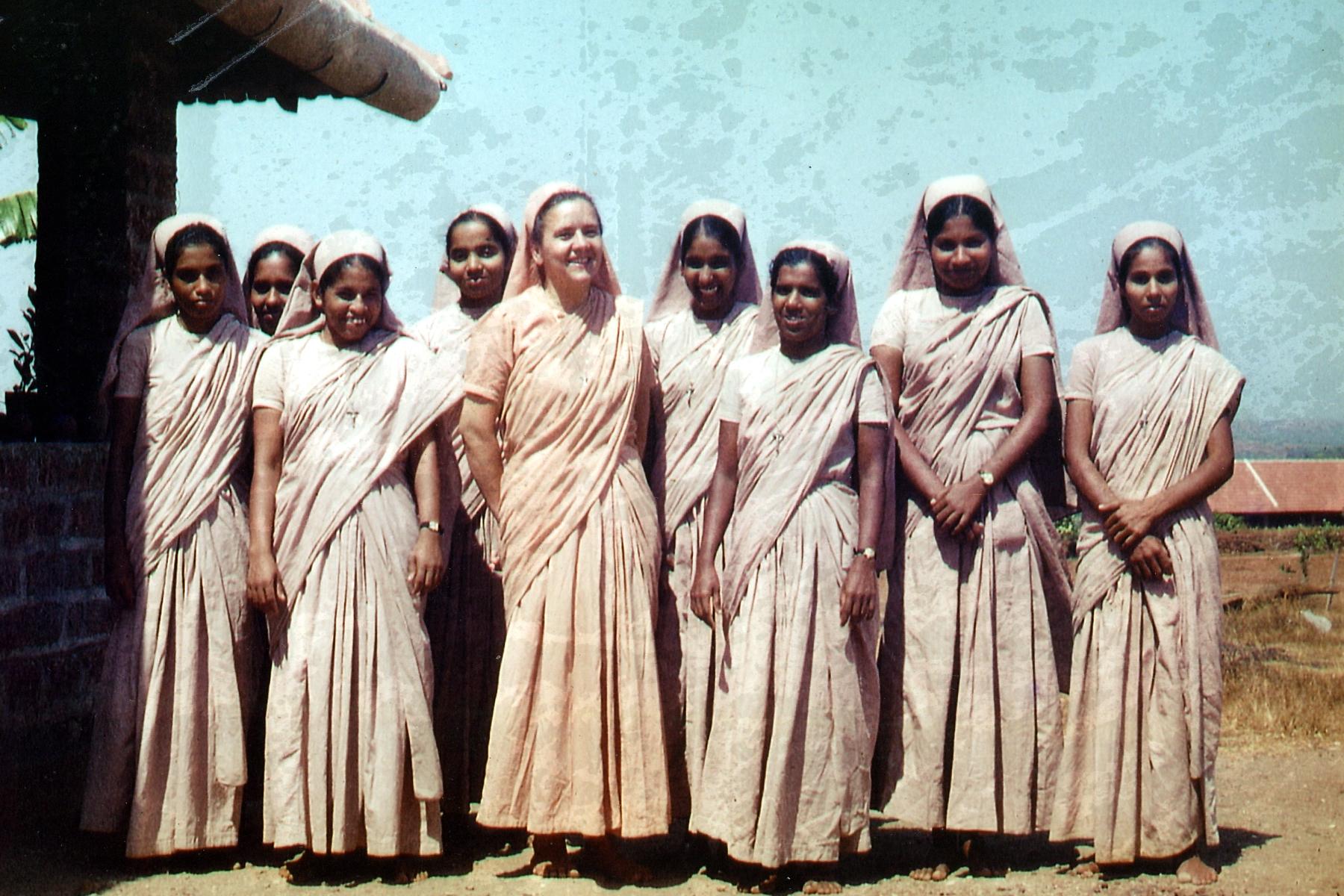
The project reflects the wider mission of the Dinasevanasabha congregation, founded in 1969 by Mother Petra Moennigmann, a German Ursuline nun who later adopted the name Dinadasi, meaning “handmaid of the poor.”
Moved by the poverty she witnessed while serving as a Caritas volunteer in southern India, Moennigmann established the congregation to serve impoverished, vulnerable and marginalized communities.
By the time of her death in a car accident in 1976, the congregation had grown to 300 sisters in 20 convents across Kerala. Today, it has expanded to 600 members living and working in 86 convents across four provinces, serving communities in 10 Indian states as well as Germany, Italy and the United States.
Its ministries extend beyond HIV care to include services for the elderly, people with physical and mental disabilities, women in distress and other marginalized groups.
Fighting Stigma Through Care and Education
Over the past 25 years, the Infant Jesus Children’s Home has become a long-term refuge for children frequently rejected by their own families because of fear and misinformation surrounding HIV/AIDS.
“Our home has successfully reintegrated more than 125 children into society in the past 25 years. Many are now adults, married and settled with jobs,” Sister Veronica said.
Sister Ashly, who has served as the center’s administrator for the past decade, said stigma remains one of the greatest obstacles facing residents.
Many children arrive after being abandoned or orphaned, while others are referred by the state’s Child Welfare Committee, which also monitors their development. Relatives often hesitate to accept them because of misconceptions about HIV transmission.
To address this, the sisters visit family members, educate them about the disease and encourage them to reconnect with the children.
The path to independence, Sister Ashly said, depends heavily on education and employment opportunities.
“Our main goal is to make the girls independent with jobs and instill in them self-esteem and confidence,” she said.
The center currently houses 76 children and 20 women, most of whom are HIV-positive. Through access to quality nutrition, antiretroviral therapy and regular medical treatment, residents are able to remain active and healthy. However, mental health challenges remain common.
Some children experience anxiety and depression, prompting regular consultations with mental health professionals.
“Our children are innocent victims of the dreaded virus as they contracted it at their birth,” Sister Ashly said.
Extending Support Into Adulthood
Government regulations generally require children to leave institutional care at age 18. Faced with the prospect of vulnerable young women having nowhere to turn, the congregation established Mercy Home in 2005.
The facility provides continued support to women transitioning into adulthood.
The congregation has also adapted its operations to comply with regulations requiring separate facilities for boys and girls. Boys are transferred after age six to Snehasadan, a center operated by the Camillus Fathers.
The sisters maintain contact with former residents long after they leave.
One former resident, Thulasi Theresa, now works as a caretaker at the center. She recalled arriving with her infant daughter after discovering both she and her child were HIV-positive.
“My husband left me when I became pregnant, and to my shock, I found out that he had HIV/AIDS. Soon, my baby and I also tested positive,” she said.
Theresa credits the sisters with transforming their lives. Her daughter, Smitha, was raised at the center, later secured employment and eventually married with the support of the congregation.
“Now I want to raise my girl Kiara the way the sisters did for me, giving her love and care,” Smitha said.
Building Futures and Breaking Isolation
Social integration remains central to the center’s philosophy.
Sister Veronica said the congregation recently helped 10 women find marriage partners who are also HIV-positive and receiving treatment. Suitable matches are identified through church-run institutions and nongovernmental organizations. According to the sisters, the children born to these couples are HIV-free and leading healthy lives.
Within the home itself, residents have created a close-knit community.
Some children say they have little or no memory of their biological parents. Instead, they see the sisters and fellow residents as family.
One girl described the center as her true home, where she plays, studies, prays and lives alongside friends. Others spoke proudly of daily responsibilities such as gardening and maintaining the facility.
“We like to do these small tasks and keep our home clean and beautiful,” one resident said.
Rani Maria, a physically disabled young woman pursuing a bachelor’s degree in computer applications, described the institution as “a home filled with love, care and hope.”
Recognition for a Lasting Mission
The center’s work has earned national and international recognition.
In 2007, a German award honored Dinasevika for developing one of India’s leading care centers for children and women living with HIV. More recently, in 2023, the institution was recognized by a charitable trust in Karnataka as the state’s best child-care institution.
For Sister Veronica and her fellow sisters, however, the measure of success is not found in awards but in the lives rebuilt under their care.
From abandoned infants to educated adults with careers, families and confidence, the congregation’s mission continues to challenge stigma and provide hope for some of India’s most vulnerable children.
- Raju Hasmukh with files from Global Catholic
Related Images:


