






Neocatechumenal Way marks 60 years in Madrid as Church advances canonization cause of co-founder Carmen Hernández with major events.
Newsroom (27/05/2026 Gaudium Press ) The Neocatechumenal Way, one of the most influential Catholic movements of the past six decades, is set to commemorate its 60th anniversary in Madrid with a series of significant ecclesial events, including the formal conclusion of the diocesan phase in the canonization cause of its co-founder, Carmen Hernández.
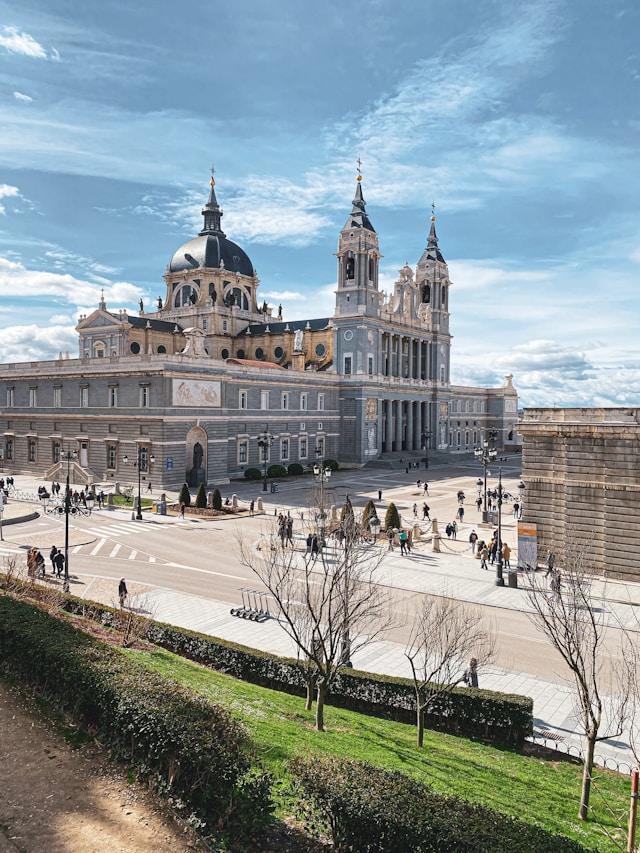
The milestone celebration will take place on May 30 at the Cathedral of Our Lady of Almudena, where the archbishop of Madrid, Cardinal José Cobo, will preside over a Mass of Thanksgiving. The liturgy will be concelebrated by numerous Spanish bishops and attended by more than 100 priests, underscoring the broad ecclesial impact of the movement both in Spain and globally.
Originally scheduled for the previous year, the celebration was postponed following the death of Pope Francis, adding a note of solemnity and renewed significance to this year’s observance. The anniversary not only marks six decades of missionary and catechetical work but also highlights the enduring vitality of a movement that began in the margins of Spanish society.
A Movement Born Among the Poor
Founded in 1964 by Spanish artist Kiko Argüello and theologian Carmen Hernández, the Neocatechumenal Way emerged in the impoverished neighborhood of Palomeras Altas in Madrid. Argüello, who abandoned a promising career in painting, chose instead to live in a makeshift dwelling among the poor, proclaiming the message of Christ’s resurrection.
Hernández soon joined him, bringing theological depth and a profound understanding of the reforms initiated by the Second Vatican Council. Together, under the encouragement of then-archbishop Casimiro Morcillo González, they developed a model of Christian initiation aimed at adults seeking to rediscover the meaning of their baptism.
Over time, this method—based on small, community-centered formation, liturgical renewal, and deep engagement with Scripture—spread rapidly through parishes. Today, the Neocatechumenal Way is present in more than 6,250 parishes across approximately 1,400 dioceses worldwide, spanning 138 countries on five continents.
Global Reach and Ongoing Formation
The movement’s international growth has been accompanied by the establishment of 116 Redemptoris Mater diocesan missionary seminaries, where nearly 3,500 priests have been formed. These seminaries play a central role in sustaining the Neocatechumenal Way’s missionary emphasis, preparing clergy for evangelization in diverse cultural contexts.
According to a statement from the organization, the anniversary represents “a moment of joy that encompasses the entire reality of the Neocatechumenal Way”—an acknowledgment of its origins in hardship and its expansion into a global ecclesial presence.
Central to its approach is an “itinerary of Christian initiation” lived within small communities, fostering a rediscovery of faith through liturgy, catechesis, and communal life. The movement places particular emphasis on the Easter liturgy, Scripture—including both Old and New Testaments—and insights drawn from patristic and Jewish traditions.
Advancing the Cause of Carmen Hernández
The commemorative events will continue on June 2 with the closing rite of the diocesan phase of Carmen Hernández’s canonization process. The ceremony will take place at the Redemptoris Mater Seminary in Madrid, where Hernández is buried, adding a personal and spiritual dimension to the proceedings.
The cause, formally opened on December 4, 2022, has involved the extensive collection of nearly 30,000 pages of documentation by postulator Carlos Metola. Its conclusion at the diocesan level comes just under a decade after Hernández’s death on July 19, 2016.
The event will feature addresses by Cardinal Cobo, Metola, and Kiko Argüello, who collaborated with Hernández for more than 50 years. Their shared mission shaped the theological and pastoral foundations of the Neocatechumenal Way, with Hernández’s contributions widely described by the movement as “fundamental.”
Her work was particularly influential in integrating the teachings of the Second Vatican Council into the life of the movement. This included the development of small Christian communities, renewed liturgical practices, and a profound engagement with the Word of God.
A Legacy of Faith and Devotion
In the years since her death, Hernández has continued to inspire devotion among members of the Neocatechumenal Way and beyond. According to the organization, more than 118,000 people have visited her tomb over the past decade, with many reporting spiritual favors attributed to her intercession.
As the Church in Madrid prepares to mark both the movement’s anniversary and the advancement of Hernández’s cause, the moment offers an opportunity to reflect on a legacy that began in poverty but has reached millions worldwide.
The twin celebrations—one honoring the history of a dynamic ecclesial movement, the other recognizing the life of a woman considered central to its identity—highlight the enduring relevance of the Neocatechumenal Way in the contemporary Catholic Church.
- Raju Hasmukh with files from CNA
Related Images:


