






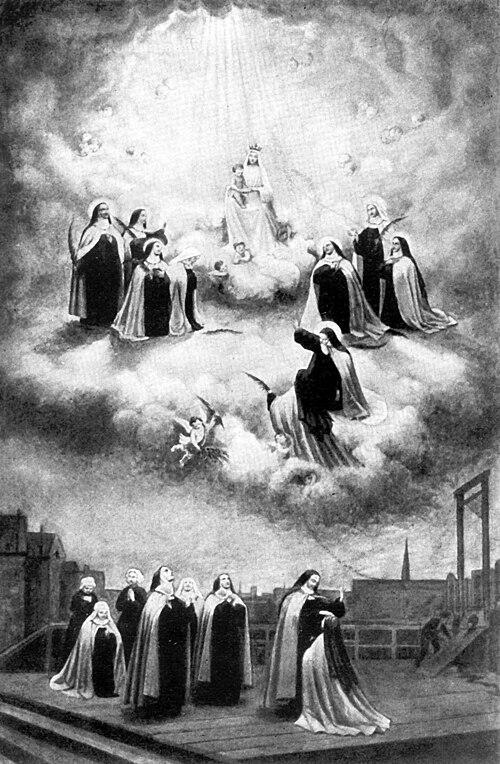
Beyond Bastille Day celebrations, France’s Revolution brought anti-Catholic persecution, church closures, massacres, and enduring historical scars.
Newsroom (14/07/2026 Gaudium Press ) Every year on July 14, France celebrates its national holiday with military parades, fireworks, patriotic ceremonies, and public festivities. Commonly known as Bastille Day, the date commemorates the storming of the Bastille in 1789, an event traditionally portrayed as the birth of liberty, popular sovereignty, and modern France. For generations, it has stood as a symbol of emancipation from tyranny and the triumph of revolutionary ideals.
Yet this familiar narrative tells only part of the story.
Beneath the celebrations lies a more controversial and painful chapter of French history—one marked by the systematic persecution of the Catholic Church, the suppression of religious life, and episodes of violence whose memory remains deeply significant for many Catholics today. While the French Revolution undoubtedly emerged from legitimate aspirations for greater freedom and justice, it also unleashed a campaign against the Church that transformed religious life across the nation and left thousands dead.
Revolution and the Reshaping of the Church
The storming of the Bastille launched a revolutionary process that rapidly extended beyond political reform. Within the first months of the Revolution, Church property was nationalized, religious orders were suppressed, and monasteries began closing across France. Contemplative communities, many of which had existed for centuries, were dissolved as revolutionary authorities sought to reorganize society according to new political principles.
A decisive turning point came in 1790 with the adoption of the Civil Constitution of the Clergy. The legislation fundamentally altered the relationship between Church and state by transforming bishops and priests into public officials elected by citizens. The reform significantly reduced the authority of Rome in ecclesiastical appointments and placed the clergy under the authority of the revolutionary government.
Pope Pius VI strongly condemned the measure. In response, a large number of French priests and bishops refused to swear the required oath of loyalty. These clergy became known as “refractory priests” and were increasingly viewed by revolutionary leaders as opponents of the new order.
A Campaign of Dechristianization
What began as political restructuring soon evolved into a broader effort to remove Christianity from public life. Churches throughout France were closed, confiscated, or repurposed. Some became warehouses and military facilities, while others were converted into temples dedicated to the revolutionary Cult of Reason. Later, under Maximilien Robespierre, the Cult of the Supreme Being was promoted as an alternative civic religion.
Visible symbols of Christianity became targets. Crosses were torn down, religious statues and relics destroyed, and churches desecrated. In one of the most symbolic acts of the period, the royal basilica of Saint-Denis, the traditional burial place of French monarchs, was desecrated and the remains of kings and queens were removed from their tombs and discarded into mass graves.
The campaign extended beyond religious buildings. Priests were pressured to abandon their vocation, and some were ordered to marry as evidence of their loyalty to revolutionary ideals. The traditional Christian calendar was replaced by the Republican calendar, while place names with religious associations were altered to eliminate Christian references from public space.
For many believers, these actions represented not merely political reform but an attempt to erase Christianity from French society.
The Carmelite Massacre
Among the most tragic episodes of the Revolution were the September Massacres of 1792, particularly the killings at the former Carmelite convent in Paris.
On September 2 and 3, 1792, 191 priests and religious were executed after refusing to renounce their loyalty to the Catholic Church. According to Catholic accounts, many met death while praying and forgiving their executioners. Their fate later became a powerful symbol of religious resistance during the Revolution.
In recognition of their sacrifice, Pope Pius XI beatified the victims in 1926, honoring them as martyrs of the revolutionary era.
Violence Beyond Paris
The persecution of clergy and religious communities was not confined to the capital.
During the Reign of Terror, the city of Nantes witnessed notorious mass drownings that claimed numerous lives, including members of the clergy. In Rochefort, hundreds of refractory priests were confined aboard overcrowded and unsanitary prison ships. Many died from disease, hunger, and harsh conditions before ever receiving a trial.
Elsewhere, violence accompanied the suppression of resistance movements. In Lyon, clergymen were among those executed after the crushing of local uprisings. In the Vendée, where many residents opposed revolutionary policies and defended their faith, government forces known as the “infernal columns” carried out brutal operations that resulted in the destruction of villages and the deaths of civilians, priests, and families alike.
Historians continue to debate the precise number of victims. However, there is broad recognition that the scale of violence directed at both civilian populations and the Church was extraordinary.
A Complex Historical Legacy
Acknowledging these events does not require denying the aspirations that animated many revolutionaries in 1789. The French Revolution remains one of the most influential episodes in modern history, inspiring movements for political participation, citizenship, and civil rights across the world.
Yet reducing the Revolution to a straightforward story of progress risks overlooking its darker dimensions. The religious persecutions, the dechristianization campaign, and the suffering of thousands of clergy and faithful form an essential part of the historical record.
For many French Catholics, the memory of martyred priests, expelled nuns, desecrated churches, overturned crosses, and devastated communities remains a living reminder that the promise of liberty was not experienced equally by all. Their perspective challenges a purely celebratory interpretation of the Revolution and calls for a fuller understanding of its consequences.
Remembering the Meaning of Liberty
As France commemorates July 14 each year, the anniversary offers an opportunity not only to celebrate national achievements but also to reflect on the complexities of its past.
A mature understanding of history requires acknowledging moments of both triumph and tragedy. The French Revolution’s legacy is inseparable from the ideals of liberty and popular sovereignty, but it is also marked by episodes of religious persecution and violence that should not be forgotten.
Perhaps the most enduring lesson is that liberty reaches its highest expression only when it protects every conscience equally—including the freedom to believe, to worship, and to remain faithful to one’s convictions. More than two centuries after 1789, that principle remains as relevant as ever.
- Raju Hasmukh with files from Tribune Chretienne
Related Images:


