






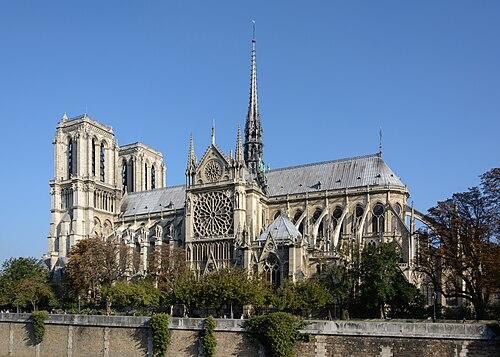
France unveils Notre Dame’s final restoration phase, seeking €130 million to complete preservation works through 2033.
Newsroom (07/07/2026 Gaudium Press ) More than five years after the devastating fire that shocked the world, Notre Dame Cathedral is preparing to enter the final stage of its restoration journey. French authorities have unveiled a new series of interventions scheduled between 2027 and 2033, aimed at completing the recovery of one of the world’s most celebrated religious and architectural landmarks.
A symbol of Christian heritage and a masterpiece of Gothic architecture, Notre Dame attracts millions of pilgrims and tourists to Paris each year. The fire of April 15, 2019, triggered an extraordinary wave of international solidarity that ultimately made the cathedral’s reconstruction possible.
Although the cathedral reopened for worship in December 2024, restoration efforts remain unfinished. Officials now estimate that an additional investment of €150 million will be required to complete the remaining work. Around €20 million has already been secured, while the remaining €130 million will need to be raised through a new fundraising campaign involving individuals, businesses, and partner organizations.
“Our goal is to definitively complete the restoration of the cathedral,” said Philippe Jost, president of Rebâtir Notre-Dame de Paris, in comments to the French Catholic newspaper La Croix.
A New Phase Focused on Long-Term Preservation
The upcoming restoration program includes approximately a dozen projects designed not only to address the consequences of the 2019 fire but also to tackle conservation issues that predated the disaster.
Experts involved in the reconstruction have emphasized that Notre Dame’s challenges extend beyond fire damage. The cathedral, which has stood for more than eight centuries, was already facing significant preservation concerns before the blaze revealed deeper structural and heritage-related vulnerabilities.
As a result, the new phase of work aims to secure the monument’s future while completing tasks that were left outside the scope of the initial reconstruction effort.
The Western Rose Window Takes Center Stage
Among the most significant projects is the complete restoration of the cathedral’s famous western rose window, one of the defining masterpieces of European Gothic art.
Dating back to the 13th century, the stained-glass window has not undergone a full restoration since the extensive works overseen by architect Eugène Viollet-le-Duc during the 19th century. Conservation specialists consider the intervention essential to preserving one of Notre Dame’s most recognizable artistic treasures.
The restoration plan also includes work on the façades of the north transept, a number of medieval sculptures, and other architectural elements that are showing signs of age and deterioration.
Officials believe these interventions will play a crucial role in ensuring the long-term stability and preservation of the monument.
Open Once Again, Yet Still a Construction Site
The reopening of Notre Dame in December 2024 marked a historic milestone for France and the Catholic Church. Regular liturgical celebrations resumed inside the cathedral, fulfilling the commitment to return the building to worship within five years of the fire.
Since reopening, thousands of visitors and faithful have once again crossed the cathedral’s doors each day, restoring Notre Dame to its traditional role as both a spiritual center and a major cultural destination.
However, restoration leaders stress that the reopening did not signify the end of the cathedral’s recovery. Instead, it represented the successful completion of the first phase of a much larger conservation effort.
The December 2024 reopening ceremony was widely regarded as one of the most important cultural and religious events in Europe in recent years.
Reviving the Spirit of Global Solidarity
Project leaders are hoping that the new fundraising campaign will reignite the international solidarity that emerged in the wake of the 2019 disaster.
Following the fire, donors from around the world pledged nearly €1 billion to support reconstruction efforts. Those resources enabled the cathedral’s remarkable recovery and also provided funding reserves for future conservation work.
The upcoming appeal seeks to build on that momentum, ensuring that Notre Dame’s restoration can be completed without interruption and preserved for future generations.
Stained-Glass Controversy Remains Unresolved
Despite progress on the restoration front, one of the cathedral’s most debated issues remains unsettled.
At the center of the controversy is a proposal supported by French President Emmanuel Macron to replace six 19th-century stained-glass windows created by Viollet-le-Duc with contemporary works by French artist Claire Tabouret.
The proposal is currently awaiting a court ruling after several heritage preservation groups challenged the plan. Opponents argue that the existing windows suffered only minimal damage during the fire and therefore do not warrant replacement.
The debate has exposed broader questions about how historic monuments should evolve in the modern era. Preservation advocates favor maintaining the cathedral’s historical integrity, while supporters of the proposal see an opportunity to introduce a contemporary artistic contribution into one of France’s most iconic landmarks.
As Notre Dame moves toward the final phase of its restoration, the cathedral remains both a symbol of resilience and a focal point for discussions about heritage, conservation, and artistic renewal. The coming years will determine not only the completion of its physical recovery but also how future generations experience one of the world’s most treasured monuments.
- Raju Hasmukh with files from ACI Prensa
Related Images:


