






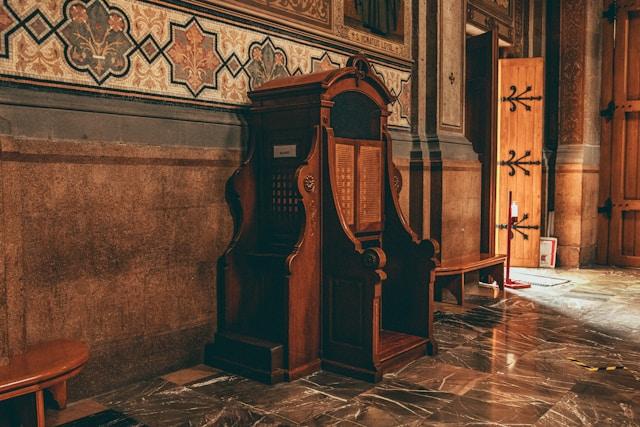
Barcelona installs 50 confessionals for papal vigil, while Madrid reopens parishes after criticism over “listening centers” plan.
Newsroom (27/05/2026 Gaudium Press ) As preparations intensify for Pope Leo XIV’s visit to Spain, the Archdiocese of Barcelona has announced a striking pastoral initiative: the installation of 50 confessionals inside the Estadi Olímpic Lluís Companys during the June 9 prayer vigil. The move signals a strong emphasis on the sacrament of reconciliation as a central component of the event, aligning liturgical practice with the expectations of large-scale Catholic gatherings.
According to plans reported by Religión Confidencial, the confessionals will be evenly divided across the stadium, with 25 placed in the Tribune area and 25 in the Side area. This arrangement is designed to handle large numbers of participants during a vigil that will combine testimonies, catechesis focused on the legacy of Antoni Gaudí, and a dedicated period for confession before the Pope leads the main prayer.
Fr. Carlos Bosch, director of the Diocesan Secretariat for Pastoral Care in Barcelona, outlined the structure of the event in a press briefing. The evening will unfold in three stages: an initial welcome featuring testimonies and catechesis, a designated time for the sacrament of forgiveness, and finally the central act of prayer with Pope Leo XIV. The inclusion of confession at a prominent point in the schedule reflects a clear pastoral priority—offering pilgrims not only a communal experience but also a moment of personal spiritual reconciliation.
Madrid’s Strategy Under Scrutiny
Barcelona’s approach stands in contrast to the initial strategy adopted by the Archdiocese of Madrid, where organizers opted not to install confessionals at major papal events in the capital. Instead, Madrid introduced so-called “listening centers”—spaces staffed by trained lay “listening agents,” intended to provide emotional support and conversation during the Pope’s visit.
The initiative, developed in collaboration with the San Camilo Center for the Humanization of Health, quickly became a focal point of controversy. Critics argued that the centers risked overshadowing the sacramental dimension traditionally associated with such gatherings, particularly for youth vigils where confession is often a key feature.
Reporting by The Pillar revealed that, until questions were raised publicly, there had been no comprehensive plan to ensure widespread availability of confession during the June 6 youth vigil in Madrid. Initially, the archdiocese’s strategy relied largely on encouraging parish priests to make themselves available independently—a decentralized approach that drew criticism for lack of coordination.
A Late Adjustment: Parishes Open Overnight
Facing mounting concern, Madrid’s auxiliary bishop Vicente Martín Muñoz issued a letter on May 20 urging parishes—especially those in the city center and those hosting pilgrims—to remain open throughout the night of June 6. The directive called explicitly for spaces dedicated to reconciliation, alongside areas for prayer, silence, and pastoral listening.
This change has been widely interpreted as a corrective measure. The bishop’s appeal emphasized the importance of ensuring that “young people and pilgrims can find a space for silence, prayer, and reflection,” while also making confession available with priests present.
For many observers, the adjustment marks a significant shift from the earlier plan. The decision to keep churches open overnight restores a more traditional model of sacramental accessibility, even if it stops short of replicating the large-scale confessional infrastructure planned in Barcelona.
Defending the “Listening Centers” Model
Despite the criticism, Madrid officials have defended their approach. Sara de la Torre, communications director for the archdiocese, sought to reassure the faithful that confession would remain accessible throughout the Pope’s visit.
“Let no one be afraid or think that confession will not be offered,” she stated on May 25, emphasizing that the diocese had worked to ensure its availability in parishes across the city.
De la Torre also pointed to practical constraints. With only four months to prepare for the papal visit, Madrid lacked the long lead time associated with events like World Youth Day. Instead, the archdiocese chose to rely on its existing infrastructure—476 parishes spread across the region—to meet pastoral needs.
At the same time, she maintained that the listening centers were not intended to replace confession but to complement it. “Nothing is comparable to the sacrament of confession,” she said, describing the centers as spaces for those seeking conversation and emotional support rather than sacramental absolution.
Internal Debate and Missed Opportunities
Behind the scenes, however, the issue has sparked internal tensions. Sources close to the organizing team described the absence of confessionals at mass gatherings as a “missed opportunity.” One proposal reportedly considered transforming the June 6 vigil into a large-scale “day of reconciliation,” with hundreds of priests available to hear confessions simultaneously.
That idea was ultimately rejected. Some organizers questioned the necessity of confessionals at youth events, while others argued that the sacrament would be better offered in parish settings. Logistical concerns also played a role, including the demands placed on clergy already scheduled to participate in the Corpus Christi Mass with the Pope the following day.
Critics have pointed out practical shortcomings in the parish-based approach. While Madrid technically counts 476 parishes, many are located far from the city center, and some priests serve multiple churches. This reality raised concerns about accessibility, particularly for pilgrims unfamiliar with the city or unable to travel significant distances.
Barcelona’s Broader Program
While Madrid continues to refine its strategy, Barcelona is moving ahead with a comprehensive and tightly coordinated program. The papal visit will culminate on June 10 with a Mass at the Sagrada Familia Basilica, commemorating the centenary of Gaudí’s death and including the blessing of the Tower of Jesus Christ—now the tallest church structure in the world.
Organizers expect around 8,000 participants for the Mass, with over 4,000 tickets distributed through local parishes. The visit will also include a meeting with inmates at Brians 1 prison and a prayer service at Barcelona Cathedral, underscoring the pastoral breadth of the Pope’s itinerary.
A Tale of Two Approaches
Taken together, the differing strategies in Barcelona and Madrid illustrate two distinct pastoral models. Barcelona has opted for a centralized, highly visible presence of confession within the main event itself, integrating the sacrament into the collective experience of the vigil. Madrid, by contrast, has leaned toward a decentralized model, relying on parish networks while supplementing them with non-sacramental listening initiatives.
The late adjustments in Madrid suggest a recognition of the importance many Catholics place on the sacrament of reconciliation during papal visits. As the events approach, both cities will offer opportunities for confession, though through markedly different frameworks.
For participants, the contrast may ultimately highlight an enduring question within modern pastoral practice: how best to balance innovation in outreach with the preservation of sacramental life at the heart of the Church’s mission.
- Raju Hasmukh with files from Infocatholica
Related Images:


