






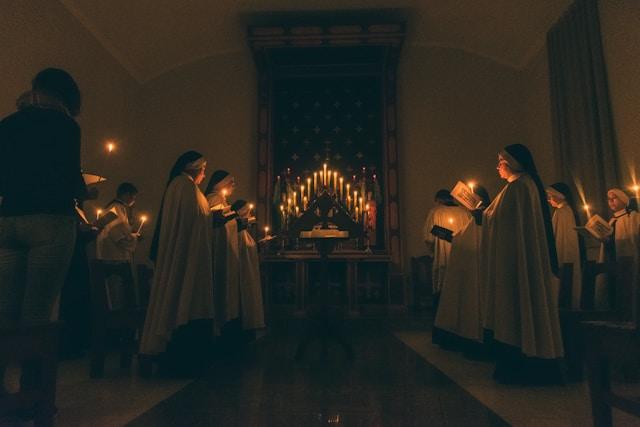
Bangladesh’s cloistered convents face dwindling vocations as fewer young women embrace religious life, leaving aging communities under strain.
Newsroom (25/05/2026 Gaudium Press ) In a small chapel inside a cloistered convent roughly 120 kilometers north of Dhaka, 18-year-old Maria Manda kneels in silent prayer before the Blessed Sacrament. Her presence represents a rare and increasingly uncommon choice among young Bangladeshi women: a life of enclosure, discipline and devotion far removed from the modern world.
Manda entered the Monastery of the Poor Clares of Perpetual Adoration 14 months ago. In 2025, she was the only new aspirant to join the community in Mymensingh, underscoring what church leaders describe as a growing vocation crisis affecting contemplative religious life across Bangladesh.
“Few nuns now manage the work that was previously carried out by several hands,” said Sister Mary Dominica, the convent’s superior.
Two decades ago, the monastery housed around 50 nuns. Today, that number has fallen to just 20. The trend is not isolated. At Bangladesh’s only other cloistered convent, located in Dinajpur, only 15 nuns maintain a similar life marked by prayer, silence and strict enclosure. Together, the two houses form a fragile contemplative presence in a country where fewer young women are choosing this path.
A Rare Calling in a Changing Society
Manda’s decision to enter the monastery was initially met with resistance from her family, who struggled with the idea of a life permanently separated from home and society. Over time, they accepted her choice.
“I feel peace when I pray,” Manda said, reflecting on her first year, which has required her to adapt to rigid routines, extended silence and minimal contact with the outside world.
Another young aspirant, 20-year-old Purobi Rema, joined the convent six months later—again, the only new entrant since Manda. Their arrivals highlight a stark reality: vocations to cloistered life are becoming increasingly rare.
“Many young women visit, but only a few stay,” said Sister Mary Rose, a former superior. “Those who remain usually have a clear sense of commitment.”
According to Fr. Peter Rema, the monastery’s 80-year-old chaplain, broader social changes are driving the decline. Expanded access to education, more diverse career opportunities and evolving expectations are reshaping how young women envision their futures.
“People are more focused on education and a comfortable life,” he said. “The discipline of monastic life can appear difficult in comparison.”
Demographic shifts are also a factor. Smaller family sizes mean parents are often reluctant to support a vocation that removes a daughter permanently from family life, particularly in economically vulnerable households.
The cloistered nature of the vocation adds to the challenge. As Fr. Rema noted, fewer young people today are willing to accept a life with limited external interaction.
Fewer Hands, Heavier Burdens
Inside the convent, the impact of declining numbers is both immediate and visible. Tasks once shared among several nuns are now carried out by far fewer sisters.
For example, five sisters previously worked together to produce Eucharistic hosts. Today, only two manage the same work, even as demand from parishes has increased.
This pattern extends across all areas of convent life. The sisters rotate through a range of duties, including sewing Mass vestments, preparing altar cloths, producing hosts and wine for liturgy, gardening and caring for elderly members.
“Each hour is scheduled. There is little unstructured time,” Sister Mary Dominica said.
The strain is particularly evident in the convent’s commitment to continuous prayer. Sisters take turns during the night in the chapel, often disrupting their sleep multiple times each week.
“Earlier, night adoration was done in pairs,” said Sister Mary Catherine, who has lived in the monastery for nearly 30 years. “Now, sisters often take turns alone. It increases both responsibility and fatigue.”
The Rigors of Enclosure
The demands of cloistered life—silence, strict routine and limited personal freedom—can deter even those initially drawn to it.
Lucky Florence Corraya, a teacher who once explored the vocation through a “Come and See” program, ultimately chose not to remain.
“Life in the cloistered convent centers on discipline and sacrifice,” she said. “The structure allows very little personal freedom, which can be difficult.”
For older members of the community, the shrinking numbers bring additional challenges. With fewer sisters, caregiving responsibilities increase while opportunities for companionship diminish.
Fr. Biolen Bernard Chambugong, chancellor of the Mymensingh Diocese, noted that elderly and sick nuns face particular hardship.
“One of their needs is someone to talk to,” he said, pointing to the quiet loneliness that can accompany aging within enclosed communities.
A Tradition Endures
The Poor Clares of Perpetual Adoration trace their roots to a contemplative Franciscan tradition founded in France in 1854 and introduced to Bangladesh in 1933 by missionaries from Kerala, southern India.
Despite the decline in vocations and the pressures facing the community, the rhythm of prayer remains unchanged.
“The structure of prayer continues,” Sister Mary Dominica said.
For the sisters who remain, the choice to stay is grounded in a deep sense of conviction. In the stillness of the chapel in Mymensingh, where Maria Manda kneels in prayer, that quiet commitment persists—sustaining a way of life that is increasingly rare, yet enduring.
- Raju Hasmukh with files from UCA News
Related Images:


