






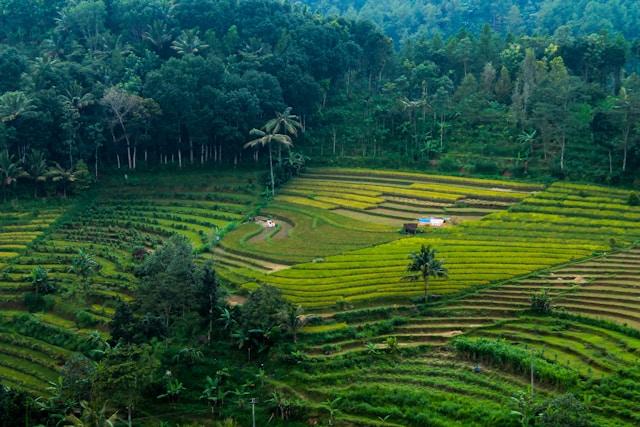
A new Catholic pilgrimage in Central Java retraces the roots of the Church’s mission, blending history, faith, and community in Indonesia.
Newsroom (09/07/2026 Gaudium Press ) A new walking pilgrimage in Indonesia is bringing renewed attention to the historic roots of the Catholic Church in Central Java. Inspired by Spain’s world-renowned Camino de Santiago, the initiative known as the “Camino Misionero” or “Missionary Walk” invites participants to retrace the foundations of Catholic evangelization in the region while deepening their spiritual life through prayer, reflection, and community.
At the heart of the journey lies Muntilan, a town often referred to as the “Bethlehem of Java.” The title reflects the town’s central place in the development of the Catholic mission on the island and its enduring significance in the history of the Indonesian Church.
Muntilan’s importance dates back to the pioneering work of Fr. Frans van Lith, SJ, the Dutch missionary credited with laying much of the groundwork for Catholic growth in Central Java. His vision took shape through the establishment of Xavier College, a boarding school for boys that became a key institution for Catholic education.
The educational mission expanded with the contribution of the Ursuline Sisters of the Holy Family (OSF), who founded a boarding school for girls near the Buddhist temple of Mendut in neighboring Magelang Regency. Together, these institutions helped shape generations of Indonesian Catholics who later served communities across the country, extending the influence of the mission far beyond Central Java.
Although the original Mendut school and boarding facilities no longer exist, their legacy remains alive. The history of the Catholic mission has been preserved through local educational institutions and the Muntilan Mission Museum, which documents the origins and development of evangelization efforts in Java. Today, the museum serves as a focal point for visitors seeking to understand the deep historical roots of the Church in the region.
The inaugural Missionary Walk, held on June 27–28, drew more than 70 participants from various parts of Indonesia. While many pilgrims traveled from Jakarta and other major cities, local parishioners from communities around Muntilan contributed significantly as volunteers, helping organize activities throughout the two-day event.
The pilgrimage route was carefully designed to connect participants with some of the most significant landmarks in the history of the Catholic mission in Java. Among the locations visited were Kembaran Village, the FIC Brothers’ House, Van Lith High School, the Sanjaya Pastoral Center (PPSM), the Kanisius Foundation (YKCM), the Muntilan Parish Church, and the Mission Museum.
Organizers envisioned the pilgrimage as a unique combination of historical education, spiritual renewal, and communal fellowship. The event began on June 27 with a historical walk from the Sanjaya Pastoral Center of the Archdiocese of Semarang to the missionary heritage site in Muntilan. Participants later attended formation sessions and explored exhibits at the Mission Museum before gathering for an evening of fellowship.
The first day concluded with evening prayers at Kerkhof Muntilan, the town’s historic Catholic cemetery. The setting offered participants an opportunity to reflect on the generations of missionaries, clergy, religious sisters, and lay faithful who helped establish and sustain the Catholic presence in Java.
The pilgrimage continued the following day with a route stretching from Kerkhof Muntilan to Mendut Church, located directly opposite the renowned Mendut Buddhist Temple. Pilgrims then proceeded to Kerkhof Mendut before completing the journey at the Church of St. Peter in Borobudur.
The pilgrimage culminated in the celebration of Holy Mass, presided over by Fr. Yohanes Wahyu Rusmana, providing a fitting spiritual conclusion to the two-day experience.
Like the Camino de Santiago that inspired it, the Camino Misionero is intended to be much more than a physical trek. Organizers describe it as a journey that combines prayer, historical awareness, and fellowship, enabling participants to encounter the story of the Church in Java in a tangible and deeply personal way. By walking the paths connected to the region’s missionary heritage, pilgrims are encouraged not only to remember the past but also to draw inspiration for their own faith journeys.
The successful launch of the pilgrimage has encouraged organizers to view it as the beginning of a broader movement. Plans are already being considered for a future edition, tentatively scheduled for November, with expectations of attracting a larger number of pastoral workers and pilgrims from across the Indonesian archipelago.
Ultimately, the vision behind the “Bethlehem of Java” pilgrimage is to transform history from something merely studied into something personally experienced. By connecting participants with the places, people, and stories that shaped the Catholic mission in Central Java, organizers hope to inspire a new generation to embrace the missionary spirit through faith, service, and fraternal communion.
As interest grows, the Camino Misionero may emerge as one of Indonesia’s most distinctive Catholic pilgrimages—offering believers an opportunity to walk in the footsteps of the pioneers who helped establish the Church in Java and to rediscover the enduring power of mission in contemporary life.
- Raju Hasmukh with files from Asianews.it
Related Images:


