






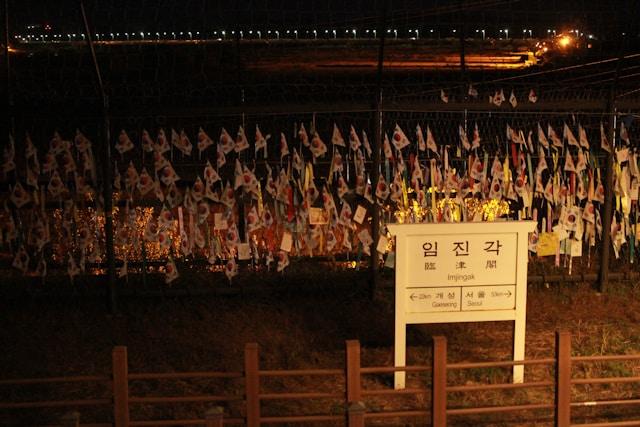
Young Catholics in South Korea journey to the DMZ, praying for peace, reconciliation, and ecology ahead of World Youth Day 2027 in Seoul.
Newsroom (27/05/2026 Gaudium Press ) About 100 young South Korean Catholics gathered at one of the world’s most heavily fortified borders to pray for peace, reconciliation, and care for the environment, as part of preparations for World Youth Day (WYD) set to take place in Seoul in 2027.
The May 22–25 program, organized by the World Youth Day committee of the Diocese of Uijeongbu, drew roughly 80 participants to the Demilitarized Zone (DMZ), the buffer that has separated North and South Korea since the end of the Korean War. The initiative combined pilgrimage, education, and spiritual reflection, setting the tone for what organizers hope will be a globally resonant youth gathering next year.
A Pilgrimage Along a Divided Border
Participants traveled approximately 60 kilometers along sections of the border, moving through areas in Paju and Yeoncheon County. The route included ecological parks and historically significant sites, blending environmental awareness with reflection on the peninsula’s unresolved political division.
Each day concluded with smaller group gatherings where pilgrims sang hymns, prayed, and shared personal reflections. The journey also included opportunities for deeper spiritual engagement, including the Sacrament of Confession. The program concluded with a Holy Mass celebrated by Bishop Benedictus Son Hee-song of Uijeongbu on May 25.
Organizers emphasized that the pilgrimage was designed not only as a religious exercise but also as a message—highlighting the need for reconciliation between North and South Korea and the preservation of the DMZ’s unique ecosystem.
The DMZ as a Symbol of Peace and Ecology
Father Francis Kim Seung-yeon, chair of the diocesan organizing committee, described the DMZ as a place where two crucial themes intersect.
“The values of peace and ecology are exquisitely combined here,” he said during the program’s opening Mass on May 22.
Despite its origins as a militarized buffer zone, the DMZ has, over decades of minimal human interference, become an ecological haven. This dual identity—both scar of conflict and sanctuary of biodiversity—has made it a powerful symbol for the Church’s message of healing and stewardship.
Kim noted that next year’s diocesan phase of World Youth Day will bring international pilgrims to this very region. “Young pilgrims from around the world will gather here at the inter-Korean border to profess their faith and unite their hearts for ecology and peace,” he said.
Preparing for a Global Gathering
World Youth Day, a triennial international Catholic event founded by Pope John Paul II, is expected to draw participants from across the globe when it comes to Seoul from Aug. 2–8, 2027. Pope Leo XIV is scheduled to attend the gathering.
The event begins with a preliminary phase known as the “Days in the Dioceses,” running from July 29 to Aug. 2, during which visitors are hosted across South Korea’s 15 dioceses. These local experiences are intended to provide pilgrims with a deeper understanding of Korean culture, history, and the Church’s role in society.
The recent DMZ pilgrimage is part of these broader preparations, offering young Catholics a preview of the themes likely to shape next year’s gatherings.
Youth Voices and Hopes for Reconciliation
For participants, the journey was both personal and educational. Joseph Lee Ki-woong, a young Catholic from Seoul, expressed hope that international visitors would gain a deeper understanding of the Korean Peninsula’s ongoing division.
He said he wanted Catholic youth from around the world to learn not only about Korea’s history but also about ongoing efforts toward reconciliation.
A History That Still Shapes the Present
The significance of the pilgrimage is rooted in Korea’s modern history. Following centuries of unified rule under the Joseon Dynasty, the peninsula was colonized by Japan in the early 20th century. After Japan’s defeat in World War II in 1945, Korea was divided along geopolitical lines, with the United States backing the South and the Soviet Union supporting a communist regime in the North.
Attempts at reunification failed amid ideological tensions between global powers, culminating in the outbreak of the Korean War in 1950. The conflict resulted in roughly 4 million deaths and displaced around 10 million people.
Although active fighting ended with an armistice on July 27, 1953, no formal peace treaty was signed. The Korean Peninsula remains technically at war, with the DMZ serving as both a physical and symbolic reminder of that unresolved conflict.
Bridging Faith, Memory, and the Future
For the young pilgrims who walked along the DMZ in May, the journey was more than a prelude to a global event. It was an opportunity to confront the legacy of division while imagining a future rooted in reconciliation.
As South Korea prepares to host thousands of young Catholics in 2027, the message emerging from the DMZ is clear: the pursuit of peace and care for creation are inseparable—and the next generation is being called to carry both forward.
- Raju Hasmukh with files from UCA News
Related Images:


