






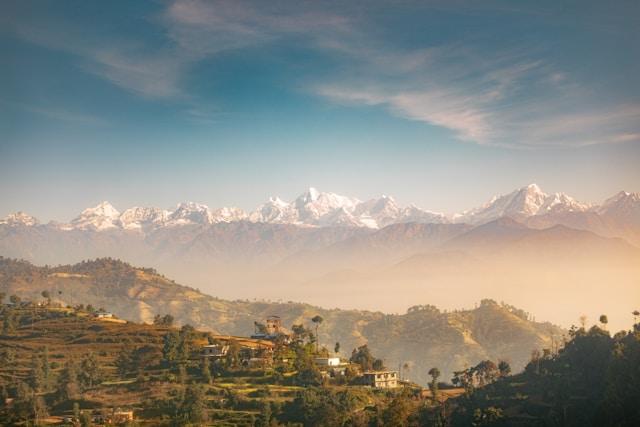
Nepal’s Christian leaders urge constitutional reforms, citing discrimination, anti-conversion laws, and limited protection of religious freedom rights.
Newsroom (28/05/2026 Gaudium Press ) Nepal’s Christian community has formally called for sweeping constitutional and legal reforms, arguing that the country’s existing framework offers only limited protections for religious minorities and falls short of its stated commitment to secularism. The appeal, presented to a government-appointed task force on May 26, underscores rising concerns over discrimination, legal restrictions, and the perceived marginalization of non-Hindu communities in the Himalayan nation.
Memorandum Submitted to Government Task Force
A five-member delegation of Christian leaders submitted a memorandum to the Constitution Discussion Paper Taskforce, a body established by the government of Prime Minister Balendra Shah to explore long-term political reforms and possible constitutional amendments. The document lays out detailed concerns about the state of religious freedom in Nepal and proposes a range of institutional and legal changes.
The submission argues that despite Nepal’s transformation into a secular, federal democratic republic in 2015, the state continues to privilege the Hindu majority in practice. The memorandum points to government observance of Hindu religious holidays and the participation of political leaders in religious rituals as evidence of institutional bias.
Concerns Over Discrimination and Legal Constraints
At the center of the Christian community’s grievance is what it describes as a rise in intolerance and discrimination against minority faiths, particularly Christians. According to the memorandum, these trends are rooted in “anti-secular laws” and gaps in how constitutional provisions are implemented by state institutions.
BP Khanal, an interfaith coordinator of the Nepal Christian Society (NCS) and a member of the task force, emphasized that Nepal’s legal system criminalizes proselytism and religious conversion—policies he says contradict both secular principles and international human rights standards.
“Secularism ensures that the state treats all religions and their people equally,” Khanal said, adding that Christian minorities are “being persecuted” under the current legal framework.
Debate Around Constitutional Provisions
A significant portion of the memorandum addresses Article 26 of Nepal’s constitution, which governs religious freedom. While Article 26(1) affirms that every individual “who has faith in religion shall have the freedom to profess, practice, and protect” their religion, Christian leaders argue that the provision is incomplete.
They have recommended adding explicit language guaranteeing the “freedom to adopt a religion,” aiming to align the constitution more closely with international norms on freedom of belief.
Further concerns focus on Article 26(3), which prohibits converting another person from one religion to another. The delegation argues that the clause’s vague wording has enabled authorities to target Christian communities disproportionately. They propose revising the provision to outlaw only “forced conversion,” thereby preventing misuse while preserving basic freedoms.
Penal Code and Criminalization of Conversion
The memorandum also calls for amendments to Nepal’s penal code, specifically seeking the repeal of provisions that criminalize proselytism and conversion. Under current law, individuals found in violation can face imprisonment of up to five years and fines of up to 50,000 Nepalese rupees (approximately US$326).
Christian leaders contend that such penalties undermine the principle of religious freedom and create conditions in which minority groups operate under constant legal risk.
Proposed Institutional Reforms
Beyond constitutional and legal revisions, the memorandum outlines a broader vision for strengthening secularism and protecting minority rights in Nepal. Among its key recommendations is the establishment of a national interfaith commission tasked with promoting dialogue, ensuring equality, and safeguarding the rights of all religious communities.
The delegation also proposed practical measures to address longstanding concerns of minority groups. These include allowing churches to be registered as religious trusts, providing designated burial grounds for minority faiths, and granting constitutional recognition to Christian institutions.
Additionally, the leaders have urged the government to officially recognize major Christian observances such as Christmas and Easter as public holidays, a move they say would symbolize equal respect for all religious traditions.
A “Rare Opportunity” for Reform
Pastor Bhab Ghale, representing both the National Churches Fellowship of Nepal and the United National Nepali Church Council (UNNCC), described the current constitutional review process as a critical moment for change.
He noted that the government led by Prime Minister Balendra Shah has a “rare opportunity” to address historical injustices faced by religious minorities. Ghale expressed cautious optimism that the task force would take the memorandum seriously and translate its recommendations into concrete reforms.
“We are hopeful the government will take up our suggestions and concerns seriously and act upon them,” he said.
The Christian community’s appeal highlights growing tensions between Nepal’s constitutional identity as a secular republic and the lived experiences of its religious minorities. As the government undertakes a review of its legal and political systems, the demands put forward by Christian leaders reflect a broader call for inclusivity, equality, and the protection of fundamental freedoms. Whether these proposals will lead to tangible policy shifts remains an open question, but they have undoubtedly added urgency to Nepal’s ongoing debate over the meaning and practice of secularism.
- Raju Hasmukh with files form UCA News
Related Images:


