






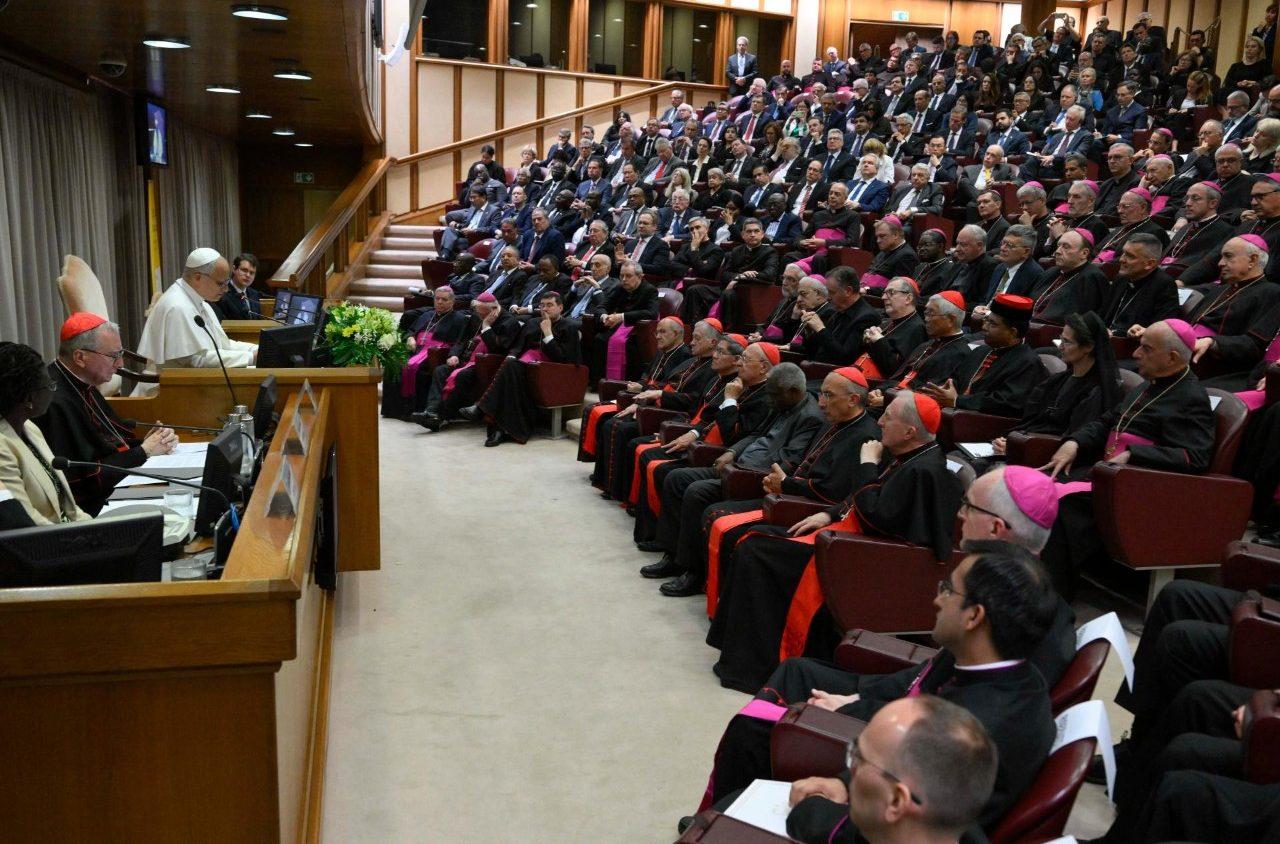
Pope Leo XIV will present his first encyclical with AI executive Christopher Olah, signaling a historic Vatican-AI ethics alliance.
Newsroom (22/05/2026 Gaudium Press ) In a striking departure from Vatican protocol, Pope Leo XIV will personally attend the May 25 press conference unveiling his first encyclical, Magnifica Humanitas, marking a rare hands-on approach for a papal document launch. Even more unprecedented is the company he will keep on stage: Christopher Olah, co-founder of artificial intelligence firm Anthropic, signaling a profound convergence between the Catholic Church and cutting-edge AI development.
Traditionally, encyclicals are introduced by senior Vatican officials rather than the pope himself. Pope Leo’s decision to appear in person underscores the document’s significance—and the urgency with which the Church is approaching the ethical implications of artificial intelligence. The inclusion of Olah further suggests that Magnifica Humanitas will be deeply engaged with contemporary technological questions.
Anthropic confirmed on May 19 that it has spent several months convening discussions with experts across disciplines and traditions. These consultations have included “scholars, clergy, philosophers, and ethicists from more than 15 religious and cross-cultural groups,” reflecting an effort to root AI development in diverse moral frameworks. The Vatican’s collaboration is the latest chapter in a growing dialogue between religious institutions and technology leaders.
A Company Defined by Safety
Founded in 2021 by former OpenAI researchers, Anthropic has rapidly emerged as a major force in the AI sector, with a potential valuation approaching $950 billion pending investor negotiations. Its distinguishing feature, however, is not merely financial success but a consistent focus on safety. The company emphasizes its mission to “put safety at the frontier” of AI research, a stance championed by co-founder Dario Amodei.
Amodei’s commitment to cautious advancement—reportedly a factor in his departure from OpenAI—has shaped Anthropic’s identity. This philosophical alignment with the Vatican’s concern for human dignity and ethical responsibility likely influenced Olah’s presence at the encyclical’s unveiling.
Some observers view Anthropic’s participation as strategic, particularly as the company navigates tensions with the Trump administration and seeks stronger footholds in European markets. Yet the partnership also reflects years of sustained engagement between the Catholic Church and the tech industry, predating Pope Leo’s election in May 2025.
Foundations of Dialogue
The Vatican’s interest in AI ethics is not new. Under Pope Francis, the Church launched the Minerva Dialogues in 2016, establishing an annual forum for discussions between Church officials and technology executives. These meetings laid the groundwork for more formal initiatives, including the 2020 congress “RenAIssance: For a Human-centric Artificial Intelligence.”
That event produced the Rome Call for AI Ethics, a landmark document signed by the Pontifical Academy for Life along with major stakeholders such as Microsoft, IBM, the United Nations’ Food and Agriculture Organization, and Italy’s Ministry of Innovation. The document outlines six core principles for AI governance: transparency, inclusion, accountability, impartiality, reliability, and security with privacy.
Further advancing this agenda, the North American AI Research Group—organized by Bishop Paul Tighe—published a 2023 volume titled Encountering Artificial Intelligence: Ethical and Anthropological Investigations. These initiatives illustrate a sustained effort to ensure technological progress remains anchored in human-centered values.
Shared Ethical Vision
Anthropic’s mission closely mirrors many of these principles. As a public benefit corporation, the company balances profit with broader societal responsibility, declaring its goal as the “responsible development and maintenance of advanced AI for the long-term benefit of humanity.”
Its flagship AI assistant, Claude, is governed by a guiding framework known as “Claude’s Constitution,” designed to ensure helpfulness while adhering to ethical constraints. Notably, this framework incorporates input from religious thinkers, including Catholic priest Father Brendan McGuire, a former Silicon Valley executive.
According to McGuire, Anthropic sought direct collaboration with the Vatican to help steer the industry’s rapid evolution. His work at Santa Clara University’s Institute for Technology, Ethics and Culture—developed in partnership with the Vatican—has further strengthened these ties. Bishop Tighe and ethicist Brian Patrick Green also contributed to shaping Claude’s constitutional principles.
Conflict and Conviction
Anthropic’s ethical commitments have not come without cost. In February, the Trump administration directed U.S. agencies to cease using the company’s AI systems, citing national security concerns. Anthropic countered that the decision stemmed from its refusal to support mass surveillance or autonomous weapons.
This dispute has escalated into ongoing litigation with the Pentagon, which has characterized the company’s stance as “ideological.” Anthropic, in turn, argues that the rationale behind its designation as a supply chain risk has shifted over time.
For Amodei, these conflicts reflect a broader mission. A biophysicist by training, he has long advocated for AI that serves humanity’s highest interests. In a July 2025 interview, he described a personal motivation rooted in his upbringing and the loss of his father to a rare disease, emphasizing the life-saving potential of scientific advancement.
Despite warnings about AI risks, Amodei insists on accelerating development—provided it is guided responsibly. “The reason I’m warning about the risk is so that we don’t have to slow down,” he said, highlighting the delicate balance between innovation and caution.
A Defining Moment
The joint appearance of Pope Leo XIV and Christopher Olah represents more than a symbolic gesture. It reflects a shared recognition that artificial intelligence is not merely a technical challenge but a moral one. As Magnifica Humanitas is unveiled, the world will be watching for how the Vatican articulates its vision for a future shaped increasingly by intelligent machines.
In bridging ancient wisdom and modern technology, the event may signal a new phase in global efforts to ensure that AI remains, above all, in service of human flourishing.
- Raju Hasmukh with files from OSV News
Related Images:


