






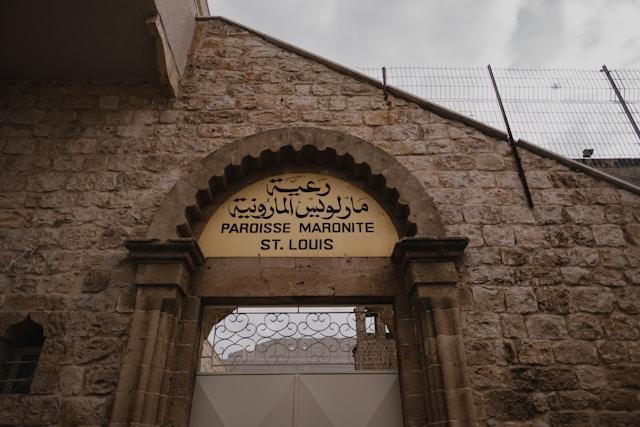
Maronite priests’ wives gather in Lebanon for first national meeting, affirming identity, mission, and role in Church and society.
Newsroom (22/05/2026 Gaudium Press ) On May 16, a milestone event unfolded within the Maronite Church in Lebanon: the first national meeting of the wives of Maronite priests. Known affectionately as “khouriyètes”—the feminine form of khoury, meaning priest—these women have long existed within the life of the Church without a clearly defined collective identity. That began to change as 154 participants gathered under the theme, “Vocation and mission of the ‘khouriyé’ in the Church.”
The gathering marked a significant turning point. It formally recognized the wives of priests as integral participants in their husbands’ priestly vocation and opened a pathway for structured formation and continued engagement within the Church. Organized jointly by the Diocese of Antelias, led by Bishop Antoine Bou Najem, and the Patriarchal Follow-up Committee of the Synod on Synodality, presided over by Bishop Mounir Khairallah of Batroun, the initiative represented both institutional support and a broader pastoral vision.
Between Tradition and Renewal
In a message addressed to the assembly, Cardinal Mario Grech, Secretary General of the Synod of Bishops, emphasized the dual significance of the initiative. He described it as a synthesis of fidelity to the long-standing Eastern tradition—where married clergy are a recognized and valued part of ecclesial life—and openness to the evolving role of women in contemporary society.
Cardinal Grech underscored that the presence and contribution of these women must not be viewed as secondary. Instead, their role should “fully accompany the priestly path,” becoming an essential dimension of the Church’s mission. Addressing the khouriyètes directly, he affirmed their calling as a “true vocation,” rooted not only in marriage but also in service to the ecclesial community.
Stories of Vocation and Daily Balance
Among the women present was Rita Abou-Mitri, 49, coordinator of the priests’ wives group in the Diocese of Antelias. Her experience reflects both the richness and the complexity of this dual vocation. Married to Fr Georges Abou-Mitri, parish priest of St Michael’s in Beit Chaâr, Rita is also a mother of three and a trained nurse who once worked in a major Beirut hospital.
Her story is emblematic of the balancing act many khouriyètes navigate daily. Early in her marriage, she left her professional career to care for her children, relying on her husband’s income—a combination of parish support and his work teaching catechism and offering spiritual guidance. Financial realities can vary widely; while some priests may receive a relatively stable parish salary, others earn far less, supplementing income through sacramental services such as baptisms and weddings.
Yet for Rita, the essence of her role lies not in sacrifice alone but in collaboration. She describes her marriage as a partnership of two intertwined vocations: priesthood and family life. “It is our collaboration that helps the family grow,” she explains, emphasizing that this shared mission requires flexibility, mutual support, and constant discernment.
“Leaving God for God”: A Spiritual Framework
A guiding principle for Rita is drawn from the spirituality of St Vincent de Paul: the idea of “leaving God for God.” This concept encourages prioritizing acts of charity and immediate human need over rigid adherence to routine spiritual practices.
In practical terms, this might mean stepping out of Mass to care for a child or leaving a parish meeting to respond to a family emergency. For Rita, this flexibility represents “a law of freedom,” allowing her to remain faithful to both her family responsibilities and her role within the parish community.
At the same time, boundaries are essential. She speaks of the need for restraint in her involvement across numerous parish activities—from youth groups and women’s committees to sacramental preparation and school relations—so that neither her family nor her husband’s ministry suffers from imbalance.
The Broader Context of Married Priesthood
The Maronite Church’s allowance for married clergy remains a distinctive element of its Eastern Catholic identity. Men choose between marriage and celibacy before ordination, and married priests cannot become bishops or remarry if widowed. This model has long been seen as a stabilizing force within Lebanese society, embedding priests deeply within family and community life.
In recent years, even Western contexts have seen limited extensions of this model. The late Pope Francis permitted the ordination of married Eastern priests in regions affected by migration, reflecting shifting pastoral realities.
Monsignor Paul Nahed, himself a married priest and secretary-general of the synodal follow-up committee, framed the issue succinctly: whether celibate or married, the essence of priesthood lies in wholehearted service and fidelity to Christ.
A Community Emerges
The diversity within the gathering itself spoke volumes. From a newly married woman of one week to another celebrating her 50th wedding anniversary—and even the wife of a priest whose own son is now a married priest—the event showcased a living tradition spanning generations.
Despite this, Rita acknowledged that the total number of khouriyètes in Lebanon remains unknown, highlighting the need for better data and continued organization.
The meeting concluded with small-group “dialogue in the Spirit,” a synodal process of listening and sharing, and an interactive session with Patriarch Beshara Raï, who addressed practical concerns such as financial stability and widowhood. Importantly, a follow-up committee was established to ensure continuity through pastoral and biblical formation programs.
A Pentecost Moment
For many participants, the gathering was more than an administrative milestone—it was a spiritual experience. Rita described the atmosphere as one of “listening, discernment and participation,” likening it to a Pentecost moment within the Church.
In claiming a collective identity, the khouriyètes have stepped into a more visible role—one that honors tradition while embracing a renewed vision of partnership, service, and shared mission in the life of the Church.
- Raju Hasmukh with files from Asianews.it
Related Images:


