









Amid U.S. terror designation for Cartel de los Soles and blocked cardinal, Venezuela’s Catholic Church defies Maduro, demanding justice and release of political prisoners.
Newsroom (17/11/2025 Gaudium Press ) In a deepening institutional crisis, Venezuela’s Catholic Church has positioned itself as one of the country’s final independent voices for moral and civic conscience, directly challenging Nicolás Maduro’s government at a moment of heightened domestic repression and renewed international pressure.
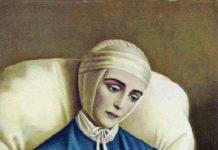
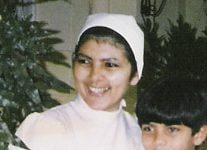
The rupture between the Maduro regime and the Catholic hierarchy reached a symbolic breaking point surrounding the October 19 canonizations in Rome of Venezuela’s first native-born saint, Dr. José Gregorio Hernández, and Blessed Carmen Rendiles. What could have been a rare occasion for national unity instead exposed an unbridgeable divide.
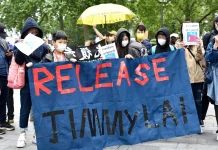
Days before the Vatican ceremony, the Venezuelan Episcopal Conference issued a pastoral letter on October 7 calling on authorities to grant clemency and free political prisoners, stating it was necessary “for the state authorities to adopt measures of pardon allowing for the release of those imprisoned for political reasons.” The NGO Foro Penal reported 875 political prisoners at the time.
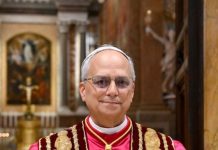
Speaking at a symposium at Rome’s Pontifical Lateran University two days before the canonizations, Caracas Archbishop Cardinal Baltasar Enrique Porras delivered a blistering assessment, describing Venezuela’s situation as “morally unacceptable.” He condemned the “weakening of the exercise of civic freedom,” “militarization as a mode of government,” and “corruption and lack of autonomy of public authorities,” while highlighting the destruction of family unity caused by state repression.
During the thanksgiving Mass in St. Peter’s Basilica on October 20, Vatican Secretary of State Cardinal Pietro Parolin amplified the message, invoking Isaiah to urge authorities to “open the unjust prisons, break the locks of shackles, free the oppressed, break all chains” and to rebuild Venezuela on “the foundations of justice, truth, and freedom.”
The Maduro government responded swiftly and aggressively. President Maduro sought to drive a wedge between the hierarchy and grassroots clergy, declaring, “I believe in the parish priest and I strongly believe in the new generation of priests,” while accusing Cardinal Porras of having “dedicated his entire life to conspiring against José Gregorio Hernández.” Powerful regime figure Diosdado Cabello echoed the attack, insisting the problem lay not with the Catholic Church but with a “hierarchy disconnected from what is happening at the grassroots level.”
Tensions escalated further when Cardinal Porras was effectively prevented from traveling to the saint’s birthplace in Isnotú for a thanksgiving Mass. His commercial flight was canceled, a chartered private plane was diverted to Barquisimeto, and all ground transportation from the airport was blocked. The cardinal denounced the incident as “an attack on a fundamental right,” asking, “What crime has been committed that prevents one from fulfilling a religious duty?” The Venezuelan Episcopal Conference immediately expressed solidarity, calling the events “deeply lamentable.”
The domestic confrontation is unfolding against a backdrop of intensifying external pressure. The United States recently designated the Cartel de los Soles—widely alleged to involve high-ranking Venezuelan officials—as a foreign terrorist organization. The USS Gerald R. Ford carrier strike group remains deployed in the Caribbean, and regional military mobilization has increased.
On November 16, U.S. President Donald Trump surprised observers by signaling possible diplomatic overtures, telling reporters at Palm Beach airport, “We could have discussions with Maduro, and we’ll see how it goes… They would like to talk.”
Yet inside Venezuela, the Catholic Church—despite harassment, travel restrictions, and attempts to fracture its unity—continues to articulate demands for justice, truth, and the liberation of political prisoners. In a country experiencing institutional collapse, rampant corruption, and widespread suffering, the Church remains one of the last national institutions capable of speaking with moral authority on behalf of a disoriented and oppressed population, insisting that no lasting reconstruction is possible without respect for human dignity and the rule of law.
- Raju Hasmukh with files from Tribune Chretienne
Related Images: