






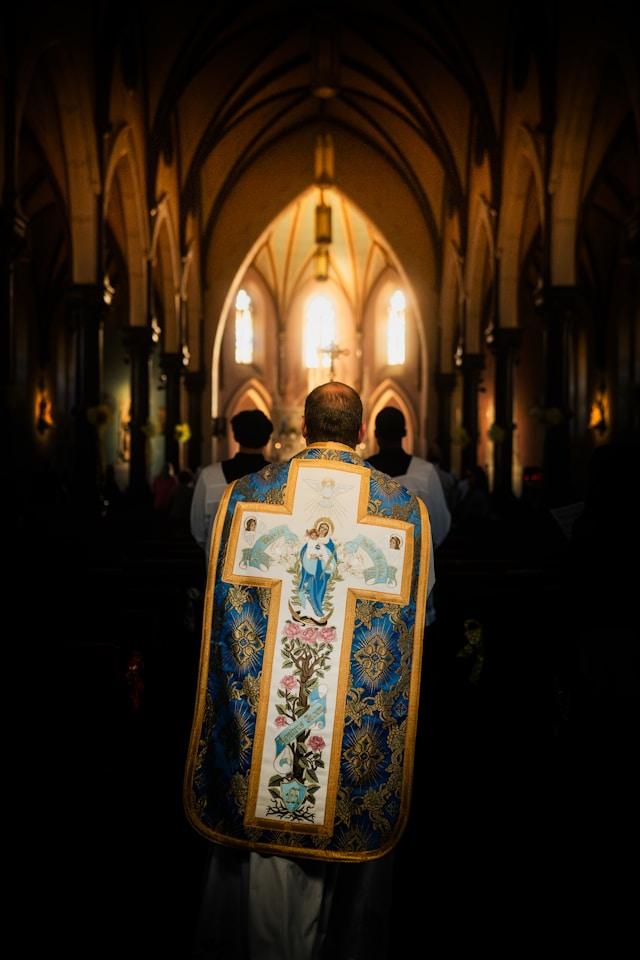
SSPX plans controversial bishop consecrations without papal consent, deepening tensions with Pope Leo XIV and challenging church authority.
Newsroom (24/06/2026 Gaudium Press ) A breakaway traditionalist Catholic group is poised to escalate its decades-long conflict with the Vatican by consecrating four bishops without papal approval, a move widely seen as a direct challenge to Pope Leo XIV’s authority and the unity of the Catholic Church.
The Society of St. Pius X (SSPX), known for its adherence to the traditional Latin Mass and rejection of modern church reforms, has organized a large-scale, four-day event at its seminary in Écône, Switzerland, culminating in the July 1 consecration ceremony. Far from operating discreetly, the group has embraced publicity, offering livestream coverage and even commemorative merchandise, including a limited-edition wine set for attendees.
The event underscores the SSPX’s evolution into what some observers describe as a digitally savvy movement that blends anti-modern theology with modern outreach. “They look really like Traditionalism 2.0,” said Massimo Faggioli, a theology professor at Villanova University. He noted that the group appears less interested in reconciliation with Rome than in solidifying its identity as a global hub for ultra-traditionalist Catholicism.
A Historic Rift Deepens
The SSPX traces its origins to 1970, when it was founded in Switzerland in opposition to reforms introduced by the Second Vatican Council. Those reforms included allowing Mass to be celebrated in vernacular languages rather than Latin, a change that deeply unsettled traditionalists.
The group formally broke with Rome in 1988, when its founder, Archbishop Marcel Lefebvre, consecrated four bishops without papal consent. The Vatican responded by excommunicating Lefebvre and the newly consecrated bishops, and the SSPX has remained without official status in the church ever since.
Despite its irregular standing, the SSPX has steadily expanded its global presence. Today, it operates a network of schools, seminaries, and parishes, supported by hundreds of clergy and religious members across dozens of countries. According to its own figures, the organization includes two bishops, more than 700 priests, and hundreds of seminarians and religious personnel.
The upcoming consecrations—of Pascal Schreiber (Switzerland), Michael Goldade (United States), Michel Poinsinet de Sivry (France), and Marc Hanappier (France)—are intended to bolster leadership ranks. SSPX officials argue the move is necessary, citing the advanced age of its existing bishops and the demands of its growing international community.
Vatican Response: “Schismatic Act”
The Vatican has issued strong warnings against the planned ceremony, calling it a “schismatic act” and a “grave offense to God.” Under church law, bishops consecrated without papal mandate—and those who perform the consecrations—automatically incur excommunication.
At the heart of the dispute is papal authority over episcopal appointments, a cornerstone of Catholic doctrine that ensures apostolic succession and unity with Rome. By proceeding without approval, the SSPX effectively signals its continued rejection of that authority.
Father Davide Pagliarani, the SSPX superior, has defended the decision by invoking a “state of necessity,” arguing that the post-Vatican II Church has deviated from core teachings and that extraordinary measures are required to “save souls.” The Vatican, however, rejects this justification as unfounded.
Efforts to resolve the standoff have reached another impasse. Although Vatican officials invited Pagliarani for discussions, longstanding theological disputes—particularly regarding the Second Vatican Council—remain unresolved.
A Public, Organized Display of Defiance
The scale and visibility of the planned event suggest that confrontation with Rome is not only anticipated but, in some respects, embraced. Thousands are expected to attend, with meticulous logistical arrangements including accommodation options, carpool coordination from over 100 locations, and prepaid meal plans using festival-style wristbands.
The sale of a commemorative “Cuvée des Sacres” wine set further highlights the event’s blend of tradition and modern branding. Priced at 75 Swiss francs, the collection features four bottles with labels symbolizing episcopal insignia such as the miter, ring, cross, and crozier.
Observers say such efforts reflect a deliberate strategy. “They never had any idea of walking back,” Faggioli remarked, pointing to the extensive preparation as evidence of long-term intent.
Pope Leo XIV Signals Acceptance of Consequences
Pope Leo XIV has responded with a measured tone, acknowledging both the seriousness of the act and the likelihood that it will proceed. While he indicated he might make a final appeal for reconciliation, he emphasized that the SSPX bears responsibility for its choices.
“It is their choice,” the pope said, noting that division within the Church is always painful but must sometimes be confronted. He reiterated that the SSPX continues to reject key elements of Catholic teaching, particularly those stemming from Vatican II.
From the outset of his papacy, Leo has sought to ease tensions with traditionalists, a group whose relationship with Rome became strained under Pope Francis. However, the SSPX’s actions appear to place them beyond the reach of such efforts.
Divided Reactions Among Traditionalists
The planned consecrations have elicited mixed reactions from within the broader traditionalist Catholic community. While some sympathize with the SSPX’s critique of the modern Church, many reject the move as unlawful and potentially damaging.
Joseph Shaw, head of the Latin Mass Society of England and Wales, described the event as unusually transparent compared to other unauthorized ordinations. At the same time, he emphasized the importance of maintaining clarity and legitimacy in sacramental practices.
Others have criticized both sides. Luigi Casalini, associated with the “Messa in Latino” blog, condemned the consecrations as “grievously unlawful” while also accusing the Vatican of inconsistency. He argued that Rome has been harsher toward SSPX’s ultra-conservative stance than toward progressive reforms in parts of the German Church.
Perhaps anticipating such criticisms, the Vatican recently reaffirmed existing rules barring laypeople from delivering homilies at Mass, rejecting a request from German bishops and reinforcing its doctrinal authority.
A Test of Unity in a Changing Church
The July 1 consecrations mark a pivotal moment in the long-running conflict between the SSPX and the Vatican. They highlight not only enduring theological divides but also the evolving strategies of dissent within the modern Church.
As the SSPX leans into its identity—combining traditional liturgy with contemporary organization and outreach—the challenge it poses to Rome is no longer merely historical. It is increasingly a question of how authority, tradition, and unity will coexist in a global and rapidly changing religious landscape.
- Raju Hasmukh with files from Crux Now
Related Images:


