






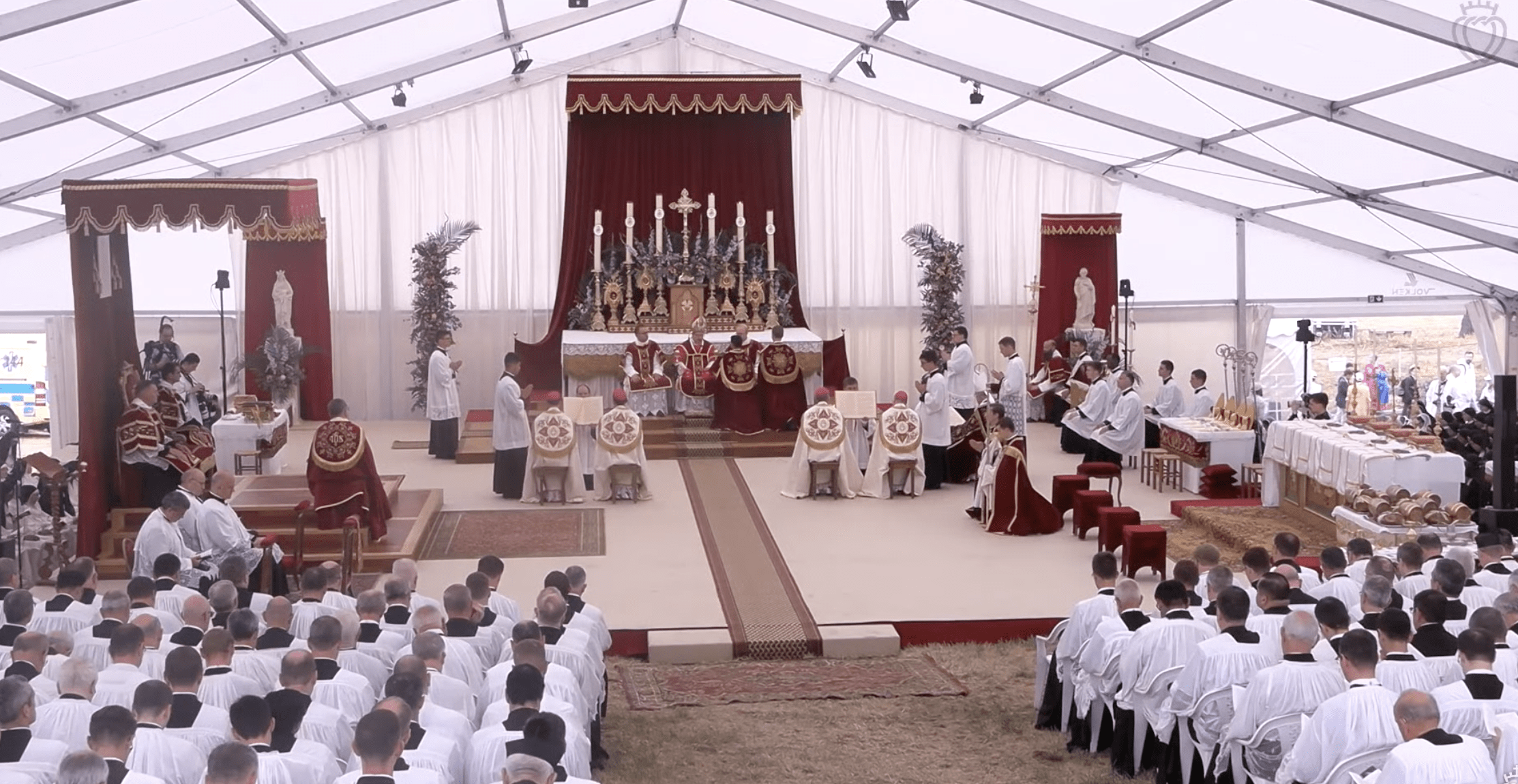
SSPX files canonical appeal against a Vatican decree, invoking canon law provisions it says suspend enforcement pending review.
Newsroom (14/07/2026 Gaudium Press )The Society of Saint Pius X (SSPX) has formally initiated a canonical challenge against a decree issued by the Dicastery for the Doctrine of the Faith, marking the beginning of a legal process provided for under the Code of Canon Law.
According to a statement released by the Priestly Fraternity of Saint Pius X on July 13, the organization filed an administrative appeal on July 11 against the decree published by the Vatican dicastery on July 2. The appeal was submitted in accordance with canons 1734 and following of the Code of Canon Law, which govern the procedures for contesting administrative acts issued by ecclesiastical authorities.
Canonical Procedures for Challenging Administrative Decrees
The SSPX bases its action on a series of canons that establish the legal framework for seeking the review of administrative decisions within the Church.
Under Canon 1734, anyone who believes they have been harmed by an administrative decree must first submit a written request to the authority that issued the decree, asking for its revocation or modification. This request must be filed within ten working days following notification of the decree.
Canon 1735 grants the issuing authority thirty days to respond. If the authority rejects the request or modifies the decree, the time period for any subsequent appeal begins at that point.
The Code also addresses the question of implementation during the review process. Canon 1736 provides that where the law grants an appeal a suspensive effect, the request for reconsideration itself suspends execution of the decree. In other situations, suspension may be sought from a higher authority.
If the initial petition is unsuccessful, Canon 1737 allows the interested party to present an appeal before the competent superior authority within fifteen working days.
Finally, Canon 1739 gives the reviewing authority broad powers. It may uphold the decree, declare it invalid, revoke it, modify it, or replace it entirely with another decision.
SSPX Argues Decree Is Suspended
In its statement, the Fraternity maintains that the filing of its appeal has the effect of suspending execution of the decree while the matter is under examination.
The SSPX specifically invokes Canon 1353, arguing that the appeal automatically prevents enforcement until the competent authority has ruled on the petition. Based on this interpretation, the Society contends that the decree issued by the Dicastery for the Doctrine of the Faith cannot be implemented while the appeal remains pending.
The question of suspension is central to the current proceedings, as it determines whether the contested decree can take effect before a final decision is rendered through the canonical review process.
Preliminary Step Before Possible Hierarchical Appeal
The Society describes its filing not as the final stage of litigation but as a preliminary procedure required by canon law.
According to the organization, the submission constitutes the initial remedy available to any person or institution that believes an administrative action of the Church has caused harm. This step must be completed before pursuing a formal hierarchical appeal against an act of the Holy See.
The SSPX emphasized that it is exercising a right explicitly recognized within the canonical legal system. The organization stated that its action is being undertaken “in a spirit of respect for ecclesiastical authority” and with the aim of seeking “justice, truth and the good of the Church.”
A Process Within Established Canonical Structures
The appeal places the dispute firmly within the administrative procedures established by the Code of Canon Law for reviewing Vatican decisions.
The SSPX noted that the current process differs significantly from the events surrounding the episcopal consecrations of 1988, when disputes were addressed principally through canonical declarations and sanctions. By contrast, the present matter is proceeding through the formal administrative appeals mechanism specifically provided for under Church law.
Under this framework, the Dicastery for the Doctrine of the Faith remains the competent authority responsible for examining the challenge and handling the review process in accordance with canonical norms.
Awaiting the Holy See’s Response
With the appeal now filed, attention turns to the Vatican’s response and the application of the procedural timelines established by canon law.
The Society of Saint Pius X concluded its statement by entrusting the process to the prayers of the faithful as it awaits a decision from the Holy See. The outcome of the appeal will determine whether the challenged decree is upheld, modified, revoked, or replaced through the mechanisms provided by the Church’s legal system.
- Raju Hasmukh with files from Infovaticana
Related Images:


