






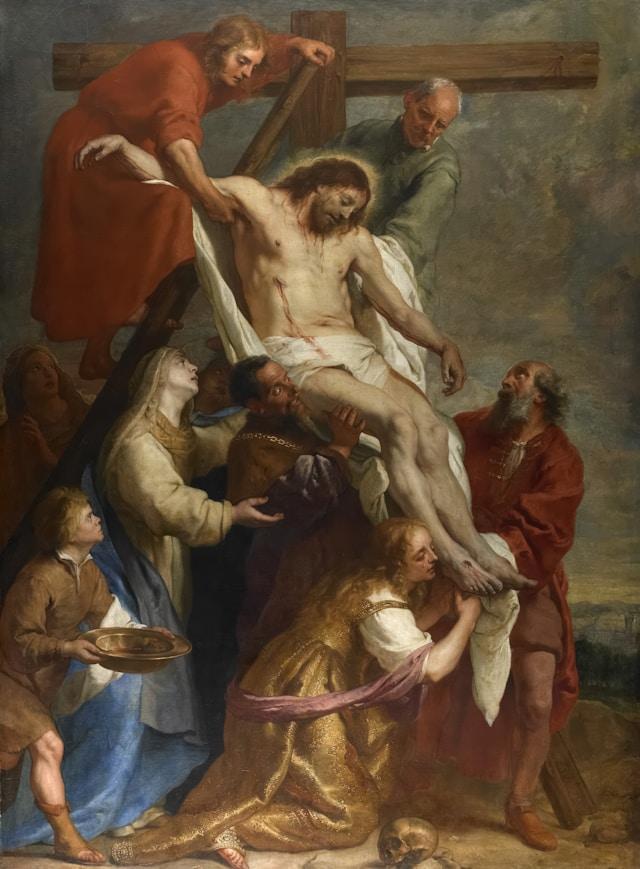
Restored Flemish triptych returns to Granada, highlighting Queen Isabella I’s spirituality and enduring legacy in sacred art and prayer.
Newsroom (18/06/2026 Gaudium Press ) The Royal Chapel of Granada marked a significant cultural and spiritual milestone on Wednesday with the unveiling of the restored 15th-century Flemish triptych Descent from the Cross, attributed to renowned painter Dieric Bouts. The artwork, freshly returned after a meticulous three-year restoration in Belgium, has reclaimed its place as one of the chapel’s most treasured devotional pieces.
The ceremony drew prominent religious figures, including the Archbishop of Granada, Monsignor José María Gil Tamayo, and the Head Chaplain of the Royal Chapel, Manuel Reyes. Both underscored not only the artistic importance of the triptych but also its deep spiritual resonance, particularly in connection to Queen Isabella I of Castile.
A Work Rooted in Royal Devotion
According to the Archdiocese of Granada, the triptych once formed part of the private devotional panels before which Queen Isabella prayed. Its return has therefore revived more than an artistic masterpiece—it has reawakened a tangible link to the monarch’s personal spirituality.
In his address, Archbishop Gil Tamayo emphasized the contemplative significance of the painting, noting that Queen Isabella meditated upon the Passion of Christ through works such as this. He expressed hope that modern viewers might rediscover the same spiritual insights the Queen sought, inviting the faithful to reflect deeply on the meaning of Christ’s sacrifice.
The triptych, depicting the moment following the Crucifixion when Christ is taken down from the cross, stands as a powerful example of Flemish religious art. Its detailed emotional realism and theological depth make it one of the most notable works preserved in the Royal Chapel, which itself was established by the Catholic Monarchs following their conquest of Granada.
Spiritual Formation and Artistic Reflection
Head Chaplain Manuel Reyes expanded on the context of Queen Isabella’s devotional practices, highlighting the influence of Friar Hernando de Talavera, the first Archbishop of Granada. Talavera played a central role in shaping the Queen’s spiritual life, encouraging a combination of intellectual and contemplative devotion.
Reyes explained that devotional artworks like the Descent from the Cross were not mere decoration but integral tools for meditation. For Isabella, such images complemented readings from the life of Christ, structured prayer, and the recitation of the Divine Office. These elements together fostered a deeply personal encounter with faith.
“Reading about the life of Christ and leaning on the beauty of paintings were the elements experienced, read, reflected upon and contemplated in the domestic sphere,” Reyes noted, portraying the Queen’s piety as both structured and intimate. The triptych, in this sense, becomes a visual testament to her sincere and profound religious commitment.
Exhibition and Future Placement
Following its unveiling, the restored artwork will remain temporarily on display through September as part of a special exhibition dedicated to Dieric Bouts. Afterward, it will return to its usual place within the museum-sacristy of the Royal Chapel, ensuring continued access for scholars, visitors, and the faithful alike.
Beatification Efforts Remain Active
The event also served as a reminder of the ongoing cause for the beatification of Queen Isabella I, a process that has been open for decades within the Catholic Church. Manuel Reyes reaffirmed the commitment of the Royal Chapel’s Chapter to advancing this cause, linking it closely to the Queen’s enduring spiritual and historical legacy.
He further noted that Queen Isabella herself chose Granada as her burial site, cementing the city’s role as a focal point of her memory. Local authorities, including the City Council, continue to support efforts toward her recognition as a saint, aligning civic pride with religious heritage.
A Convergence of Art, Faith, and History
The return of the restored triptych has thus transcended the realm of art restoration, offering a moment of reflection on Spain’s religious and historical identity. By reconnecting contemporary audiences with a work that shaped the spiritual life of one of the country’s most influential monarchs, the Royal Chapel of Granada reaffirms its role as a bridge between past and present.
In the renewed glow of Bouts’ masterpiece, the legacy of Queen Isabella I—her faith, her influence, and her enduring presence in Granada—once again comes vividly into focus.
- Raju Hasmukh with files from Infovaticana
Related Images:


