






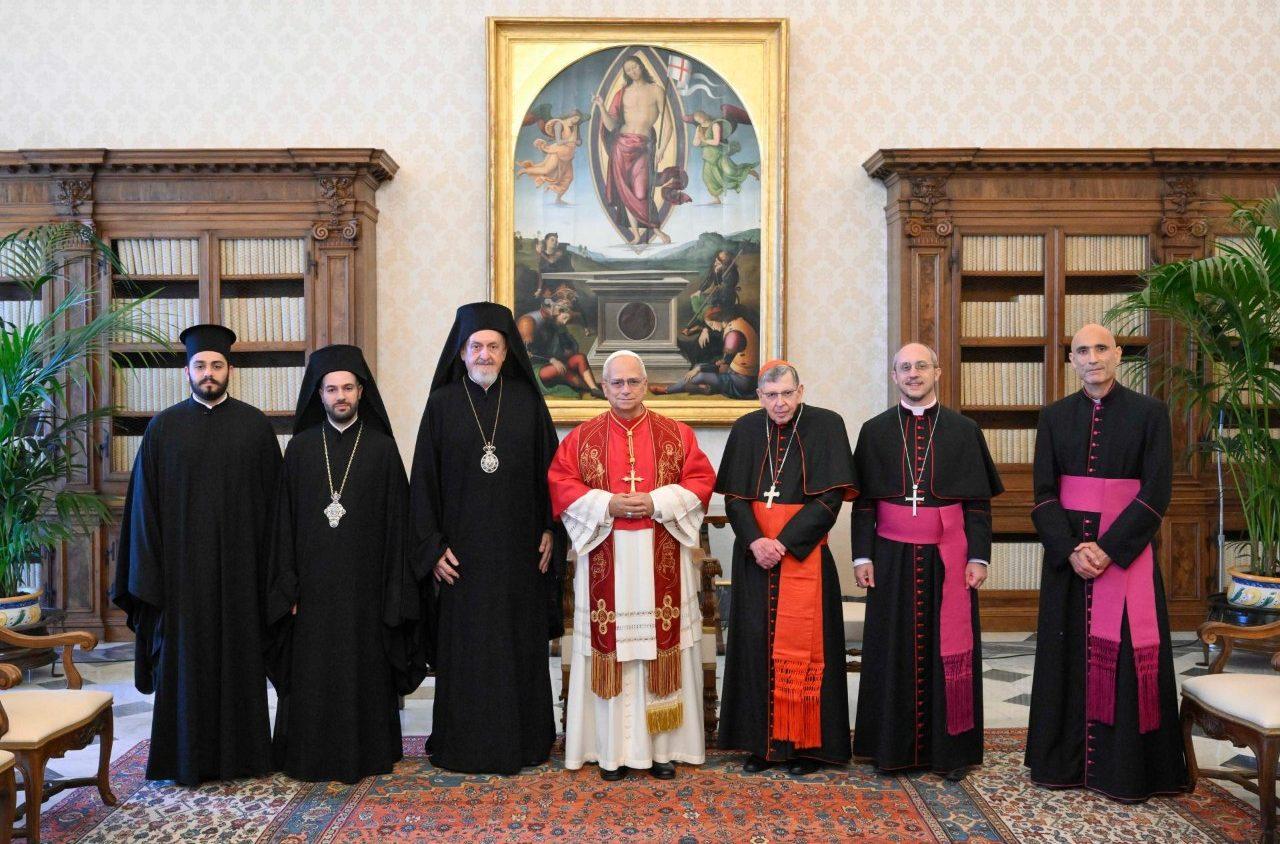
Pope Leo XIV urges Christian unity, peace, and cooperation ahead of the 2033 Jubilee of the Redemption during a Vatican meeting.
Newsroom (30/06/2026 Gaudium Press ) Pope Leo XIV has called on Christian communities across the world to undertake a shared journey toward the celebration of the Year 2033, marking two thousand years since the Redemption of Christ, while emphasizing the urgent need for Christians to present a united witness in a world increasingly marked by conflict, polarization, and social division.
Addressing a delegation from the Ecumenical Patriarchate of Constantinople at the Vatican on Tuesday, on the occasion of the Solemnity of Saints Peter and Paul, the Pope expressed his hope that all Christian denominations will work together in preparation for the milestone anniversary.
“May the journey towards the celebration of the second millennium of the Redemption, in 2033, be undertaken together by all the Christian denominations of the world, rediscovering the gift and the call to be witnesses to the Risen One,” Pope Leo said.
The meeting formed part of the long-standing tradition of exchanges between the Catholic Church and the Orthodox Patriarchate of Constantinople during the feast days of their respective patron saints, a practice widely viewed as a symbol of growing fraternity between the two Churches.
Strengthening Ties with Constantinople
Welcoming the delegation, Pope Leo described their presence as a sign of the close relationship between the Catholic Church and the Church of Constantinople, as well as a reflection of the leadership of Ecumenical Patriarch Bartholomew I.
The Pope expressed gratitude to Patriarch Bartholomew and members of the Holy Synod for continuing the tradition of sending representatives to Rome, highlighting the importance of sustained dialogue and mutual engagement.
He also recalled his participation last year in the Feast of Saint Andrew at the Patriarchal Church of Saint George in the Phanar, the historic seat of the Ecumenical Patriarchate in Istanbul. Reflecting on his meetings with Patriarch Bartholomew, Pope Leo said those encounters strengthened their friendship and enabled meaningful discussions on a range of issues, particularly their shared commitment to advancing Christian unity.
According to the Pontiff, the pursuit of “full unity amongst all Christians” remains a central objective of ongoing ecumenical efforts.
Nicaea Anniversary Reinforces Foundations of Unity
A significant theme of the Pope’s remarks was the recent commemoration of the 1,700th anniversary of the First Council of Nicaea, one of the most influential gatherings in Christian history. Held in present-day İznik, the anniversary celebrations, he said, provided powerful evidence of the communion already existing among Christians who profess belief in the Triune God.
Pope Leo emphasized that shared faith in God the Father, Jesus Christ the Son, and the Holy Spirit remains a vital point of unity for Christians across traditions.
The Pope described the Nicene Creed as both the foundation and guiding principle of the ecumenical journey, arguing that it offers a model for authentic unity without erasing legitimate diversity.
“The Nicene Creed must be the foundation and guiding principle of this ecumenical journey,” he said, describing it as an expression of “Unity in the Trinity, Trinity in Unity.”
A Christian Response to a Fragmented World
Moving beyond church relations, Pope Leo connected Christian unity to some of the most pressing challenges facing the modern world.
He warned that contemporary society is increasingly characterized by wars, political polarization, and cultural and social divisions. In this context, he said, Christians who are reconciled and united in their faith are called to be a credible witness to peace.
The Pope argued that a united Christian presence could make a meaningful contribution to broader efforts aimed at fostering reconciliation and cooperation among peoples and nations.
“In an age marked by wars and growing polarization, as well as cultural and social divisions,” he said, Christians are called to become “a credible sign of peace.”
Significantly, Pope Leo suggested that the stakes extend beyond the reputation of Christianity itself. He stated that current challenges place both the credibility of the Christian message and the future of humanity at risk.
Cooperation on Global Challenges
The Pontiff also stressed the need for practical cooperation among Christian communities in addressing major global concerns.
Among the issues he highlighted were the pursuit of peace, the ethical use of emerging technologies, and care for creation. Such cooperation, he said, is not simply a strategic necessity but a consequence of the teachings of the Gospel.
Pope Leo maintained that Christian engagement with these challenges must be guided by a commitment to human dignity and a concern for those most vulnerable in society.
“Our responsibility for the life and dignity of every human being, beginning with the youngest and most needy, is the criterion that will determine our present and eternal destiny,” he said.
Looking Toward 2033
Concluding his address, Pope Leo reiterated his appreciation for the delegation’s visit and praised both its members and the Ecumenical Patriarchate for their ongoing efforts to promote Christian unity.
He assured them of his prayers and invoked the intercession of Saints Peter and Andrew—brothers in both blood and faith—as symbols of the unity Christians continue to seek.
As preparations gradually begin for the commemoration of two thousand years of the Lord’s Redemption in 2033, Pope Leo’s message underscored a vision of closer cooperation among Christian denominations. His appeal places unity, shared witness, and service to humanity at the center of the Church’s response to a world facing deep divisions and growing uncertainty.
- Raju Hasmukh with files from Vatican News
Related Images:


