






Religious leaders in Rome unite to promote fraternity, interfaith dialogue, and peace between Christian and Dharmic traditions across Europe.
Newsroom (30/06/2026 Gaudium Press ) Representatives of Christianity and the Dharmic traditions of India gathered in Rome this month for a landmark conference aimed at strengthening interreligious cooperation and promoting human fraternity in an increasingly fragmented world.
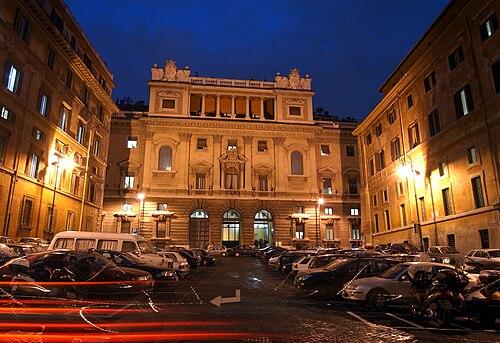
Held June 23–24 at the Pontifical University of St. Thomas Aquinas, known as the Angelicum, the conference brought together religious leaders, academics, and community representatives from across Europe under the theme, “Buddhists, Christians, Hindus, Jains and Sikhs in Europe: Building Fraternity through Dialogue and Collaboration.”
The gathering highlighted the growing importance of dialogue among faith communities at a time when societies face mounting challenges ranging from armed conflict and social division to rising cultural tensions.
Bridging Religious Traditions
The Indian subcontinent, home to more than one billion people and a rich spiritual heritage, has given rise to some of the world’s most influential philosophical and religious traditions. Hinduism, Buddhism, Jainism, and Sikhism—all commonly described as Dharmic traditions—share key concepts, including dharma (cosmic order and duty), karma (moral and cosmic justice), samsara (reincarnation), and spiritual liberation, often expressed as moksha or nirvana.
While these traditions differ significantly from Christian theology in many respects, participants at the Rome conference explored whether meaningful cooperation and mutual understanding can flourish despite theological differences.
The event was organized by the Dicastery for Interreligious Dialogue in partnership with several organizations, including the Council of European Bishops’ Conferences, the Focolare Movement, the Institute for Interreligious Relations at the Angelicum, the Hindu Forum of Europe, the European Buddhist Union, the Institute of Jainology, and the Sikhi Sewa Society of Italy.
The conference followed a similar gathering held last year at Rome’s Pontifical Gregorian University, which focused on the realities of intercultural and interreligious life in Italy.
Inspired by the Spirit of Assisi
According to Monsignor Michael Santiago, who oversees the Dicastery for Interreligious Dialogue’s engagement with India and broader Asian cultural regions, the conference commemorated the 40th anniversary of the historic 1986 World Day of Prayer for Peace convened by St. John Paul II in Assisi.
“The conference underlined the need for Christians and adherents of Dharmic religions in Europe to build bridges,” Santiago said.
He also pointed to Pope Leo XIV’s repeated calls for dialogue, collaboration, justice, and peace as central motivations behind the initiative.
Throughout the two-day event, participants emphasized that dialogue between religious and cultural communities remains essential for fostering mutual respect, solidarity, and hope. Discussions focused on practical ways faith communities can work together to address contemporary social challenges while promoting peaceful coexistence.
Fraternity as a Practical Reality
Opening the conference, Cardinal George Koovakad, prefect of the Dicastery for Interreligious Dialogue, acknowledged the immense challenges facing the concept of fraternity today.
He noted that wars, violence, discrimination, conflict, and hatred continue to undermine relationships between peoples and nations. Yet, despite these realities, Koovakad argued that fraternity should not be dismissed as an unrealistic ideal.
“Fraternity remains a concrete and lived reality,” he said, capable of enduring even amid deep divisions and hostility.
The cardinal drew inspiration from what he described as the “Spirit of Assisi,” referencing both the anniversary of St. John Paul II’s peace gathering and the upcoming 800th anniversary of the death of St. Francis of Assisi later this year.
Koovakad connected the conference’s message to the vision articulated in Pope Francis’s encyclical Fratelli Tutti and echoed in Pope Leo XIV’s appeals for dialogue and bridge-building. According to the cardinal, genuine fraternity has the power to transform religious and cultural diversity from a source of division into an opportunity for mutual enrichment.
Europe’s Religious Diversity
A significant focus of the discussions centered on Europe’s evolving religious landscape.
Koovakad described Europe as a continent shaped by centuries of cultural and religious exchange and integration. Today, he said, it has become an even richer mosaic of peoples, languages, cultures, and faith traditions.
In this environment, the cardinal stressed the importance of cultivating an inclusive and harmonious society that protects the dignity and rights of every individual, including the freedom to profess and practice one’s religion.
Participants broadly agreed that safeguarding these values is essential for maintaining social cohesion in an increasingly diverse Europe.
A Living Example of Interfaith Encounter
Among the representatives of the Dharmic traditions was Parabhakti Dasa of the International Society for Krishna Consciousness (ISKCON), a global Hindu movement founded in New York during the 1960s.
Today, ISKCON has approximately one million members worldwide and maintains around 100 temples and cultural centers throughout Europe, serving thousands of congregants, many from the Indian diaspora.
Reflecting on the conference in a travel account published by ISKCON News, Dasa highlighted a particularly memorable moment when participants attended Pope Leo XIV’s weekly General Audience on June 24.
He described the experience as deeply meaningful and spiritually significant for attendees from various faith traditions.
“For many of the participants,” Dasa wrote, “standing together in one of Christianity’s most sacred spaces, having spent two days in dialogue about fraternity and peace, was itself a powerful living testimony to what interreligious encounter can look like in practice.”
A Shared Vision for the Future
The conference concluded with a clear message: while theological differences remain, cooperation rooted in mutual respect can play a vital role in addressing the challenges of modern society.
By bringing together Christians, Buddhists, Hindus, Jains, and Sikhs under a common commitment to peace and human dignity, organizers sought to demonstrate that dialogue is not merely an idealistic aspiration but a practical path toward stronger, more cohesive communities.
As religious diversity continues to shape Europe’s future, participants expressed hope that initiatives such as the Rome gathering can serve as models for building understanding across traditions and transforming differences into opportunities for collaboration and shared human flourishing.
- Raju Hasmukh with files from Crux Now
Related Images:


