






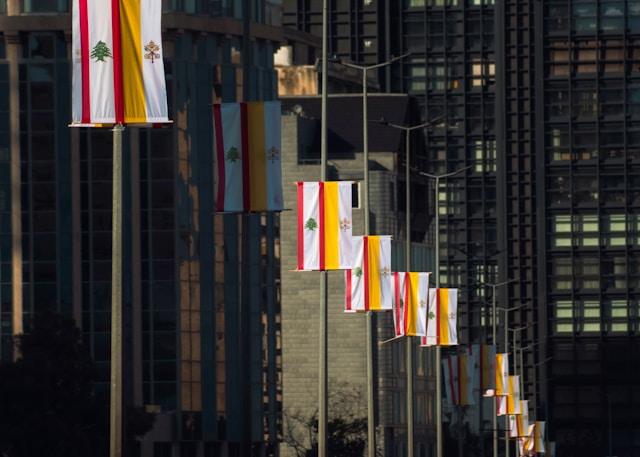
Patriarch Elias Hoayek nears beatification after miracle recognition, renewing debate on Lebanon’s pluralist identity and historic mission.
Newsroom (27/05/2026 Gaudium Press ) The Maronite Church and Lebanon are marking a significant milestone following the Vatican’s recognition of a miracle attributed to Patriarch Elias Hoayek, a figure widely regarded as one of the principal architects of modern Lebanon. On 22 May, Pope Leo XIV authorised the promulgation of a decree acknowledging the miracle, paving the way for the patriarch’s forthcoming beatification.
For many in Lebanon, the development is more than a religious event—it is a moment of historical reflection. Hoayek, who served as Maronite patriarch from 1899 until his death in 1931, is often remembered as the driving force behind the establishment of Greater Lebanon in 1920, a state envisioned as pluralistic, multi-confessional, and rooted in coexistence.
The Miracle and the Path to Beatification
The miracle recognized by the Vatican dates back to 1965 and concerns the healing of Nayef Abou Assi, a Druze army officer who suffered from a chronic spinal condition. According to accounts, Abou Assi awoke one day completely cured after dreaming of Patriarch Hoayek. The case has now been deemed sufficient for advancing the patriarch’s cause for beatification.
A ceremony is expected to take place either in Bkerké, the patriarchal seat, or in Ibrine, where Hoayek is buried, though a date has yet to be announced.
A Life of Service and Leadership
Born in 1843 in Helta, in northern Lebanon’s Batroun region, Hoayek grew up in a clerical family as the son of a priest. Early on, he distinguished himself for his intellect and composure. After studies in local seminaries and in Rome at the Pontifical Urban College, he was ordained in 1870 during the First Vatican Council.
Upon returning to Lebanon, he took on roles as a theology professor and secretary to Patriarch Paul Massaad. His responsibilities quickly expanded, and in 1889 he was appointed patriarchal vicar bishop, representing the Maronite Church in key missions to the Holy See and France. Among his accomplishments was helping reopen the Maronite College in Rome.
In 1895, Hoayek founded the Congregation of the Maronite Sisters of the Holy Family, a religious order that continues to operate today. Four years later, in 1899, he was elected patriarch.
As head of the Church, Hoayek emphasized both clergy formation and social responsibility. He sought to improve priestly education, ensuring clergy could act as educators and spiritual guides, while simultaneously strengthening outreach to the poor.
Leadership in Crisis and the Birth of a Nation
Hoayek’s leadership was particularly evident during World War I, when famine and hardship devastated the region. He opened monasteries and convents to shelter and feed those in need, regardless of religious affiliation, and even mortgaged patriarchal lands to sustain relief efforts. This humanitarian response significantly heightened his stature among the population.
His political role became critical in the aftermath of the war. In 1919, during negotiations at the Versailles Conference following the collapse of the Ottoman Empire, Hoayek successfully advocated for the creation of the State of Greater Lebanon. The entity he envisioned was not merely territorial but ideological—designed as a pluralistic and democratic society that embraced diversity among its religious communities.
This achievement earned him the enduring title “Father of Greater Lebanon,” a designation still invoked in both historical and political discourse.
A “Providential and Prophetic Sign”
News of the Vatican’s decision has been met with strong reactions from Church leaders and religious communities. Sister Marie-Antoinette Saadé, superior of the Congregation founded by Hoayek, described the moment as deeply significant.
“It is an immense joy for us,” she said, noting both his role as founder and his broader historical importance. She characterized the beatification as “a providential and prophetic sign,” urging renewed belief in a Lebanon that is “pluralistic” and “free.”
For Sister Saadé, Hoayek embodies what she called the “Lebanon-message,” echoing the concept once highlighted by Pope John Paul II—a model of coexistence intended to inspire both East and West.
A Message for a Fragile Present
Church leaders also see the beatification process as timely, given Lebanon’s current challenges. Bishop Mounir Khairallah of Batroun described the recognition of the miracle as “a grace from God and a sign of the times.”
“It is a message of hope for Lebanon,” he said, pointing to concerns over the country’s identity and territorial integrity. In a nation grappling with political divisions and uncertainty, Hoayek’s legacy is being revisited as a symbol of unity and vision.
Others within the Maronite Church highlight his role not only as a nation-builder but also as a reformer who strengthened ecclesiastical structures and restored discipline within dioceses and monasteries.
At the same time, his legacy remains subject to debate. Some critics question the outcomes of the Greater Lebanon project, arguing that subsequent generations struggled to manage the political framework it created. Yet defenders caution against judging historical decisions through contemporary lenses, emphasizing the context and challenges of Hoayek’s era.
Looking Ahead
As preparations begin for the beatification ceremony, Patriarch Elias Hoayek’s life and work are once again at the center of national reflection. For many, his path to sainthood is inseparable from Lebanon’s enduring struggle to define itself—a country striving to remain faithful to the pluralistic vision that shaped its foundation.
Whether viewed as a religious milestone or a historical reckoning, the recognition of Hoayek’s legacy underscores a central question that continues to resonate: can Lebanon reclaim the spirit of unity and coexistence that once defined its founding aspiration?
- Raju Hasmukh with files from Asianews.it
Related Images:


