






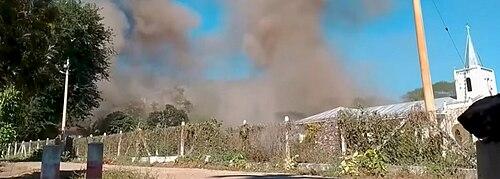
Myanmar bishop warns of worsening crisis as war displaces clergy and civilians, forcing church closures and driving thousands into hardship.
Newsroom (09/06/2026 Gaudium Press ) A Catholic bishop from Myanmar has delivered a stark account of the country’s deepening humanitarian crisis during a visit to the Vatican, warning that the prolonged civil war is not only displacing civilians but also forcing members of the clergy to abandon their dioceses.
Bishop Felice Ba Htoo of Pekhon, speaking during an ad limina apostolorum visit to Rome, revealed that since the outbreak of conflict in 2021, five out of Myanmar’s 17 diocesan bishops have been driven from their episcopal sees. The upheaval reflects the broader collapse of stability following the military coup that has plunged the Southeast Asian nation into violence and widespread displacement.
The affected dioceses—Pekhon, Loikaw, Banmaw, Mindat, and Lashio—have seen their bishops leave their cathedral churches and relocate to safer parishes far from active conflict zones. According to Bishop Htoo, the crisis has directly impacted Church structures and community life.
“We bishops have not been immune to this reality either,” he said, noting that numerous parishes have been either destroyed, attacked, or abandoned as congregations fled ongoing fighting.
A Church Under Siege
Myanmar’s civil war, triggered by the 2021 coup led by military chief Min Aung Hlaing, has led to extensive human suffering. Thousands have been killed, tens of thousands arrested, and millions displaced amid clashes between the military and a coalition of ethnic armed groups and People’s Defense Forces.
Within this volatile environment, the Catholic Church has faced mounting pressure. Bishop Htoo reported that seven of the 16 parishes in his Pekhon diocese have been closed, while approximately 60,000 parishioners have been forced to relocate, primarily to rural areas.
Clergy and religious workers have adapted by moving alongside displaced populations, continuing pastoral care under difficult and often dangerous conditions. Rather than operating from traditional parish structures, they now minister in jungles, temporary camps, and isolated villages spared from the heaviest violence.
“We try to meet them, console them, and offer them a word of hope,” Bishop Htoo explained, emphasizing the Church’s role in sustaining morale and spiritual resilience.
Humanitarian Strain Intensifies
The bishop described a rapidly deteriorating humanitarian situation in his diocese, which has received around 40,000 newly displaced people from various faith communities. Many arrived from the western regions of the diocesan territory, seeking refuge from escalating conflict.
Basic needs have become increasingly difficult to meet. Among the most pressing challenges is access to water, now a critical factor driving further displacement as resources grow scarce.
At the same time, the prolonged nature of the conflict has eroded local capacity for mutual support. In the early stages of the crisis, communities shared land and resources with displaced families. However, as the war drags on, those resources have significantly diminished.
“Now, residents must support their own families and no longer have resources to share,” Htoo said, underscoring the mounting strain on both host communities and displaced populations.
Strategic Region, Ongoing Conflict
The Pekhon diocese, located in southern Shan State, lies along a strategically important corridor where military forces and resistance groups continue to clash. Control over communication routes in this region has intensified fighting, leading to repeated waves of displacement and destruction.
Despite these conditions, Church leaders have remained present among their communities, seeking to preserve a sense of cohesion amid fragmentation and loss.
Vatican Engagement
Bishop Htoo’s remarks came during the bishops’ periodic visit to Rome, during which they meet with the pope and Vatican officials to report on the spiritual and administrative state of their dioceses.
During this visit, Myanmar’s prelates met with Pope Leo XIV, bringing firsthand accounts of the crisis to the global Church leadership. The discussions highlighted not only the scale of suffering but also the resilience of local communities and clergy.
A “Pilgrimage of Hope”
After five years of sustained conflict, exhaustion and trauma are widespread among Myanmar’s population. Yet, Bishop Htoo framed the Church’s mission in spiritual terms, describing the present moment as a test of faith.
“People are weary and traumatized by a conflict that has continued for five years. In this context of trial and suffering, we live our pilgrimage of hope,” he said.
His words reflect a broader effort by Church leaders in Myanmar to balance acknowledgment of profound suffering with a message of endurance and hope—an approach that continues to guide their ministry amid one of the country’s most challenging periods in recent history.
- Raju Hasmukh with files from UCA News
Related Images:


