






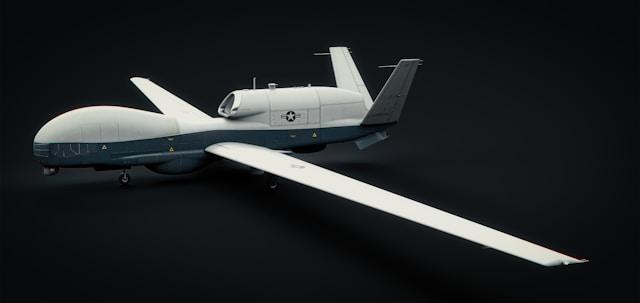
As war is reframed through memes, drones, and spectacle, society risks losing its moral compass and treating real human suffering as entertainment.
Newsroom (29/05/2026 Gaudium Press ) A society does not lose its soul only when it turns violent. It loses its soul when violence becomes entertaining.
That unsettling truth sits at the heart of what has been described as the “gamification of war.” The phrase, used to characterize how the conflict surrounding Iran is increasingly framed, captures a broader cultural shift: war is no longer only reported or analyzed—it is packaged, stylized, and consumed.
Across social media platforms, war reels circulate with striking familiarity. Clips of drones operating over regions connected to Iran, Israel, and the UAE appear with the pacing and editing of action films. Explosions are cut into highlight sequences. Missile strikes are replayed. Graphics mimic video-game interfaces. The language accompanying these visuals is often infused with swagger, suspense, or even humor.
The result is a profound dissonance. War continues to be described in official statements as tragic, grave, and necessary. Yet its presentation increasingly mirrors entertainment. It becomes something to watch, to follow, and, disturbingly, to enjoy.
There is a bitter irony in this duality. We are told that civilian suffering is regrettable, that loss of life matters. But the dominant visual grammar contradicts those claims. Speed, impact, precision, and dominance take center stage. The wounded are absent. The dead remain unseen. The spectacle eclipses the substance.
This shift is not merely aesthetic. It is moral.
Cardinal Blase Cupich warned explicitly against this drift in a March 8 appeal to conscience, cautioning against treating war as a “spectator sport or strategy game.” His insistence that a “hit” is not a score but a human catastrophe cuts through the abstraction. It reminds audiences that what appears on screen is not a simulation. It is the irreversible destruction of human life.
His warning points to a deeper transformation: the conditioning of the public imagination. Entertainment is never neutral. It trains attention. It decides what is foreground and what fades into the background. When war is filtered through the same mechanisms that shape sports highlights or movie clips, empathy begins to erode.
Suffering is no longer encountered as a lived reality. It is processed as content.
This is particularly evident in the circulation of drone footage. In social media war reels drawn from conflicts involving Iran, Israel, and regional actors like the UAE, drone strikes are often presented from a detached aerial perspective. Targets appear abstract, reduced to dots or silhouettes. The strike itself is rendered clean, precise, almost elegant. What follows—the human consequences—rarely enters the frame.
This visual distancing anesthetizes moral response. It becomes possible to admire the technology while forgetting the human cost.
The reality on the ground exposes the obscenity of this detachment. The war has produced what Pope Leo described as “atrocious violence,” with thousands of noncombatants killed across affected regions. In Lebanon alone, more than 800,000 people have been displaced. Families shelter under tarps, inside vehicles, or in unfinished buildings, facing rain, overcrowding, and disease.
These are not cinematic moments. They are prolonged experiences of fear, exhaustion, and grief.
Yet the digital ecosystem continues to transform such suffering into spectacle. The transformation does not end with imagery. It extends into economics. More than $1 billion has reportedly been wagered on war outcomes and regime-change scenarios through prediction markets. Conflict is no longer only observed—it is speculated upon.
Violence has become not just aestheticized, but monetized.
This development reveals a troubling evolution in public engagement. War is treated simultaneously as entertainment and as financial opportunity. Escalation becomes a signal. Destruction becomes a variable. The logic of the market merges with the logic of spectacle.
Meanwhile, the material consequences ripple outward. Nearly a fifth of global oil flows typically pass through the Strait of Hormuz, making the region’s instability economically consequential worldwide. Oil prices have surged, supply chains strained, and vulnerable populations—far removed from the battlefield—bear rising costs.
The glossy portrayal of military action obscures this reality: wars are ultimately paid for by those least able to afford them.
There is also a spiritual dimension to this crisis of perception. At a time traditionally associated with reflection, restraint, and moral clarity, modern culture instead offers continuous stimulation. Where one tradition calls for silence before suffering, contemporary media invites constant engagement—clicks, reactions, shares.
The contrast is stark. One posture demands reverence. The other cultivates detachment.
Pope Leo’s response rejects the logic of spectacle entirely. His calls for an immediate ceasefire, for the rejection of violence as a path to justice, and for renewed dialogue stand in direct opposition to a culture that thrives on drama and escalation.
These competing narratives—one grounded in moral seriousness, the other in digital consumption—define the current moment.
The deeper question remains unresolved: What kind of society are we becoming when war can be received in the emotional register of entertainment?
When bombardment begins to resemble content, when drone strikes mirror video games, and when human suffering competes with algorithmic engagement, something fundamental shifts. The line between tragedy and amusement blurs.
A healthy society resists that erosion. It approaches war with gravity, not excitement. It centers victims, not visuals. It speaks with restraint, not cleverness. And it understands that even when force is deemed necessary, war should remain unbearable.
Because when war begins to look like fun, something human has already been lost—long before the first explosion is heard.
- Raju Hasmukh with files from Global Catholic
Related Images:


