






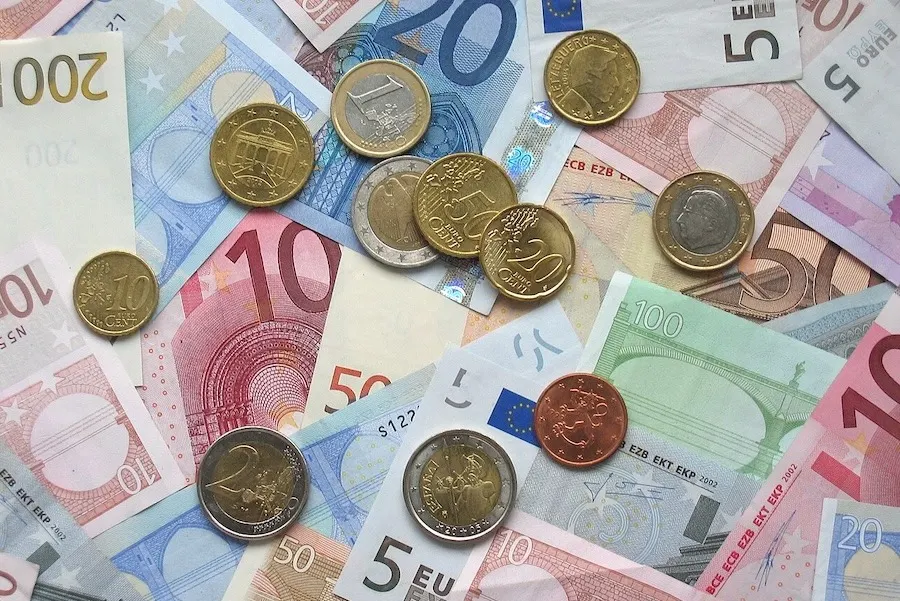
Germany’s Catholic dioceses collected €6.751 billion in church tax in 2025 despite losing over 307,000 members, extending the “church tax miracle.”
Newsroom (08/07/2026 Gaudium Press ) Germany’s Catholic Church recorded another increase in church tax revenue in 2025, even as more than 300,000 registered Catholics formally left the Church. The development has reinforced what German commentators have dubbed the “church tax miracle” (Kirchensteuerwunder)—a phenomenon in which church finances continue to grow despite a shrinking membership base.
According to figures released by the German Bishops’ Conference on July 7, the country’s 27 Catholic dioceses received €6.751 billion (approximately $7.72 billion) through the church tax system in 2025. The total represents an increase from €6.628 billion in 2024 and €6.515 billion in 2023.
The latest data show that church tax revenue rose by 1.9% year-on-year in 2025. Compared with 1991, the benchmark year used by the bishops’ conference, church tax income has increased by 73.9%.
Revenue Growth Defies Membership Trends
The increase comes despite continuing membership losses within the Catholic Church in Germany. In 2025, 307,117 people formally left the Church, although the number was lower than in previous years. Departures totaled 321,659 in 2024 and 402,694 in 2023.
The German Bishops’ Conference did not offer a detailed explanation for the latest rise in revenue. Instead, it presented the figures within its annual statistical table, which tracks church tax income since German reunification in 1990.
The apparent contradiction between declining membership and increasing tax income has drawn sustained attention from church observers and financial analysts. While overall membership continues to fall, revenue has remained remarkably resilient.
How Germany’s Church Tax System Works
Germany operates one of the world’s most extensive church tax systems. Religious communities recognized as corporations under public law are entitled to levy taxes on registered members.
For Catholics officially registered with the Church, the tax amounts to 8% to 9% of an individual’s income tax liability, depending on the federal state in which they live.
The tax is collected by the state, typically through payroll deductions, and then transferred to the Church. In return, government authorities retain roughly 3% of the revenue as an administrative fee.
Church tax income forms the financial backbone of the Catholic Church’s operations in Germany. The funds support pastoral ministries, schools, social and charitable institutions, pensions, maintenance of church properties, and international aid projects.
Catholics who wish to stop paying the tax must formally declare their departure from the Church. Under a 2012 decree issued by the German Bishops’ Conference, individuals who take this step may no longer receive the sacraments, hold Church offices, or serve as baptismal or confirmation sponsors.
Why Revenue Keeps Rising
Many analysts point to Germany’s income structure and progressive tax system as the primary explanation for the continuing rise in church tax income.
The church tax is calculated as a percentage of income tax rather than a percentage of total earnings. As a result, higher earners contribute disproportionately larger sums.
For example, a Catholic earning €30,000 annually and paying €3,000 in income tax would owe approximately €270 in church tax at a 9% rate. Another Catholic earning €60,000 and paying €10,000 in income tax would contribute €900 in church tax.
Although the second individual earns only twice as much, the Church receives more than three times the amount in church tax revenue.
This mechanism has become particularly significant as wages have risen. Following economic pressures linked to the COVID-19 pandemic and the war in Ukraine, Germany experienced improving wage growth in 2023 and 2024. The country’s statistical office reported a 3.1% increase in real wages in 2024, boosting tax receipts and, in turn, church tax collections.
Some economists also argue that many of those leaving the Church are younger adults or lower-income earners whose financial contribution to church tax revenue was relatively limited. Their departure has therefore had a smaller effect on overall income than raw membership figures might suggest.
At the same time, the remaining membership includes a significant number of older and higher-income individuals who account for a substantial share of total contributions.
Church Leaders Prepare for Future Decline
Despite the favorable figures, Church leaders have increasingly cautioned that the trend cannot continue indefinitely.
As the Catholic population ages, many of today’s highest contributors will eventually retire or pass away. Meanwhile, younger generations are proving less likely to remain registered members, reducing the future pool of church tax payers.
Recognizing these long-term risks, dioceses across Germany have begun implementing cost-cutting measures.
In July 2025, Beate Gilles, general secretary of the German Bishops’ Conference, warned that officials would need to make “hard cuts” to spending from the Association of the Dioceses of Germany, citing both membership decline and expectations of falling church tax income in the years ahead.
Regional dioceses have already begun feeling financial pressure. In February 2026, the Diocese of Rottenburg-Stuttgart announced that parishes would receive €167 million in church tax allocations for 2026, down from a previously planned €183 million. The diocese attributed the reduction to significantly lower church tax revenues already recorded during 2025.
During the same month, the Diocese of Fulda said it would continue subsidizing only about half of its parishes because of declining membership and reduced church tax income.
These developments suggest that local financial realities can differ sharply from the national picture presented by aggregate revenue figures.
Protestant Church Sees Similar Pattern
The Catholic Church was not alone in experiencing the phenomenon in 2025.
The Evangelical Church in Germany (EKD), a federation of 20 regional Protestant churches, also reported higher church tax income despite substantial membership losses.
The EKD received approximately €6.09 billion in church tax revenue in 2025, compared with €5.97 billion in 2024. The increase occurred even though the Protestant body lost around 586,000 members, equivalent to roughly 3% of its total membership.
The parallel experience of Germany’s two largest Christian denominations suggests that broader economic factors—particularly wage growth and the structure of the church tax system—continue to outweigh the financial effects of declining membership, at least for now.
A Miracle With an Expiration Date?
Germany’s church tax system has once again demonstrated its ability to generate growing revenues despite a steady exodus of members. The combination of rising incomes, progressive taxation, and a remaining base of relatively affluent contributors has enabled both Catholic and Protestant churches to maintain strong financial results.
Yet church leaders increasingly view the trend as temporary rather than permanent. While the “church tax miracle” remains alive in the national statistics, ongoing demographic shifts and continuing membership losses are raising questions about how long the phenomenon can continue before declining numbers begin to outweigh growing incomes.
- Raju Hasmukh with files from The Pillar
Related Images:


