






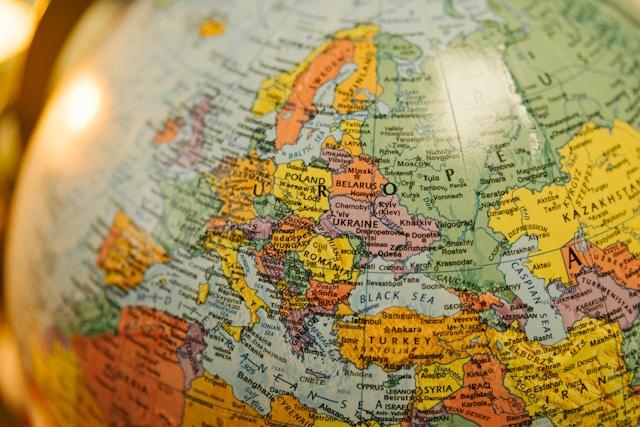
Catholic leaders from Poland and Ukraine urge reconciliation, forgiveness, and peace, calling on both nations to reject division and embrace shared Christian values.
Newsroom (02/07/2026 Gaudium Press ) In a significant display of ecclesiastical unity, senior Catholic leaders from Poland and Ukraine have issued a joint appeal urging reconciliation between their nations, emphasizing forgiveness, mutual respect, and the preservation of shared Christian values in the face of growing political and historical tensions.
The statement, released on June 29 from Rome and Kyiv, was signed by Cardinals Mykola Bychok, Konrad Krajewski, Kazimierz Nycz, and Grzegorz Ryś, along with Major Archbishop Sviatoslav Shevchuk, head of the Ukrainian Greek Catholic Church. The appeal was issued while the cardinals were gathered in Rome for the recent consistory.
Framing their message within the broader peace efforts of Pope Leo XIV, the Church leaders said they were speaking “in unity with Holy Father Leo XIV,” whose first year as pope has been characterized by persistent efforts to build peace grounded in the common good and by firm opposition to war in all its forms.
The signatories stressed that reconciliation between Poland and Ukraine is not merely a political matter, but one that directly affects the credibility of Christian witness.
“We are aware that the question of reconciliation between Poles and Ukrainians concerns not only relations between the two peoples but also the authenticity of our common Christian witness,” they wrote.
The appeal comes at a delicate moment in relations between the neighboring countries. Despite Poland’s strong support for Ukraine since the Russian invasion in 2022, disagreements over interpretations of World War II-era atrocities have contributed to renewed tensions. Against this backdrop, the Church leaders sought to redirect attention toward dialogue, understanding, and the values shared by both nations.
Central to their message was a call to reject divisive rhetoric. Echoing Pope Leo XIV’s repeated appeals for peace, the bishops argued that language itself can either foster reconciliation or deepen conflict.
“Following Pope Leo, we are convinced that the first step toward peace is the disarmament of language,” they wrote. “This applies not only to words but also to gestures, signs, and symbols. They can also wound, close the path to encounter, and generate fear.”
The Church leaders warned against allowing competing interpretations of history to become tools of division. While acknowledging the importance of historical memory, they cautioned that imposing a single vision of the past or future can perpetuate hostility and undermine efforts toward peace.
“When we impose our own vision of the past and the future on others, we succumb to the logic of a culture of violence and power,” the statement said. Instead, they encouraged both societies to pursue “the common good, not only of particular interests.”
Drawing on Christian teaching, the appeal highlighted forgiveness and mercy as essential responses to the wounds of history. Quoting the Gospel’s message of reconciliation, the bishops underscored that lasting peace cannot be achieved through resentment or retaliation.
“The Gospel in which we believe teaches us that the remedy for sin is forgiveness, and the limit that God has set for evil is mercy,” they wrote.
The statement also invoked the legacy of St. John Paul II, whose pontificate was marked by sustained efforts to foster closer relations between Poles and Ukrainians. The signatories described his work as a foundation that should not be abandoned, even in times of political disagreement or social tension.
“We feel the duty not to abandon the common path begun with the blessing of St. John Paul II but to walk it patiently and courageously,” they wrote. “Too much unites our peoples for us to allow our common heritage to be wasted.”
While recognizing the painful chapters shared by both nations, the Church leaders emphasized that Christians are called to confront historical grievances through truth, charity, and forgiveness rather than through anger or division. Their message presented reconciliation not as a denial of past suffering, but as a moral and spiritual responsibility rooted in the Christian faith.
The appeal concluded with a broader call to resist what the bishops described as a culture of division and to offer a positive Christian witness in a world increasingly marked by conflict. Reaffirming their support for Pope Leo XIV’s vision of peace, they urged individuals and communities alike to place the common good above narrow interests.
“Together with the Holy Father Pope Leo XIV,” they wrote, “we call on everyone to think primarily in terms of the common good and not only of private interests.”
The joint declaration stands as a rare and notable intervention from Catholic leaders on one of the most sensitive issues affecting Polish-Ukrainian relations, seeking to reaffirm the spiritual bonds that unite the two nations and to encourage a path forward based on mercy, truth, and reconciliation.
- Raju Hasmukh with files from EWTN News
Related Images:


