






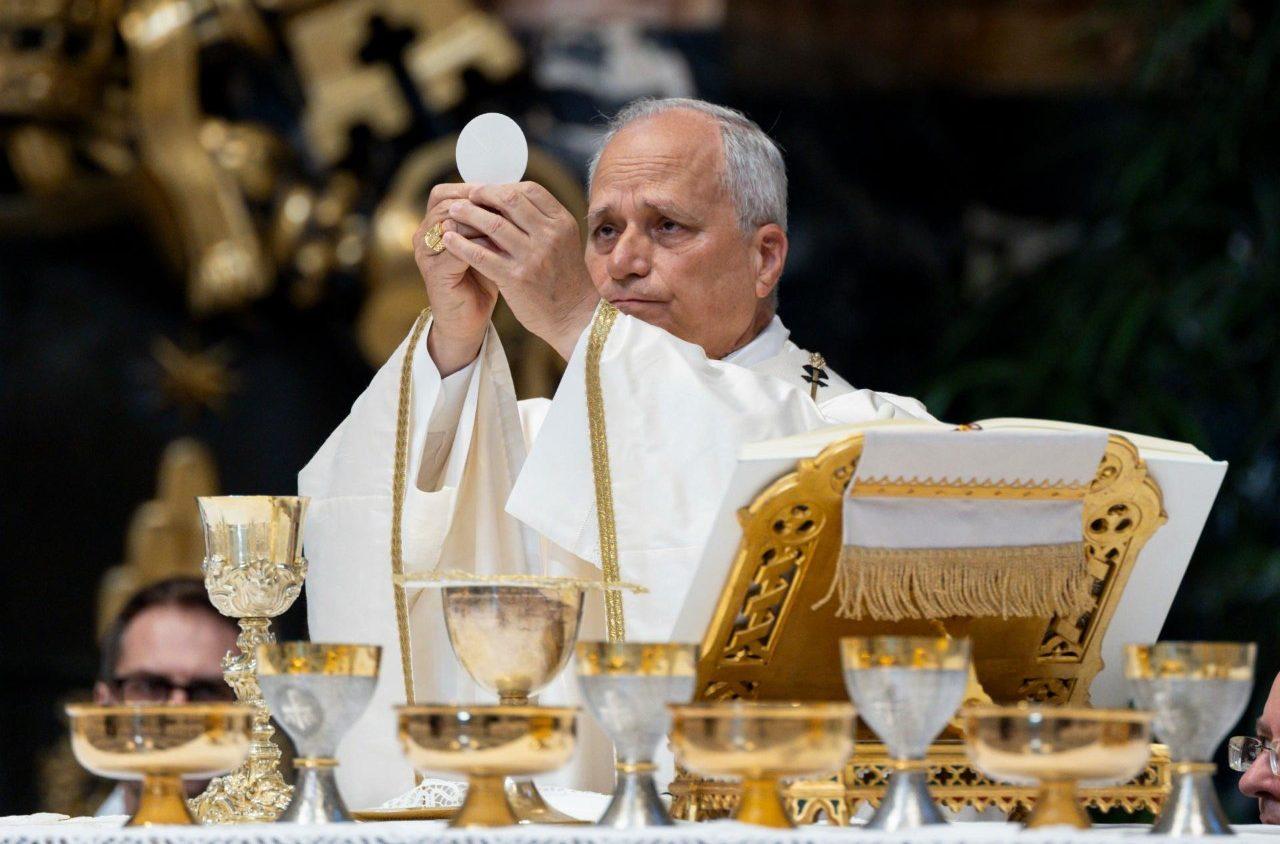
Pope Leo XIV opens Extraordinary Consistory urging faith, unity, and obedience as Cardinals gather in Vatican ahead of Saints Peter and Paul feast.
Newsroom (26/06/2026 Gaudium Press )The Extraordinary Consistory convened by Pope Leo XIV formally opened on Friday, June 26, with the celebration of the Eucharist in St. Peter’s Basilica, marking the beginning of two days of reflection among Cardinals on the pressing concerns facing the Church and the world.
Gathered in Vatican City from June 26 to June 27, the Cardinals began their deliberations by entrusting their work to prayer during the Mass, setting a tone of spiritual discernment that will culminate with the Solemnity of Saints Peter and Paul. The meeting underscores the Church’s ongoing effort to address global challenges while reinforcing its spiritual and institutional foundations.
A Christ-Centered Foundation
In his homily, Pope Leo XIV emphasized that the Consistory’s vitality flows directly from Christ, invoking the Gospel of John: “I am the true vine” (Jn 15:1). He framed the gathering not merely as an administrative exercise but as a spiritual event grounded in communion with Christ.
“The Gospel itself prepares the ground for it to bear fruit: ‘Remain in me, and I in you’ (Jn 15:4),” the Pope said, underscoring that authentic discernment emerges from this abiding relationship.
He outlined three guiding principles for the Cardinals’ reflections: sharing in the true freedom of faith, asking for the gift of peace in unity, and embracing harmony through obedience—pillars he presented as essential for navigating the Church’s present challenges.
Inspired by Apostolic Witness
The Pope placed the Consistory within a broader historical and spiritual context, noting its timing on the eve of the Solemnity of Saints Peter and Paul. He described the two Apostles as pillars of the Roman Catholic Church whose martyrdom and missionary witness remain foundational.
“Their preaching became one with their lives, to the point of becoming part of Sacred Scripture,” Pope Leo said, encouraging the Cardinals to draw inspiration from their example as they engage in deliberation.
Faith as True Freedom
Addressing the first guiding principle, the Pope invited participants to embrace what he called the “true freedom of faith,” rooted in a personal relationship with Jesus Christ.
“It is precisely our relationship with the Lord Jesus that frees us from sin and fear,” he said, explaining that faith—far from being static—is a dynamic gift that sustains the life of the Church.
He described the Church as a living organism nourished by the Holy Spirit, with faith enabling it to “bear much fruit.” In this vision, the Cardinals, as successors of the Apostles, are both recipients and stewards of this transformative freedom, called to carry it into the wider world.
A Call for Peace in Unity
Turning to global concerns, Pope Leo XIV addressed the second principle: the pursuit of peace grounded in unity. Reflecting on ongoing conflicts affecting humanity, he issued a clear moral stance against violence.
“War is never worthy of humanity, and it is never blessed by God,” he said, emphasizing that human beings possess the intelligence and free will needed to resolve conflicts without resorting to destruction.
He framed peace as both a moral duty and an expression of justice, rooted in the shared identity of humanity as one family. This unity, he said, finds its fulfillment in Christ, described as the head and redeemer of a “magnifica humanitas.”
Drawing on themes from his first encyclical and the teaching of Saint Paul VI, Pope Leo encouraged perseverance in building a “civilization of love,” where justice and charity are inseparably linked. He reaffirmed the Church’s universal mission, stressing that it “is never partial” but addresses all people with a consistent message of conversion and salvation.
Harmony Through Obedience
The third principle—“harmony through obedience”—was presented as an attitude of attentive listening, particularly to the Word of God.
Pope Leo described obedience not as passive submission but as active receptivity to the “Word made flesh.” Through this listening, he said, the Holy Spirit guides the Church, illuminating pastoral challenges, refining intentions, and correcting deviations from its shared path.
He highlighted the ongoing implementation of the Synod as a concrete expression of this principle, noting that it calls the Church to advance in unity of faith and commitment to peace while remaining anchored in obedience to Christ.
Synodality and Collegial Leadership
Concluding his homily, Pope Leo XIV stressed the importance of working together in a collegial manner, describing it as a manifestation of synodality—the shared journey of all the baptized.
“Our working together in a collegial way embodies the synodality in which all the baptized participate in the unity of the People of God,” he said.
He linked synodality and collegiality as complementary forms of Christian fraternity, binding bishops and faithful alike into a unified community. This emphasis reflects an ongoing priority within the Church to foster collaboration and shared responsibility in its mission.
A Moment of Reflection and Direction
As the Consistory continues, the Pope’s opening message sets a clear trajectory: a Church rooted in faith, committed to unity, and guided by attentive obedience. Against a backdrop of global uncertainty, the gathering of Cardinals serves as both a moment of reflection and an opportunity to shape the Church’s response to contemporary challenges.
With its conclusion aligned with the Feast of Saints Peter and Paul, the Consistory draws symbolic strength from the Church’s apostolic origins, reaffirming its mission in the modern world while remaining anchored in its enduring spiritual foundation.
- Raju Hasmukh with files from Vatican News
Related Images:


