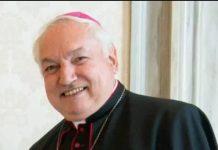















Marseille’s Cardinal Jean-Marc Aveline urges lawmakers to reject France’s end-of-life bill, defending life, care, and human dignity.
Newsroom (21/01/2026 Gaudium Press) From his diocese in Marseille, Cardinal Jean-Marc Aveline—president of the French Bishops’ Conference—spoke firmly and with conviction about the moral crossroads facing France. Responding to the open letter recently released by the French bishops concerning the draft law on end-of-life care, he described the initiative not as a gesture of opposition, but as a call “to awaken the conscience of those who will vote.”
“What is being proposed today is neither good nor necessary,” Aveline declared. His tone was steady, not defiant but deeply concerned. He argued that France already possesses sufficient legal provisions—the Claeys-Leonetti law and existing palliative-care legislation—to ensure the nation does not abandon those nearing death. “There is no need to add anything else,” he said, underscoring that the moral imperative lies in care, not control.
Beyond Law: A Question of Meaning
The controversy, as the cardinal framed it, does not rest solely on the issue of legal necessity. It touches something far more fundamental: the meaning of life, care, and freedom. “What they want to add doesn’t seem right to us because the words being used aren’t quite right,” he explained, warning of the subtle but dangerous shift in the role society grants itself. “Legalizing the power to take a life is not the same as the power we have to accompany life to the very end.”
It is this distinction that defines the Church’s intervention. “The power we have is to accompany life to the very end,” he emphasized. To cross that line, he warned, would change not only law but the moral foundation on which society rests.
A Voice Raised for Conscience
The bishops’ collective decision to address the public through an open letter reflects the gravity they attribute to the issue. “We decided to write so that we do not end up legalizing the principle of taking a life,” Aveline explained. The letter, bold and unambiguous, accuses public discourse of distorting essential moral concepts. “The words ‘liberty,’ ‘fraternity,’ and ‘humanity’ are being taken out of context,” the cardinal lamented.
True humanity, he stressed, “is that which cares until the very end, that which accompanies.” It is not, he insisted, “that which grants the power to take one’s own life.” This message, delivered with pastoral gentleness but unwavering logic, seeks to refocus the conversation on human solidarity rather than self-determination.
Lessons from Caregivers and Faith
Aveline’s warning is rooted not in ideology but in lived experience. “Caregivers often say that in palliative care, patients would probably have asked for death, but with support, this desire to die fades.” Compassion, not control, becomes the true medicine.
He invoked the Church’s “expertise in this area,” noting its long tradition of accompanying the suffering. From that vantage point, his conviction emerges with force: “True fraternity, true humanity, true freedom, allow the person struggling with this difficulty to wish to live.” And in words that sum up the heart of his message, Aveline added, “The desire to live is always stronger than the right to die.”
A Warning to Lawmakers
Addressing parliamentarians directly, Cardinal Aveline called on legislators to recognize the anthropological thresholds this proposed law would cross. “Those who have been elected as members of parliament and senators must understand the gravity of this law,” he said, warning that similar laws abroad have quickly expanded far beyond their original limits, eroding human dignity along the way.
For this reason, the bishops’ stance is unequivocal: a decisive “NO” to any law legalizing the taking of life, and a clear “YES” to investment in palliative care. “A quarter of the population in France does not have access to this care,” he noted. “When they have access, it changes everything.” Genuine care, he implied, removes despair before it takes root.
A Call to Humility and Prayer
In concluding remarks, Aveline pointed out a sobering truth: “The vast majority of healthcare workers are not in favor of this law.” Those closest to suffering understand the humility it demands. “We are small before the mystery of suffering and death,” he said. “It takes great humility to show even a little humanity.”
Given the rarity of such direct Church intervention, the cardinal closed his appeal with a spiritual plea. In this moment, he urged believers not only to debate but to pray—to “rely on the power of prayer to influence consciences.”
In his eyes, the issue transcends politics. It is about the soul of a nation and the essence of what it means to remain human: to care, accompany, and affirm life to its very end.
- Raju Hasmukh with files from Tribune Chretienne
Related Images: