







Bethlehem revives Christmas celebrations after Gaza war subdued festivities for two years, bringing hope amid lingering hardship in the Holy Land.
Newsroom (26/12/2025 Gaudium Press) Thousands gathered in Manger Square on Christmas Eve as Bethlehem restored its traditional holiday splendor, marking a tentative return to joy after two years of muted observances in solidarity with suffering in Gaza.
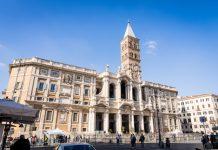
A towering Christmas tree once again illuminated the square in front of the Church of the Nativity, replacing the somber wartime nativity scene that had depicted the infant Jesus amid rubble and barbed wire as a tribute to Gaza’s devastation.
The resurgence of festivities signaled what residents described as the beginning of a return to normal life, even as economic scars from the conflict persist and tensions simmer in the Israeli-occupied West Bank.
Cardinal Pierbattista Pizzaballa, the Latin Patriarch of Jerusalem and the top Catholic leader in the Holy Land, led the traditional procession from Jerusalem to Bethlehem, declaring his hope for “a Christmas full of light.”
Arriving in Manger Square, Pizzaballa conveyed greetings from Gaza’s small Christian community, where he had celebrated a pre-Christmas Mass days earlier. Amid the enclave’s widespread destruction, he observed a resolute desire to rebuild.
“We, all together, we decide to be the light, and the light of Bethlehem is the light of the world,” he told the assembled crowd of Christians and Muslims.
At the Vatican, Pope Leo XIV — the first American pontiff — celebrated his inaugural Midnight Mass in St. Peter’s Basilica. In his homily, he reflected on the profound wisdom of the Nativity: God sending a defenseless child to offer strength amid human suffering.
“In the face of the suffering of the poor, (God) sends one who is defenseless to be the strength to rise again,” the pope told the packed basilica.
In Bethlehem, a city where around 80-85 percent of residents rely directly or indirectly on tourism, the war’s toll has been severe. Unemployment soared from 14 percent to 65 percent, according to Mayor Maher Nicola Canawati. Hoteliers, shopkeepers, taxi drivers, restaurant owners, and tour guides saw their livelihoods evaporate as visitors vanished.
Compounding the crisis, Israel revoked most work permits for Palestinians, and the Palestinian Authority has only partially paid public-sector salaries. Approximately 4,000 residents have emigrated in search of opportunity, contributing to a broader exodus of Christians from the region, where they now comprise less than 2 percent of the West Bank’s population.
Yet signs of renewal emerged. Local tour guide Georgette Jackaman, from a generations-old Christian family, called Christmas Eve “a day of joy, a day of hope, the beginning of the return of normal life here.” For her young children — aged 2½ years and 10 months — this marked their first genuine experience of the holiday.
During the war, the Jackamans launched an online platform selling Palestinian handicrafts to sustain families who had lost income.
French visitor Mona Riewer said the atmosphere deepened her understanding of Christmas. “Christmas is like hope in very dark situations,” she observed.
Parade traditions also returned. Marching scout bands, draped in Palestinian flags and tartan bagpipes, filled the streets with music — a stark contrast to the silent processions of the previous two years held in protest against the war.
Fadi Zoughbi, a former tourism logistics coordinator, said his children were thrilled by the revived spectacle. Irene Kirmiz, whose daughter plays tenor drum in a Ramallah scout band, cherished the tradition but noted the hardships of travel: her family endured three-hour waits at Israeli checkpoints for what was once a 40-minute drive.
Mayor Canawati told Vatican Radio that the restored celebrations aimed to rekindle hope after prolonged hardship. “After two years of silence, we believe we have reignited the spirit of Christmas, because the people of Bethlehem needed hope — hope for a better tomorrow.”
He emphasized a broader message: “The Palestinian people are ready for peace. The Palestinian people love life.” The mayor added that the festivities belong to all Palestinians — Christians, Muslims, and Samaritans alike — and that Bethlehem stands ready to welcome visitors once more.
Though a fragile ceasefire has held in Gaza since October, hundreds of thousands there face winter in makeshift tents with urgent needs unmet. In the West Bank, Israeli military operations and settler violence — at record highs since 2006, according to United Nations data — continue.
Elsewhere in the region, resilience shone through. Nazareth hosted its traditional Santa parade under sunny skies, while Gaza’s sole Catholic parish held Christmas Eve Mass despite damage from earlier shelling. In Syria, congregants prepared to return to a Damascus-area church struck by a deadly suicide attack months prior.
For Bethlehem’s residents, the glowing tree in Manger Square embodied cautious optimism: a light piercing lingering darkness, and a quiet affirmation that life, and hope, endure.
- Raju Hasmukh with files from AP and Vatican News
Related Images:


